Spilia: 26 years of hoping it won’t rain
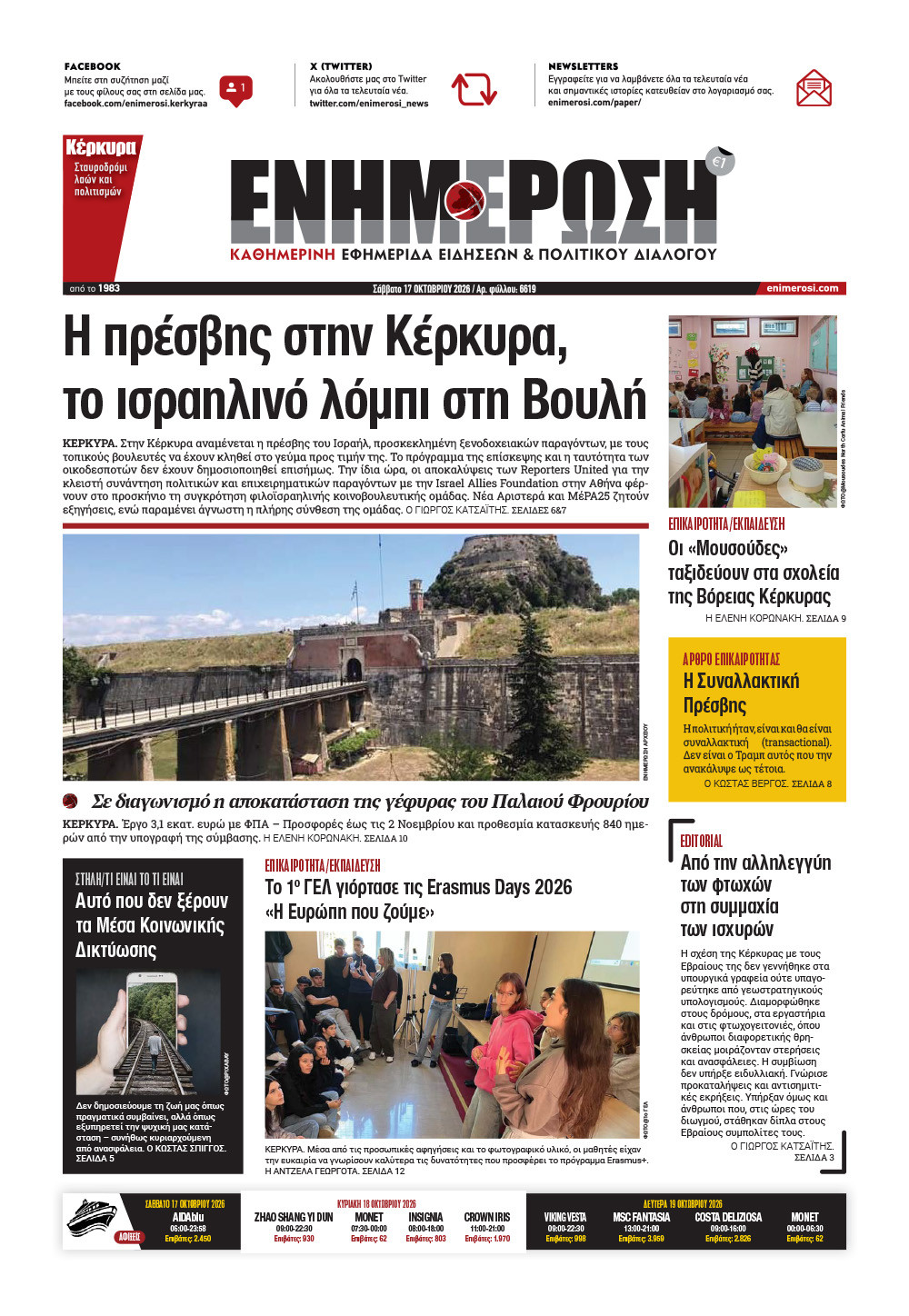
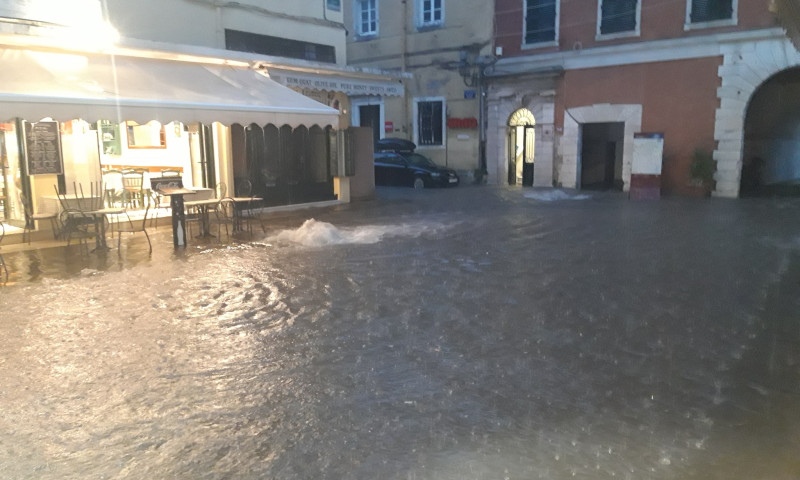 Enimerosi archive photo
CORFU. The 2000 contract, the “Mavros Gatos”, the failed separation of stormwater and sewage, the ever-changing studies, and the flood-protection project the area is still waiting for.
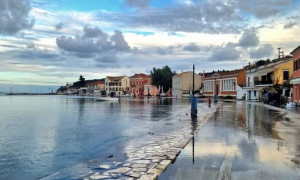
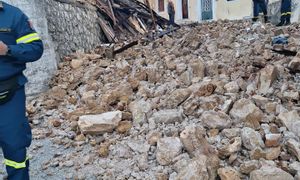
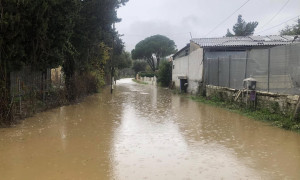
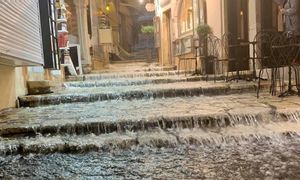
The first heavy rainfall was all it took. Spilia flooded again on Tuesday, with water and sewage entering businesses, and a story the town has known for more than a quarter of a century once again returned to the headlines. This time, however, it is difficult to attribute the problem simply to the intensity of the rainfall.
Today’s flooding adds to a chain of incidents linked to the way the area’s sewerage system was designed and to a flood-protection project that has been planned, modified and postponed for years.
2000 – The contract that failed to separate stormwater from sewage
A key point in the story is the so-called “Charalambakis contract” of 2000. The project failed to achieve the full separation of stormwater from sewage in the Old Town, leaving the network essentially as a combined sewer system.
The flows are directed to a junction with the pipeline leading to the wastewater treatment plant, at the well-known problematic hydraulic point at Mavros Gatos. When the volume of water rises sharply, the system comes under pressure and Spilia is faced with the familiar overflows.
That is why the problem is not simply a matter of “blocked drains”. Cleaning them is necessary, but it does not address the underlying design weakness of the network.
2000s – The marina and a solution still being sought
The idea of a marina at Spilia had already emerged in the 1990s, following the departure of the KTEL bus company from NASKE Square. The first phase of the project was included in the funding programme in June 2006 and included port and electromechanical works.
At the same time, however, the flooding problem remained.
The solution eventually designed was a new combined sewer pipeline capable of discharging large flows further out to sea, rather than into the harbour basin, combined, of course, with the necessary separation of stormwater from sewage within the internal network.
2022 – New contract, old problem
On 14 February 2022, the contract for the Spilia Marina was signed, with a total budget of approximately €9.7 million. The long-awaited flood-protection sub-project was also included in the contract.
However, the works began approximately six months late, and the crucial hydraulic project did not follow.
2023 – “Differences in levels” discovered
In autumn 2023, a new complication emerged. During implementation of the design, differences in levels were identified, requiring the hydraulic study to be amended.
While the marina was being built, there was still no specific timetable for the project that was supposed to protect Spilia from flooding.
2024 – “We’ll start after the harbour basin”
In April 2024, during an inspection of the construction site, it was announced that the hydraulic study was ready, DEYAK had given its consent, and only the final approval from Corfu Port Authority remained.
Construction of the flood-protection project was expected to begin once the harbour basin had been completed.
At the same time, something revealing was pointed out: even the new pipeline would not be enough on its own. DEYAK would also have to address problems within the internal network in order to achieve a genuine separation of stormwater and sewage.
2025 – “Will we flood again with the first rain?”
In August 2025, the question was put almost prophetically by Enimerosi: “Will we flood again with the first rain, or not?”
The sewerage project was still pending, and there was no clear completion date.
22 September 2026 – The rain provided the answer
A year later, the answer came in the streets.
Today’s heavy rainfall once again caused flooding in Spilia. Water was reported to have entered businesses, while one business owner complained that water mixed with sewage had entered the premises. Another business in the area also experienced serious flooding problems.
What is significant is that this is not some unknown technical problem that emerged today.
2000: the network does not fully separate stormwater from sewage.
2022: the flood-protection project is included in the new contract.
2023: differences in levels emerge and the hydraulic study is amended.
2024: it is announced that the project will follow the completion of the harbour basin.
2025: the project is still pending.
2026: Spilia floods again.
Twenty-six years after the contract that lies at the starting point of today’s problematic network, the rain continues to do what the authorities have not: put the system to the test in practice.
And every time, it produces the same result.
ELENI KORONAKI