Corfu gaining popularity with German travellers
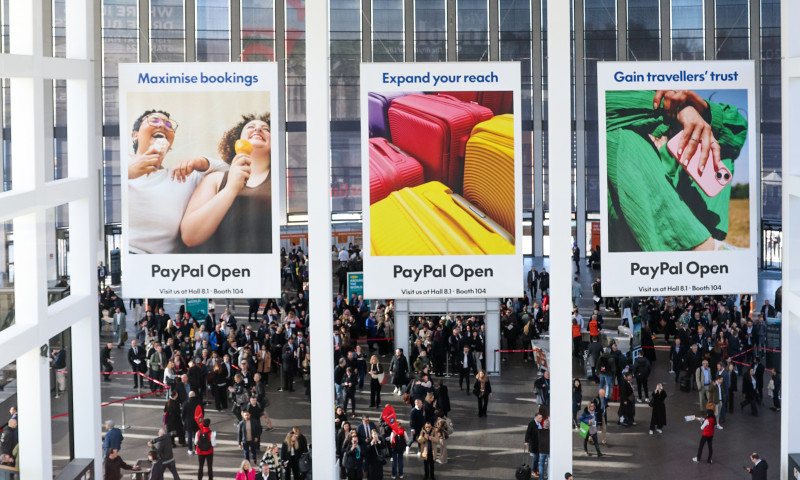 Eingang Süd
BERLIN. However, it is noted that it is becoming a particularly expensive destination, focused on the two-part model of villas and all-inclusive resorts.
There has been significant interest in Corfu and the Ionian Islands over the first days of the international tourism exhibition ITB in Berlin, where tour operators and industry professionals are discussing the prospects for this year’s tourist season amid an environment of increased geopolitical uncertainty.
Despite the shadow cast by developments in the Middle East, the general picture conveyed by the German and British markets is that demand for Greece remains strong, with the Ionian Islands continuing to rank among the established summer destinations.
During meetings taking place in Berlin, Corfu is frequently mentioned as one of the main destinations for organised holiday packages for the summer season, particularly for visitors from the United Kingdom and Germany. Early indications from advance bookings are described as positive, while major travel organisers note that the island maintains a strong presence in their programmes. At the same time, steady demand is also being recorded for the other Ionian Islands, such as Zakynthos, Cephalonia, and Lefkada.
However, discussions at ITB are also highlighting an issue that increasingly concerns Corfu: the cost of holidays. Many representatives of the tourism market point out that in recent years Greece has moved into the more expensive category of destinations for European travellers. Rising hotel prices, combined with the overall cost of accommodation, transportation, and dining, are making tourists more cautious when comparing prices with competing Mediterranean destinations.
At the same time, hospitality businesses are facing higher operating costs, mainly due to energy and fuel prices, which in turn affects the final price of travel packages. Despite these pressures, industry professionals believe that the island’s strong reputation and its established presence among major tour operators continue to support demand.
It is also noted at ITB that Corfu’s tourism market has been undergoing a phase of transformation in recent years. On the one hand, the presence of luxury homes and villas aimed at higher-income visitors is increasing, while on the other hand large hotel complexes operating with organised holiday packages are also expanding. This development is creating a new and more complex tourism landscape for the island, combining traditional mass tourism with growing demand for more private and higher-end forms of hospitality.
Overall, the climate conveyed from Berlin regarding Corfu and the Ionian Islands remains cautiously optimistic. Demand appears stable and advance bookings are at satisfactory levels. However, the cost of holidays and competition from other Mediterranean destinations are factors that the tourism market is closely monitoring ahead of the 2026 season.
GIORGOS KATSAITIS