Corfu in cruise and same-day visitor tracking network following Dubrovnik model
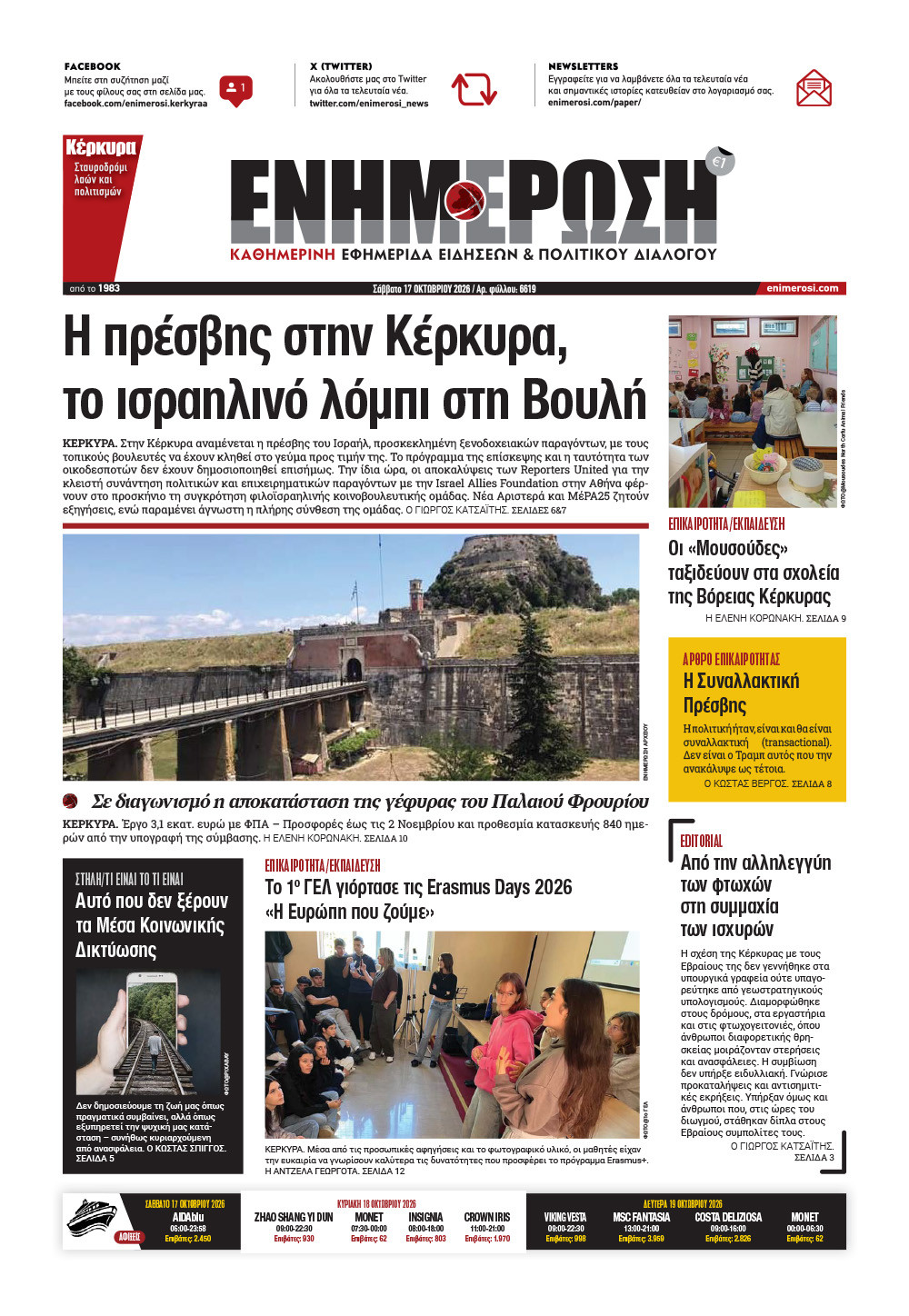
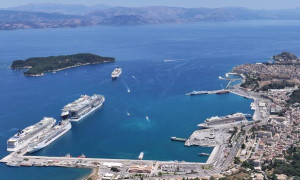
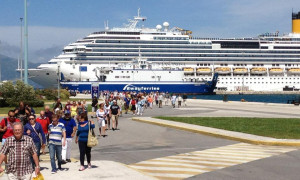
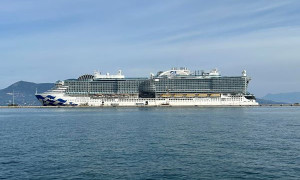
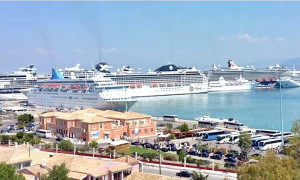
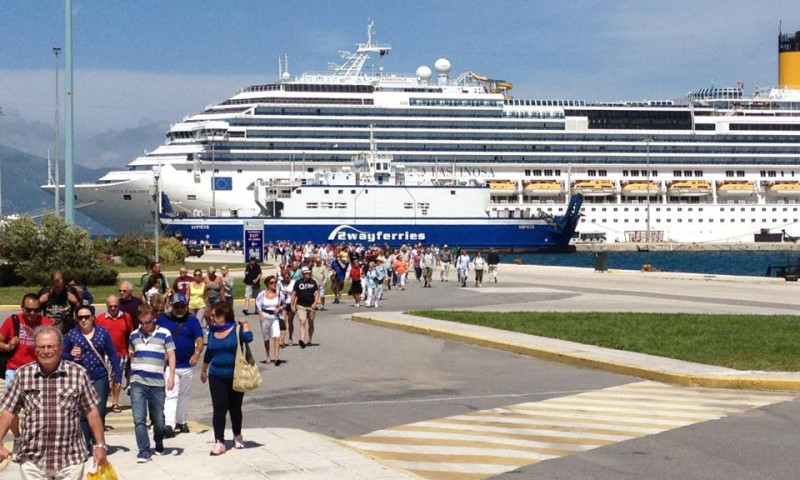 Day visitors arriving via cruise ships are a key focus of measurement for the Tourism Monitor, as they place pressure on infrastructure and public spaces without being reflected in overnight stay statistics. Enimerosi archive
CORFU. At last, policies and public discussions should move beyond simply counting arrivals and departures. Corfu is taking part in a tourism pressure monitoring programme focused on cruise activity and day visitors, together with destinations such as Rhodes.
A team of researchers is currently in Corfu in order to organise the island’s integration into the “Tourism Monitor.” This is part of a broader strategy by the Ministry of Tourism to measure the real tourism pressure in mature or over-touristed destinations.
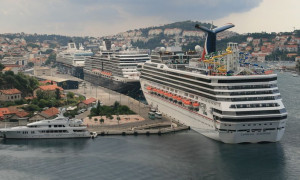
Within this framework, Greece has in recent years developed cooperation with Croatia on issues of sustainable tourism and overtourism management, with Dubrovnik being highlighted as a characteristic example of a city that has attempted to control pressure from cruise tourism and mass day arrivals through visitor monitoring systems. References by the political leadership of the Ministry of Tourism to shared challenges faced by Mediterranean destinations such as Rhodes and Corfu are part of this broader discussion on the “carrying capacity” of popular island destinations.
In contrast to traditional tourism statistics—arrivals, overnight stays, occupancy rates—the project focuses primarily on what researchers describe as “invisible tourism”: day visitors and cruise ship passengers. These are populations that use infrastructure, strain traffic and the environment, yet are not fully captured in hotel-based data.
As a result, the monitoring systems being installed or planned in pilot destinations, following the Dubrovnik model, will measure the number of day visitors per hour, simultaneous density in historic centres, cruise ship disembarkations, the distribution of flows within the town, congestion levels, pressure on water supply, waste management and transport infrastructure, length of stay, and the ratio of day visitors to overnight tourists.
Corfu is considered a special case because it combines three different sources of pressure: air arrivals, mass cruise tourism, and day trips. As a result, the actual number of people present simultaneously in the town or on the island often differs significantly from the number of overnight guests. This issue is gaining importance, as local measurements show high visitor satisfaction but also increasing pressure on infrastructure.
The Croatian experience is now used as a reference point because Dubrovnik, after years of overtourism, invested in tools for measuring visitor density, managing cruise arrivals, and monitoring flows within the historic city. A similar logic appears to be gradually being adopted in high-traffic Greek destinations. Rhodes is emerging as an initial site for implementing visitor density monitoring tools, with a particular emphasis on cruise tourism, while public debate there has already shifted from simple arrival counts to total daily visitor load. The link with Corfu reinforces the view that similar tools will be used or expanded here as well.
The picture points more to a multi-year continuous monitoring system linked to the Ministry of Tourism’s sustainability policies than to a one-off study. The key question now is not what will be measured, but whether the data will lead to decisions on cruise limits, traffic regulations, infrastructure projects, or even the definition of the “carrying capacity” of destinations.
GIORGOS KATSAITIS