Serbs return to a Corfu etched in their memories
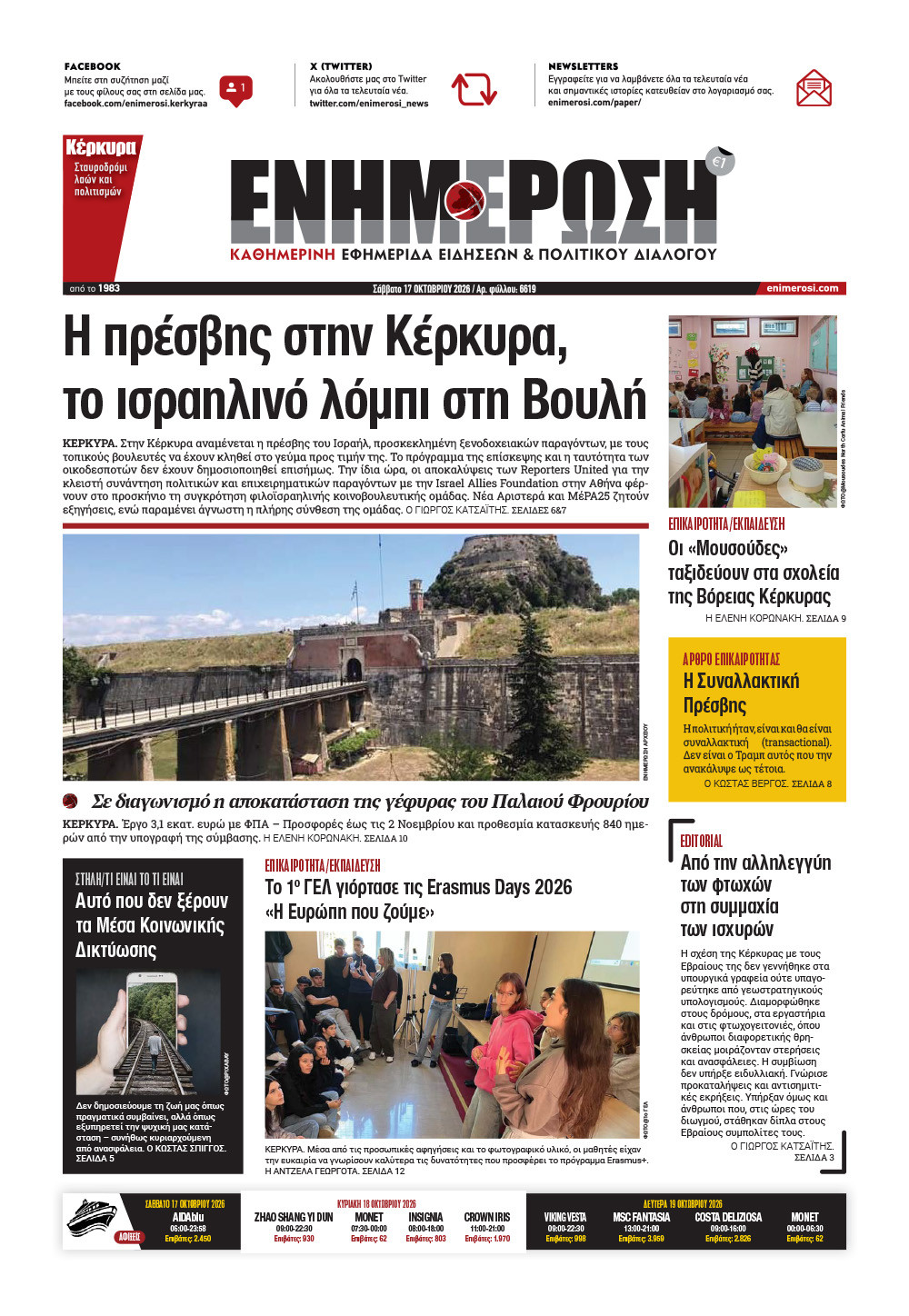
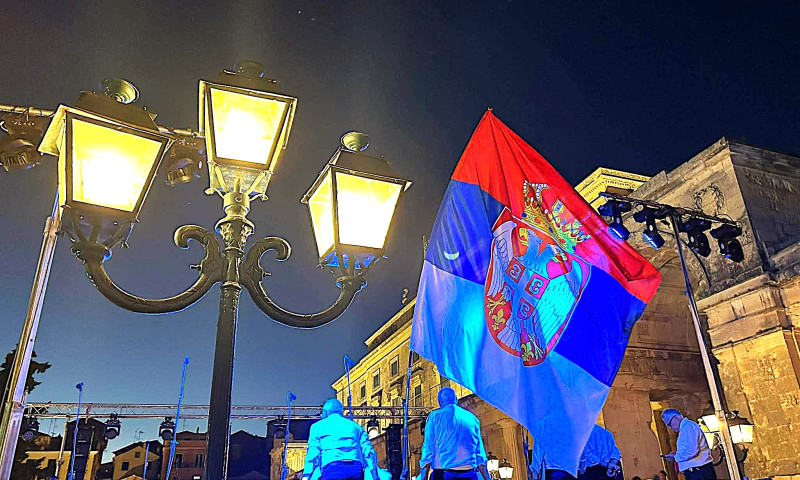 The focus of the multi-day Serbian commemorative events shifted to Corfu Town on Wednesday evening, marking 110 years since the arrival on the island in 1916 of the exhausted Serbian army. Photo: Enimerosi
CORFU. Corfu marks 110 years since the arrival of the Serbian army – Main ceremony at the Colonnade, with events in Othoni, Gouvia, Dassia and Vidos.
Events marking the 110th anniversary of the arrival of the Serbian army in the Ionian Islands are reaching their culmination this week, with Corfu and Vidos at the centre of the commemorations. The events recall the Serbian army’s dramatic retreat through Albania during the winter of 1915–1916.
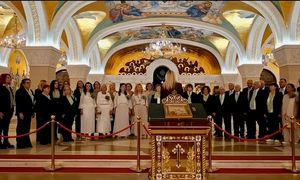
The main ceremony in Corfu Town was held on Wednesday evening, 23 September, in the open-air area of the Old Palace Colonnade, in front of the Museum of Asian Art. Those attending included representatives of Serbia and Republika Srpska, local government and Church officials, descendants of Serbian soldiers, and members of the public.
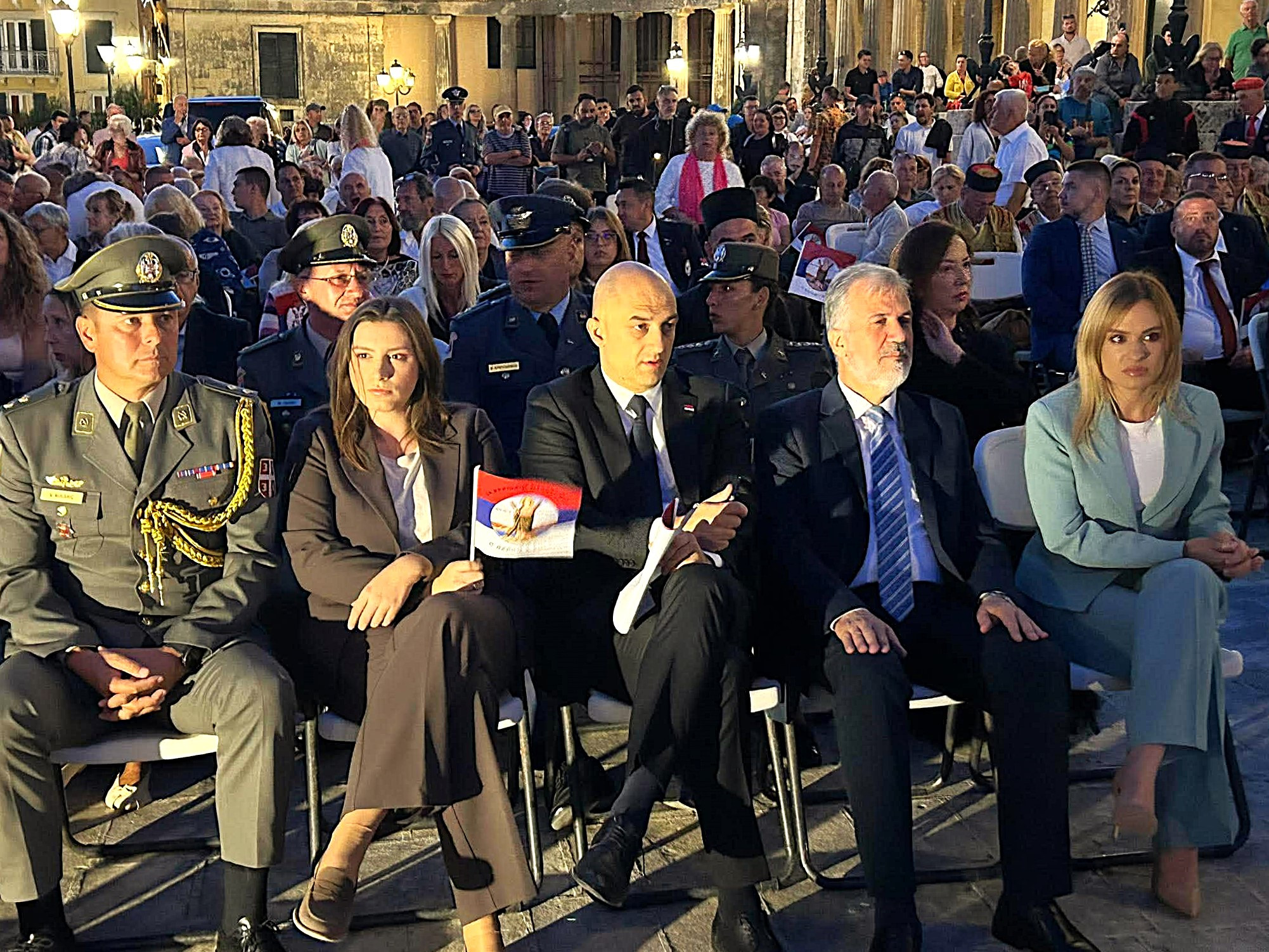
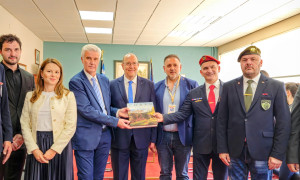
Labour, Employment, Veterans and Social Affairs Minister Milica Đurđević Stamenkovski and Republika Srpska President Siniša Karan with Mayor Stefanos Poulimenos.
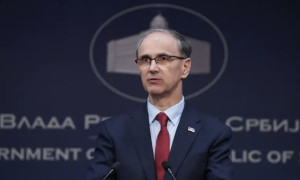
A key representative from Serbia was Labour, Employment, Veterans and Social Affairs Minister Milica Đurđević Stamenkovski, who attended as an envoy of the President of the Republic of Serbia. Also present was Republika Srpska President Siniša Karan.
Stamenkovski referred to Corfu as the place where the exhausted Serbian army found refuge, medical care and the opportunity to regroup, stressing that the ties between Serbs and Corfiots go beyond the level of relations between two states and form part of the collective memory of the two peoples.
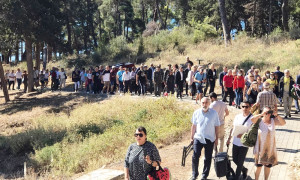
Particular emphasis was placed on Vidos and the “Blue Tomb”, as well as on the solidarity shown by Corfiots towards the Serbian soldiers who arrived on the island exhausted after their retreat.
From Othoni to Gouvia and Dassia
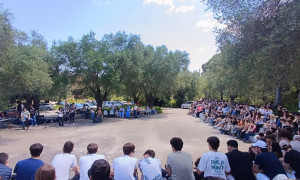
The Colonnade ceremony was not the only event. It formed part of a series of official Serbian commemorations held at locations across Corfu associated with the presence of the Serbian army in 1916.
The ceremonies began on Monday, 21 September, on Othoni, where a memorial service, wreath-laying ceremony and minute’s silence were held at the Church of Agia Paraskevi and the Serbian soldiers’ cemetery. Representatives of the Serbian government and armed forces, the Greek side and local organisations took part in the ceremony.
On Tuesday, the events moved to Gouvia, at the monument marking the site where the Serbian soldiers first landed on Corfu in 1916. The religious ceremony was followed by wreath-laying and the playing of the Greek and Serbian national anthems.
A ceremony was then held in Dassia/Ipsos, at the monument to the soldiers of the 2nd Infantry Regiment of the Morava Division, the famous “Iron Regiment”. Representatives of the Municipality of Central Corfu also took part in the ceremonies.
The Serbian state delegation also visited the Serbian House in Corfu Town and other sites associated with the Serbian army’s stay on the island. The delegation was received by Central Corfu Mayor Stefanos P. Poulimenos.
Events continue today
According to official Serbian announcements, the commemorations continue today, Thursday, 24 September, with the Serbian delegation and Republika Srpska President Siniša Karan remaining in Corfu for the anniversary ceremonies.
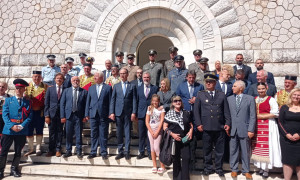
Vidos occupies a central place in the commemorative programme. It is the principal memorial site associated with the Serbian presence in Corfu and is home to the Mausoleum of the Serbian Soldiers.
This year’s commemorations carry particular significance as they mark 110 years since the events of 1916. Following the retreat of the Serbian army and thousands of civilians through Montenegro and Albania, Corfu became a place of refuge, medical care and regrouping. Thousands of exhausted and sick soldiers did not survive, with Vidos and the surrounding waters becoming one of the most powerful sites of Serbian historical memory.
ELENI KORONAKI