From Venice to Corfu: the archive, the Ionian University, and an old relationship seeking to continue
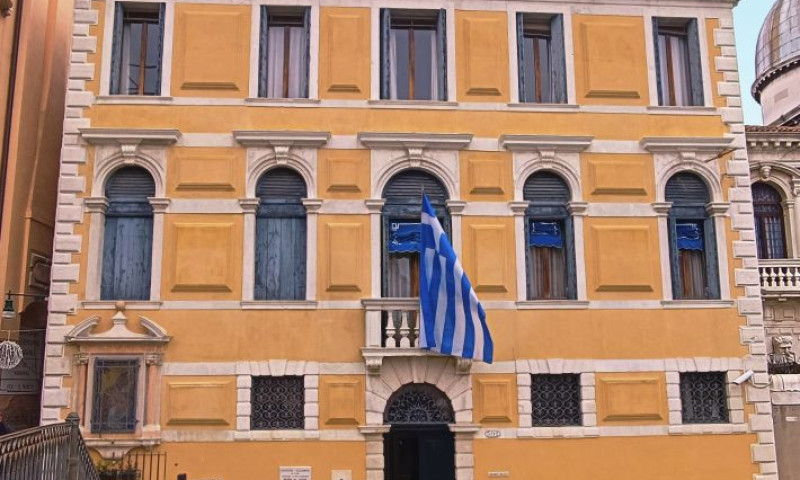 The Corfiot Thomas Flanginis, a wealthy lawyer and merchant in Venice, stipulated in his will in 1644 that a significant portion of his estate be used to establish a higher educational institution for Greek students. The Flanginian School, as it came to be known, began operating in 1665 and was housed in a building owned by the Brotherhood. Hellenic Institute Venice
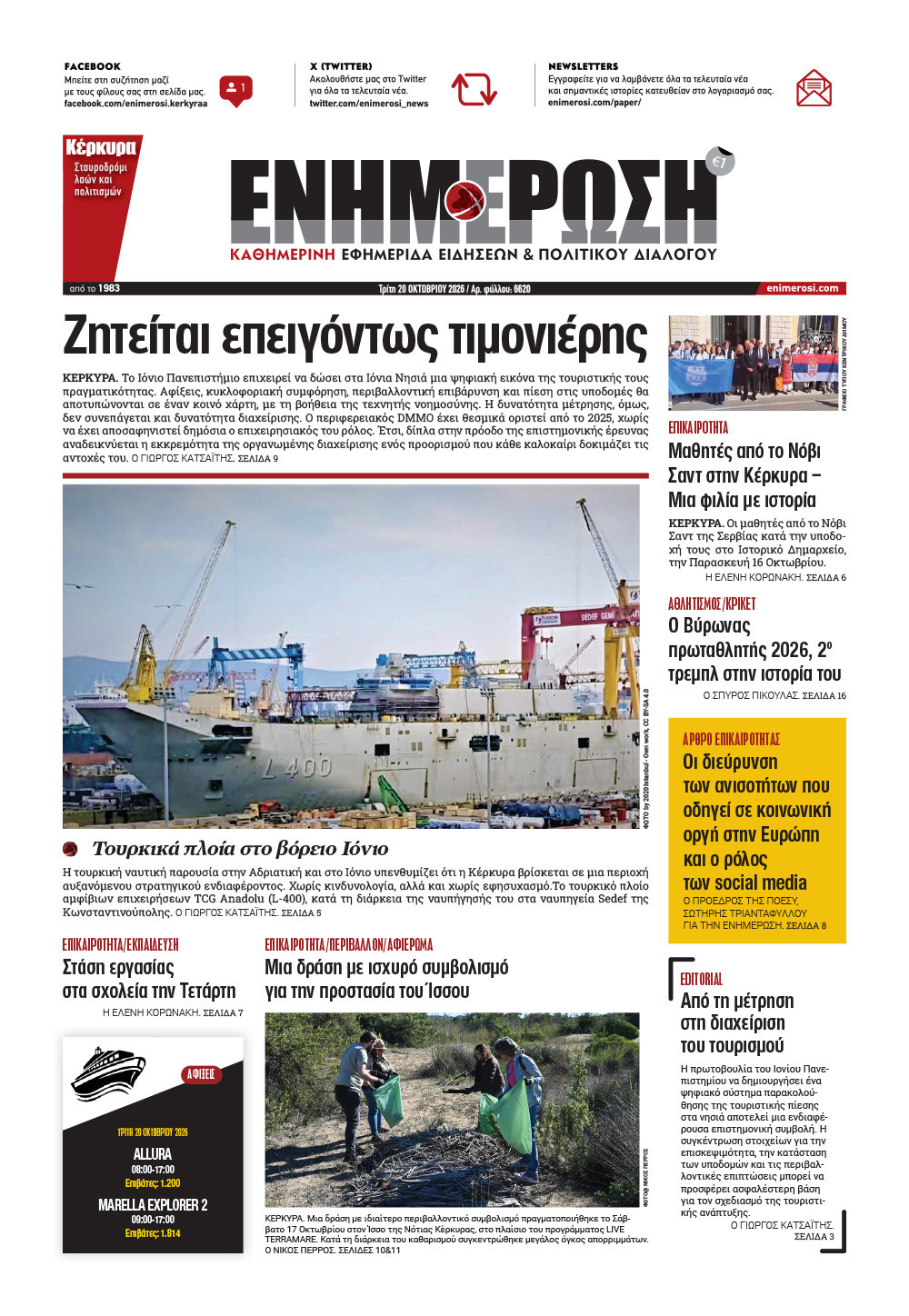
VENICE. The visit of Yiannis Loverdos to Venice for the digitisation of the Greek archive brings back into focus the role of the Ionian University Department of Archival Science and the enduring connection between Corfu and Venice through historical documents.
The participation of Deputy Minister of Foreign Affairs Yiannis Loverdos in the discussion on the “Digital Management of the Archive in Venice” concerns not only a technical digitisation process. It touches on a field in which Corfu—and in particular the Ionian University—has had a long-standing presence through its Department of Archival, Library and Museum Studies, which was founded specifically for the study, organisation, preservation, and utilisation of historical archives and cultural memory.
The Department has at times developed scientific collaborations with archival and cultural institutions in Italy and the broader Venetian sphere, while the research of many of its members has focused on the archives of the Ionian Islands, Venetian administration, and the documents that link the history of the Ionian Islands with Venice. It is no coincidence that a significant portion of the sources for the history of Corfu, local governance, the economy, and even the social structures of the Ionian Islands are found in Venetian archives.
The Corfu–Venice relationship goes beyond a symbolic level. The four-hundred-year Venetian presence in the Ionian Islands left behind a vast body of documents: administrative records, maps, contracts, maritime registers, ecclesiastical documents, and personal collections. The digitisation of these materials is considered crucial not only for historians but also for contemporary cultural policy, as it enables open access and international research.
Within this context, the conference in Venice can also be read as a reminder of an older ambition: for Corfu, through the Ionian University and its specialised departments, to become a hub for the study of the archival heritage of the Venetian and post-Byzantine world. An ambition that has at times been strengthened by international collaborations, but has never acquired a stable institutional form commensurate with its historical significance.
GIORGOS KATSAITIS