1924–2026 Sidney Merlin: 102 years since kumquat arrived in Corfu
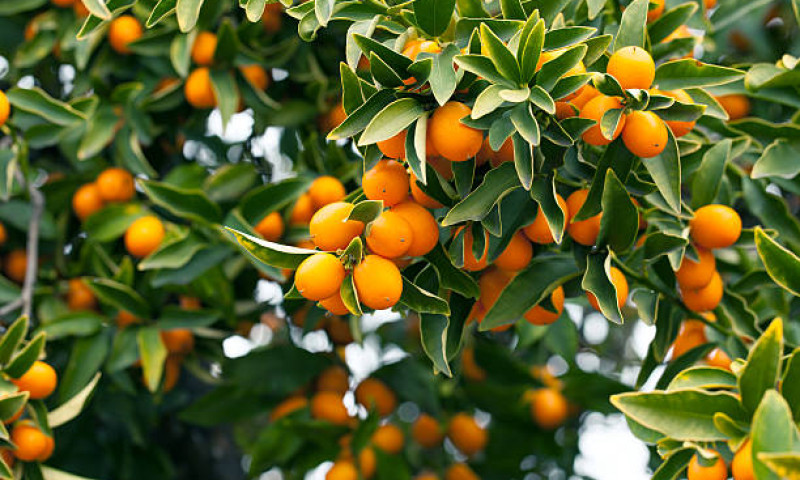
CORFU. A brief look at the history of the Merlin family, which… historically, signed off on the whole affair. The reason for its introduction? A private whim…
To mark 102 years since the arrival of the kumquat in Corfu, here is a brief look at the history of the Merlin family, which… historically, put its stamp on the whole story.
The reason for introducing it? A personal whim. Private. Individual.
It nevertheless became so closely identified with Corfiot culture that it was soon established in the collective consciousness as a trademark of the island. This tiny thing: a small, orange fruit, inscribed in the unwritten guidebook of the Corfiot shop window as “the island’s golden orange”.
Beyond its colour and fragrance, it is laden with layers of a labyrinthine history which, when explored in full, “involves” (or touches upon) revolutions, Robespierres, prime ministers, the Bey of Lamia, Olympic Games, glamorous marriages (and divorces), complicated inheritances and, naturally, pioneering achievements.
Exactly a century ago, in 1924, Sidney Merlin (with… the name to match) introduced Corfiots to the kumquat fruit for the first time.
Charles the "Patriarch"
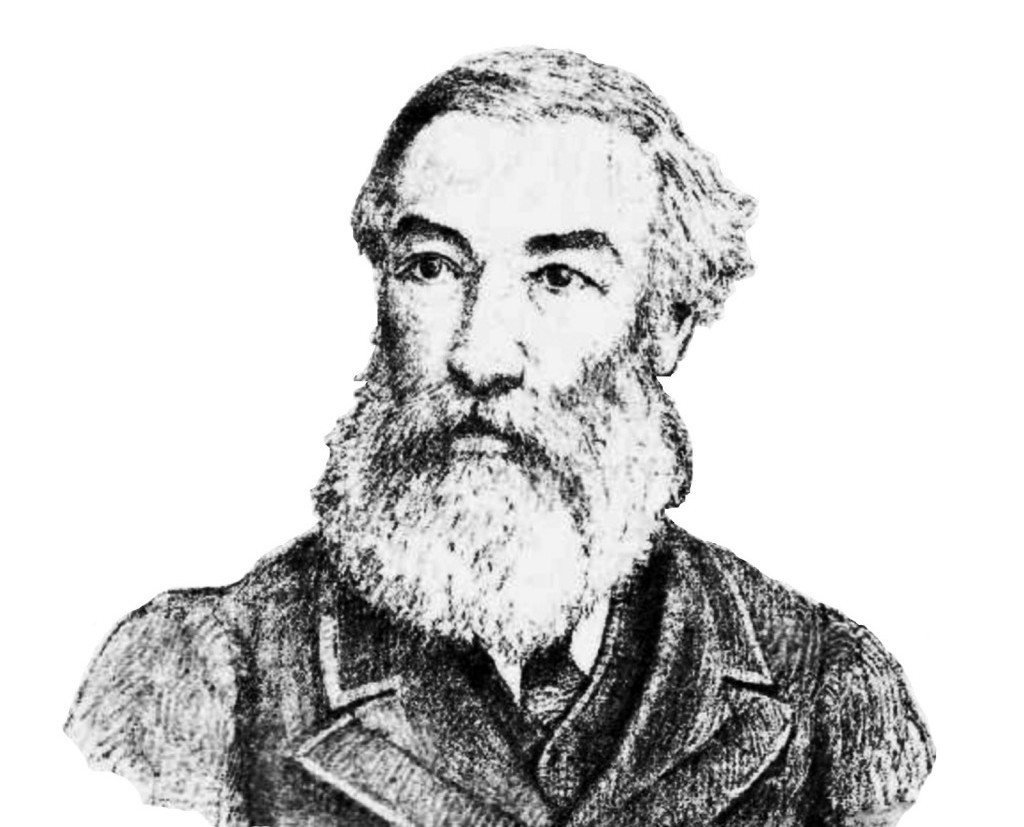
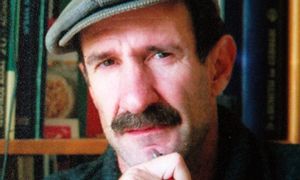
Of French origin, with a role during the years of the Revolution (according to Balomenos¹, the prosecutor and ancestor, Merlin de Douai², had supported the execution of Louis XVI), but, after 1810–14 and the… awkward restoration of the Bourbons, the family settled in Britain and acquired British citizenship (and the “Merlens” became “Merlins”), the family’s… Corfiot history begins with the banker and landowner Charles “of Prior” (Charles Louis William, 1821–1896 / pictured).
Secretary of the British Consulate (Athens, 1839), and later vice-consul (Piraeus–Patras) and agent of the Ionian Bank in Piraeus (1847), in the 1850s he took over as General Manager of the Ionian Bank in Greece. A landmark…
Investing in land
This was how Charles³ first came to Corfu. He was involved with the historic branch of the Ionian Bank (founded in 1840) and with resolving a series of issues (including the renewal of the bank’s right to issue banknotes in the Ionian Islands, among others). It was then, it is said, that he acquired his first tracts of land in Dassia — around 600 stremma, both inland and coastal, with a small stream³.
Investing in land, moreover, became a lifelong practice, particularly in Athens and Piraeus [special info: the area between Vasilissis Sofias Avenue and Kanari Street (Kolonaki, Merlin Street), where the Gestapo was headquartered during the Occupation (headquarters and detention cells) — pictured]. Together with the property brought to the marriage by his wife, Eirini Stournari (see in particular a 30,000-stremma estate at Megali Vrisi in Lamia), he built up an enormous property portfolio.
Sidney the Olympian
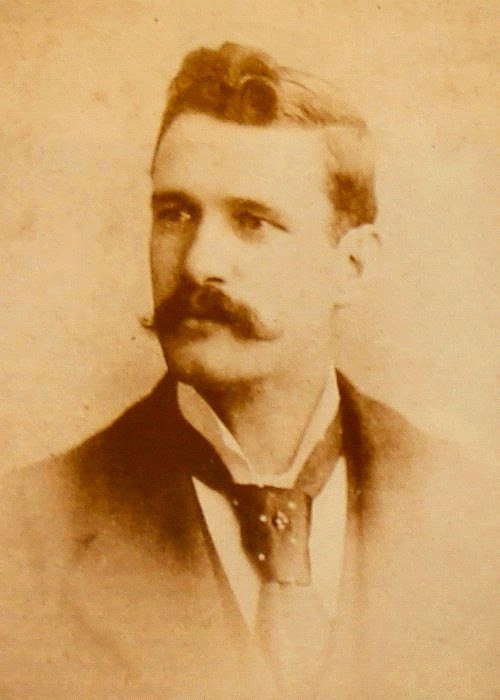
Charles married Irini, the daughter of the Metsovian merchant, landowner and investor Nikolaos Stournaris, in 1871, and they had seven children: Alfred, Edgar, Sidney, Harold, Gerald, Henriette and Ruby. Corfiot interest focuses on the third: Sidney Louis Walter Merlin (1856–1952).
Among other distinctions, he was a prominent shooting athlete [he competed in 2+1 Olympic Games, winning “gold” in Athens in 1896, and “gold” and “bronze” at the 1906 Intercalated Games], as well as a botanist and agronomist. Educated in Germany, he devoted himself to “the creation of new varieties through the cross-breeding of fruit-bearing plants”¹, as well as to introducing varieties that had previously been unknown. Bingo…
The Merlin Estate
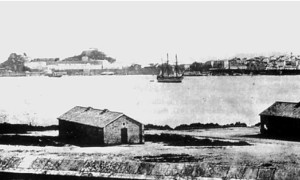
In Corfu’s historical economic landscape, the foundation of the whole enterprise became the seaside Merlin estate, on the southern edge of Dassia / Kato Korakiana. Sidney either expanded it (if we accept the account that Charles had acquired land there at an earlier stage), or purchased it outright (20,000–30,000 stremma in total) around the turn of the 19th and 20th centuries from the renowned Corfiot Theotokis family.
At its heart was the two-storey mansion (with the two levels joined in the northern section), which reached its full splendour in the early 20th century. After Sidney’s death, the estate passed to his children. Gradually, however, because of debts and a series of sales and transfers (AEGEK, Alpha Bank, Piraeus Bank, etc.), it was reduced in size (to approximately 600 stremma) and, to a large extent, abandoned.
The first thought: Lamia
And yet, the first thought (firmly established by 1910) for putting Sidney’s ideas into practice was… Lamia.
Making use of the one-sixth share of the land at Megali Vrisi⁴ that he inherited after 1885 (he drained the marshes and developed what became known as the main “Storks’ Mansion”), by the late 1900s he had acquired the estate in full, purchasing the shares belonging to Alfred, Harold and Gerald (1904–05), as well as those of Ruby and Edgar, which, in the meantime, according to Milesis⁵, had been sold to winemaker Andreas Kampas (1907).
What influenced the initial choice of Lamia? Perhaps the results of some experimental cultivation, perhaps its greater proximity to Athens, which was then the home base of his wife Zaira’s family¹. But…
Zaira's objection
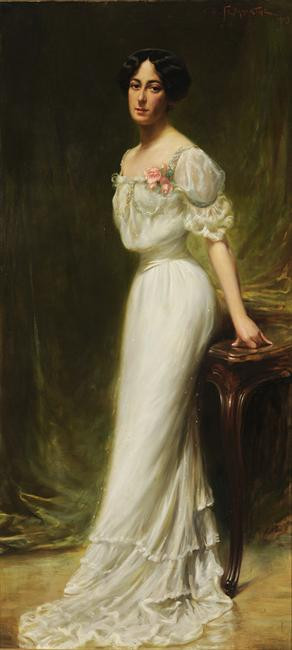
Zaira Theotoky († 1931, pictured)… Daughter of the former Mayor of Corfu and four-time Prime Minister, Georgios (1844–1916), she was a beauty and… a pioneering woman of action (Greece’s first female hunter).
According to Davanellos⁶, she met Sidney “during hunting excursions at the Agia Paraskevi estate and at the Kallithea shooting range”. They married in 1902 and had a daughter, Maria. Sidney’s wish, however, to settle in Lamia was not something she agreed with. What followed? Divorce (1916), and a new marriage (1917), to the future (during the Occupation) Prime Minister Ioannis Rallis (1878–1946), with whom she had two children, Niki and the also-future Prime Minister (1980–81), Georgios Rallis (1918–2006).
Oranges and kumquats
Were there emotional reasons following his separation from Zaira? Or more practical considerations (such as the favourable soil analysis of Corfu¹)? Whatever the case, in 1918 Sidney sold the Lamia estate to landowner Ch. Stergiopoulos and settled on his Corfu estate, where he began to pursue his… agricultural interests.
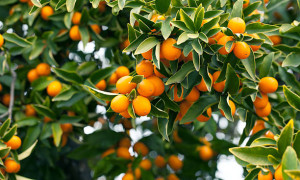
His most important legacy? The introduction (1925) of a previously unknown Californian variety of orange, the Washington Navel: the familiar “Merlin oranges” (pictured), and, a year earlier (1924), the Chinese Kumquat tree (= “golden orange” in the language of the Mandarins⁷), of the Citrus genus / Rutaceae family. Exactly a century ago…
Fortunella Margarita
The Kumquat brought by Merlin was the “Margarita” variety — more precisely, Fortunella Margarita (named in honour of Robert Fortune, who first introduced the citrus fruit to Europe in 1846⁷), or Nagami Kumquat, with its oval-shaped orange fruit (as opposed to the round Marumi or Morgani), more than 4 cm in diameter, and related to the lemon.
The tree of this variety grows to around 4 metres in both height and width. It has been found throughout Southeast Asia (China) since the 12th century and, climatically, can withstand fairly harsh conditions (down to −10°C). Unlike most varieties, it also has a shorter production period: from mid-summer (flowering) until late autumn.
1924
Was this, then, also the first time the Kumquat was introduced to Greece as a whole? If not, the distinction is a very marginal one. Given Kapadochos’⁸ note that there is no reference to the citrus fruit in Greece until 1919, with the first references appearing only in 1924 (the very same year Merlin introduced it to Corfu), from the Agricultural University of Athens (pictured), “where it was studied and introduced into Greece”.
Either way, despite its cultivation — limited or sporadic, at least — in other areas as well (e.g. Arta), over time it would become established as a “Corfiot product”. Officially, since 1994, it has been a Protected Geographical Indication (PGI) product under an EU regulation.
Nymfes & Platonas
The Merlin orange grove was what paved the way for the extensive cultivation of Kumquat on the island. Over the years, this developed with its centre (accounting for more than 80% of total production) in the north, around the plain of Nymfes.
Across an area of 300–400 stremma, with approximately 15,000 trees, in the villages of Nymfes and Platonas, the mild climate and hilly elevation (200 metres), together with the “rich vegetation and running waters”, as well as the “rocky soil, rich in trace elements”, which “resembles the conditions of the tree’s place of origin”⁷, favoured its growth and fruit production.
Recent figures put annual Corfiot Kumquat production at approximately 140 tonnes. Excluding imports…
Sources & References
(1) K. Balomenos, “Sidney Merlin and Zaira Theotoky”, amfictyon.blogspot.com (24/8/2014) • (2) According to the website of the French Embassy in Greece, Charles Merlin was the great-grandson of Merlin de Douai, a member of the National Assembly, Robespierre’s public prosecutor and later a Count of the Empire. • (3) He is also described as a renowned amateur photographer of his time. • (3) Anonymous, “The Merlin Estate in Corfu, the Orange Grove and the Kumquats”, fytoriakentia.gr • (4) The land acquired by the Merlins in Lamia was formerly the estate of Saide Hanoum, wife of the former governor of the city, Halil Bey. • (5) St. Milesis, “The Merlin Family: From Oranges to Submarines”, pireorama.blogspot.com (2/5/2012). • (6) N. Davanellos, “Lamia, the People: 1760–1930”, privately published, Lamia, 2003. • (7) Aik. Tsilimbari, “Quantitative Study of Kumquat Cultivation and Processing in Targeted Areas of Corfu”, Volos, 2022 (diploma thesis, School of Agricultural Sciences, University of Thessaly). • (8) D. Kapadochos, “The Agricultural Wealth of Corfu”, Athens, 2000 (published by the Ministry of Agriculture).
What became of Merlin
RETURNING to Corfu after 1918, Sidney entered into a second marriage, to Katia (Ekaterini) Inglési, daughter of a Greek aristocrat from pre-revolutionary Russia, with whom he had a son and a daughter.
THE INTERWAR PERIOD is described as a peaceful and productive one for the family, “with wealth and travel”¹, along with another emblematic investment, this time in Crete: the Bella Capina mansion, set in the “heart” of an extensive estate.
The couple would retreat there when the Germans invaded Greece in 1941, and even hosted the then King George II, “who, together with the government, took refuge in Crete”⁵.
THE… ADVENTUROUS PART? “On the eve of the German airborne invasion of the island,” Milesis continues, “Sidney and his wife crossed Crete on foot and, on the southern side, were rescued by the British destroyer HMS Napier and landed in Alexandria, Egypt.” This provides yet another fascinating glimpse into the family’s wartime history during the Second World War.
SIDNEY’S NEPHEW, it is said — the son of his brother Gerald — Nikolaos Merlin, was serving at the time as executive officer (second-in-command) aboard the Greek submarine Glafkos. However, “his love of submarines” led him to sail aboard the state-of-the-art British submarine HMS Perseus.
Fate, however, intervened. On 6 December 1941 (*), the Perseus struck a mine off Kefalonia, resulting in the deaths of 59 officers and sailors — 58 of them, along with Merlin. The sole survivor was John Capes, who… was washed ashore on the island.
IN MEMORY of Lieutenant Nikolaos Merlin, after the war the Hellenic Navy named a landing ship after him. A tragic irony? It too sank — in 1972, taking 44 men to their deaths.
(*) She had sailed from Malta on 24 November, bound for the Gulf of Taranto, the Adriatic and Ionian Seas as part of an offensive patrol, with Alexandria, Egypt, as her return destination.
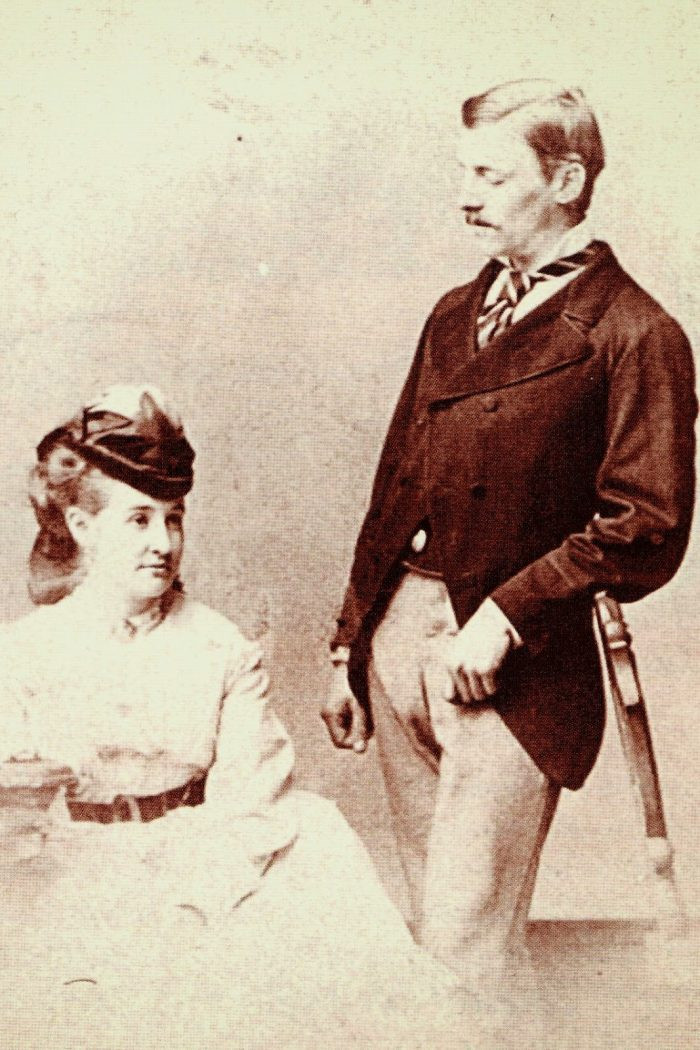
Sidney Merlin with his second wife, Katia
Photos: istockphoto.com, wikipedia, amfictyon.blogspot.com
ELIAS ALEXOPOULOS

1789655437.jpg?crop=300,180)