From Waste to Sustainability: The message of the Corfu Food & Wine Festival
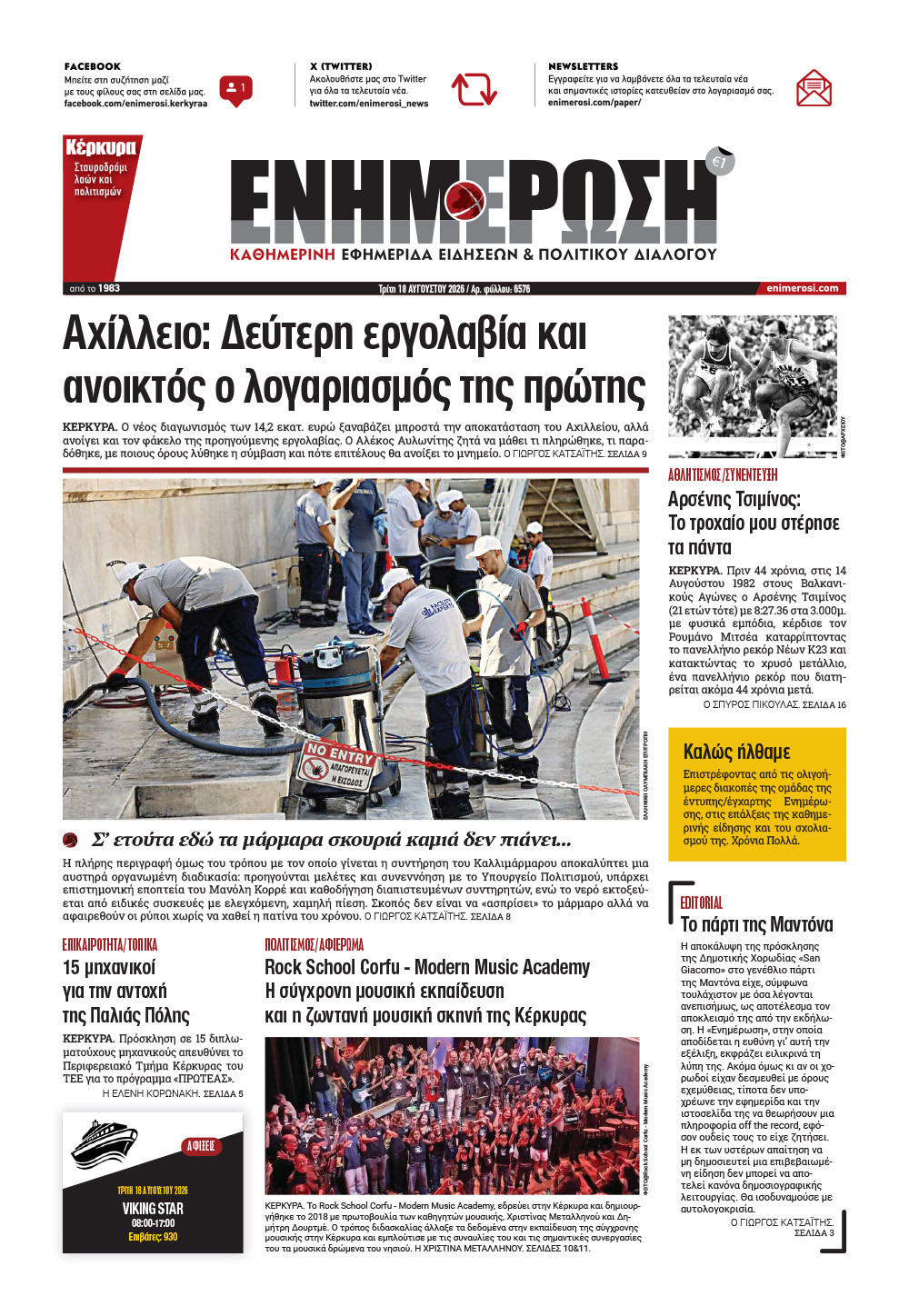
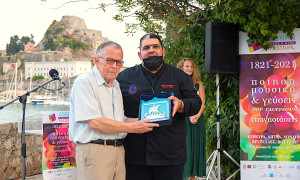
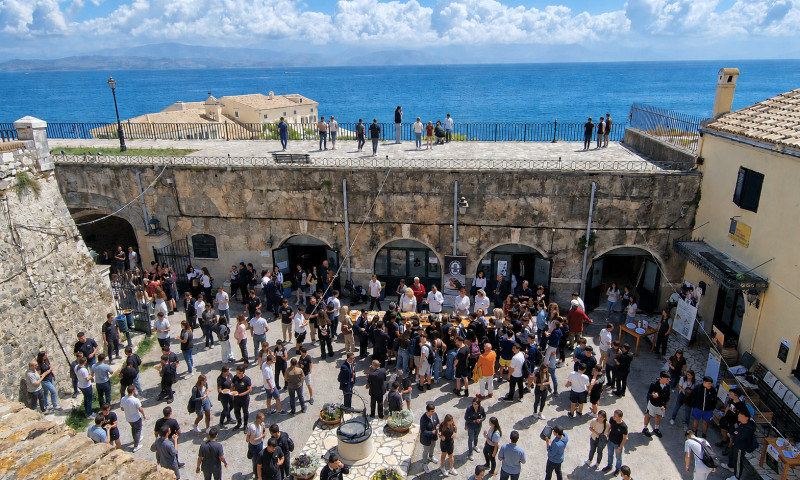 Photo: Corfu Food & Wine Festival
CORFU. The circular economy, the reduction of food waste, and sustainability were at the heart of an open interactive event held as part of the 8th Corfu Food & Wine Festival at Faliraki, where pupils, families, and visitors experienced firsthand how the everyday management of food can be connected to respect for the environment and local production.
The 8th Corfu Food & Wine Festival continues its journey in 2026 through three thematic pillars — Hearth, Cycle, and Roots — highlighting gastronomy as an experience of culture, sustainability, memory, and human connection.
As part of the “Cycle” thematic section, an open interactive event dedicated to the circular economy, sustainable food management, and the reduction of food waste took place on Friday, May 15, at the Scout Hall at Faliraki.
The initiative was organised by the Corfu Food & Wine Festival in collaboration with the Municipality of Central Corfu and Diapontia Islands, within the framework of the European Interreg IPA ADRION project CIRCUS, and was aimed primarily at pupils, children, and families in Corfu.
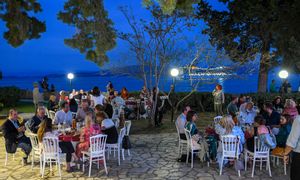
Participation was particularly high, with pupils, local residents, and foreign visitors attending presentations, taking part in hands-on activities, and discovering in practice how food, nature, and everyday habits can be connected to sustainability and respect for the environment, while also enjoying local Corfiot products and flavours.
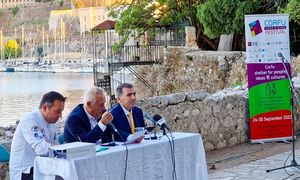
The event opened with a greeting from the Deputy Mayor for European Programmes and Culture, Nikos Vradis, who referred to the economic importance of recycling, waste reduction, and the environmental footprint created by daily choices. The topic was further developed by Environmental Studies professor Iosif Bondetsagias, who presented the basic principles of the circular economy in a simple and accessible way.
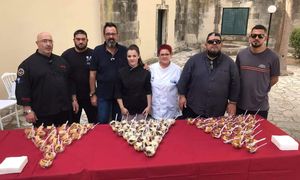
Next, the president of the Corfu Chefs’ Club, Chef Spyros Voulismas, demonstrated to the children the creative use of food through the preparation of jam and chutney made from fruits and vegetables that often end up as waste, showing that even leftovers can acquire new value.
A presentation was also given by Dimitris Fanariotis, representative of Bio7Nisa, who focused on the principles of regenerative agriculture and the initiatives implemented by the non-profit organisation in the KOISPE garden. He presented practical methods of coffee recycling and the reuse of organic materials aimed at improving soil health and promoting sustainable cultivation.
The series of presentations concluded with Professor of Informatics at the Ionian University and scientific coordinator of the CIRCUS project, Iosif Polenakis, who presented the goals of the programme and emphasised the importance of collaboration, education, and innovation in the transition toward more sustainable models of living and production.
Composting demonstrations were held in the outdoor areas of the Scout Hall, giving pupils the opportunity to learn how organic waste returns to the earth as natural fertiliser.
A special highlight was the participation of olive oil producer Spyros Dafnis from the olive oil company The Governor, who spoke about the history of the olive tree and presented circular economy practices in olive cultivation, explaining how production by-products can be reused in the olive grove.
The Ionian Islands Region Agri-Food Partnership participated with informative and interactive activities centered on the principles of Reduce, Reuse, Recycle, as well as with a special educational game for junior high school pupils focusing on the reduction of food waste.
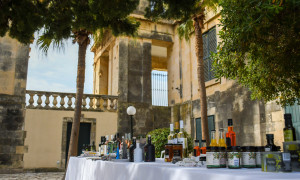
Attendees tasted the jams and chutneys prepared on site, along with products from Lazaris Distillery & Artisan Sweets, while also discovering the extra virgin olive oil of The Governor through an experience that connected gastronomy with local tradition, quality, and sustainable production.
The message of the day was clear: food waste is not only an economic issue, but also a major environmental challenge, especially for island regions such as the Ionian Islands. And change can begin with even the smallest everyday choices.
ELENI KORONAKI