Easter in Corfu: Traditions in town and countryside
Easter of the Phaeacians: Old and modern, well-known and lesser-known customs of Corfiot Easter
Hey, you… you who are reading these lines. Local or traveller… if no one has told you, know this: you are a fortunate person… to be here… ready to see. To hear. To feel it… the festival of the senses.
The sacred, the unexpected. This… the passionate, the luminous. The worthy. The refined, the otherworldly and unforeseen… the scents of Easter… the Virgin Mary’s lament… the first deep note from the cold brass… the release at the tolling of eleven… the light… more light… all the way to the miracle…
And when the days are over and you return to your own place, you will have something to say: “Somewhere… once, in a blessed land, wrapped in sunlight and beauty, God granted even me… just once, at least once, to live it. Easter… the Easter of the Phaeacians.”
With its own timeless customs. Some aspects did not survive the passage of time. Others did. Some emerged along the way. Are they all well known? No. In any case, aside from those mentioned elsewhere (katóli, tachysfagí, etc.), the tapestry of Corfiot Easter customs has always had its own distinct character. EN has captured it.
Lazarus Carols
As part of an age-old custom connected to the rebirth of nature… on Lazarus Saturday, someone dressed in a red shirt, with ribbons, and carrying a pole adorned with tied scarves, dolls, amulets, etc. (and at the top, a carved figure of ‘Lazarus’) would go from house to house, singing the ‘carols’ (from ancient agermoi, later Byzantine painenata), accompanied by two musicians. The householders would ‘buy’ a small token or amulet, offering a coin or a treat in return.
In Episkopi, these were sung in the evening (“Good evening to you, a fine night to you, Lazarus has come with the palms…”).
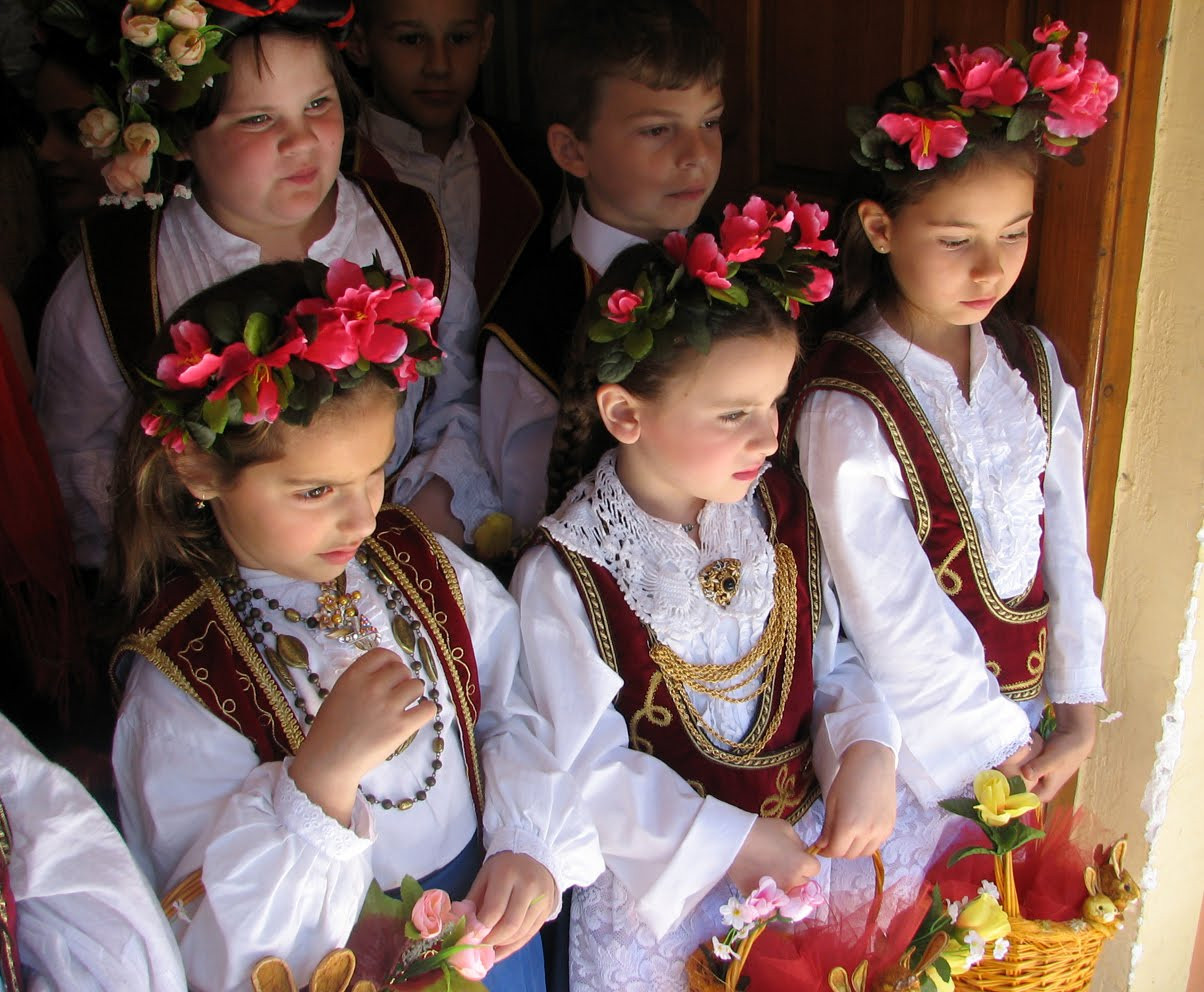
Later on, children appeared as carol-singers (the girls known as “Lazarines”), carrying little baskets and decorated with branches and flowers (a revival can be seen in Agios Mattheos and in the town).
Mastella
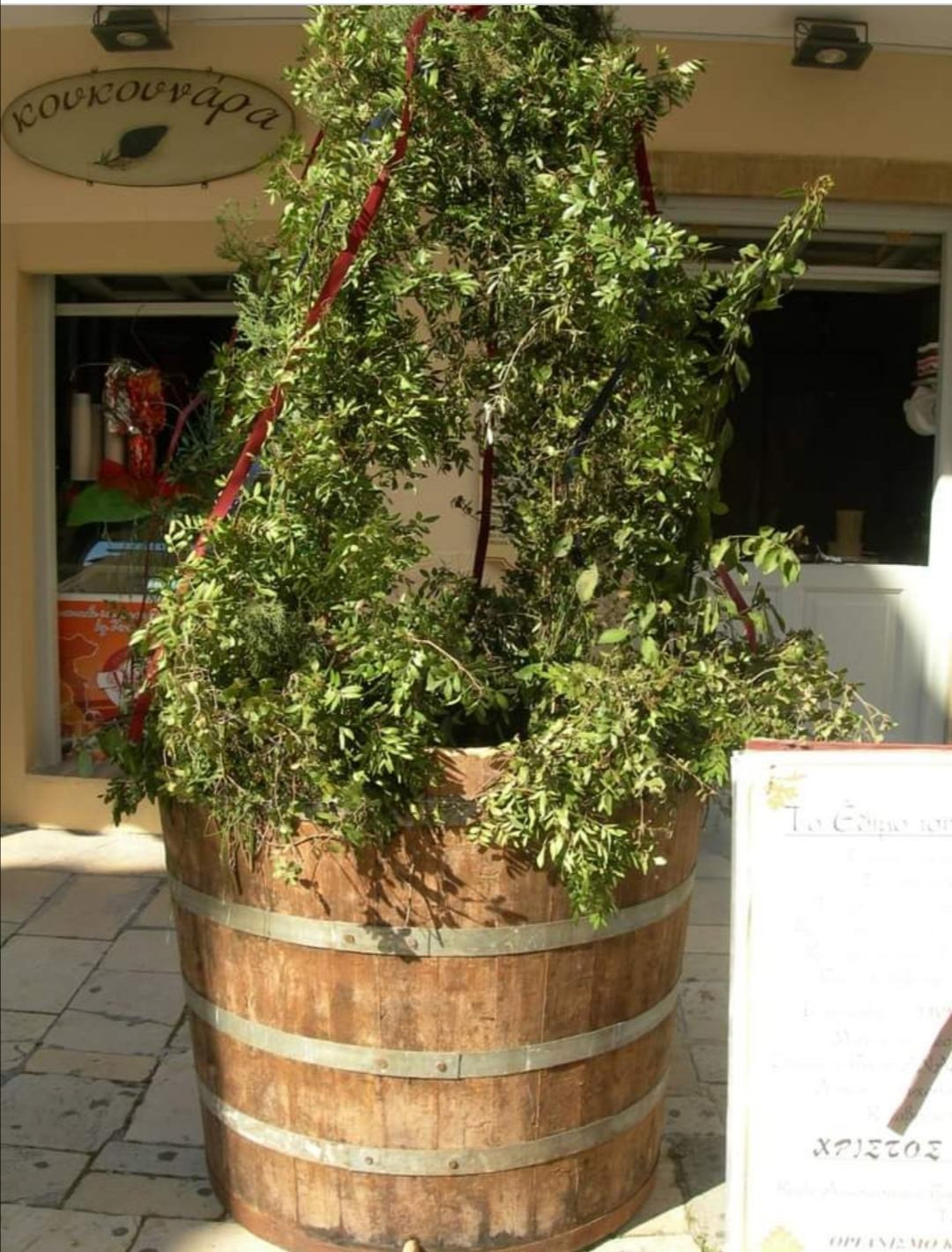
The custom of the piniatores (porters) of Pínia. A wooden barrel, decorated with myrtle and laurel and filled halfway with water (symbolically linked to Jesus’ journey to Jerusalem / the Raising of Lazarus), into which—after the First Resurrection (Easter Saturday)—the old dockworkers would throw some passerby (in recent years, one person falls in—‘Spyros’). He would splash the crowd and collect the coins that people threw in ‘for good luck’ throughout Holy Week.
The water is, in one interpretation, associated with Pontius Pilate’s ‘washing his hands’—related also to the note by Clement that, on that morning, women and children would wash themselves only after the First Resurrection (in earlier times, in the sea), remaining un-dried for the rest of the day.
The Sacred Washing of the Feet
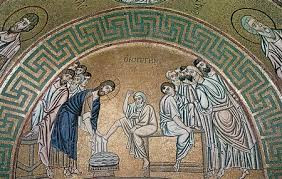
During the Venetian rule in Corfu, the ceremony of the Holy Foot Washing (of Byzantine origin)—a reenactment of Jesus washing the disciples’ feet—is also attested as a distinct part of the service performed by the Orthodox clergy.
Tip: it included elements of a ‘theatrical performance,’ taking place in the ‘centre of the market’ (opposite Annunziata), in the presence of the Venetian authorities (as noted by Nikiforos).
Participants included the Grand Protopapas (head priest, in the role of Jesus), the Sacred Pentad / Holy Order (Sakellarios, Archimandrite, etc.), and—completing the number of twelve (disciples)—other members of the Order or priests outside it. (In the Latin custom, the disciples were portrayed by the poor, who were then given alms.)
A common ‘thorn’? The role of Judas—because the people… identified them with him!
Trizonia (Crickets)
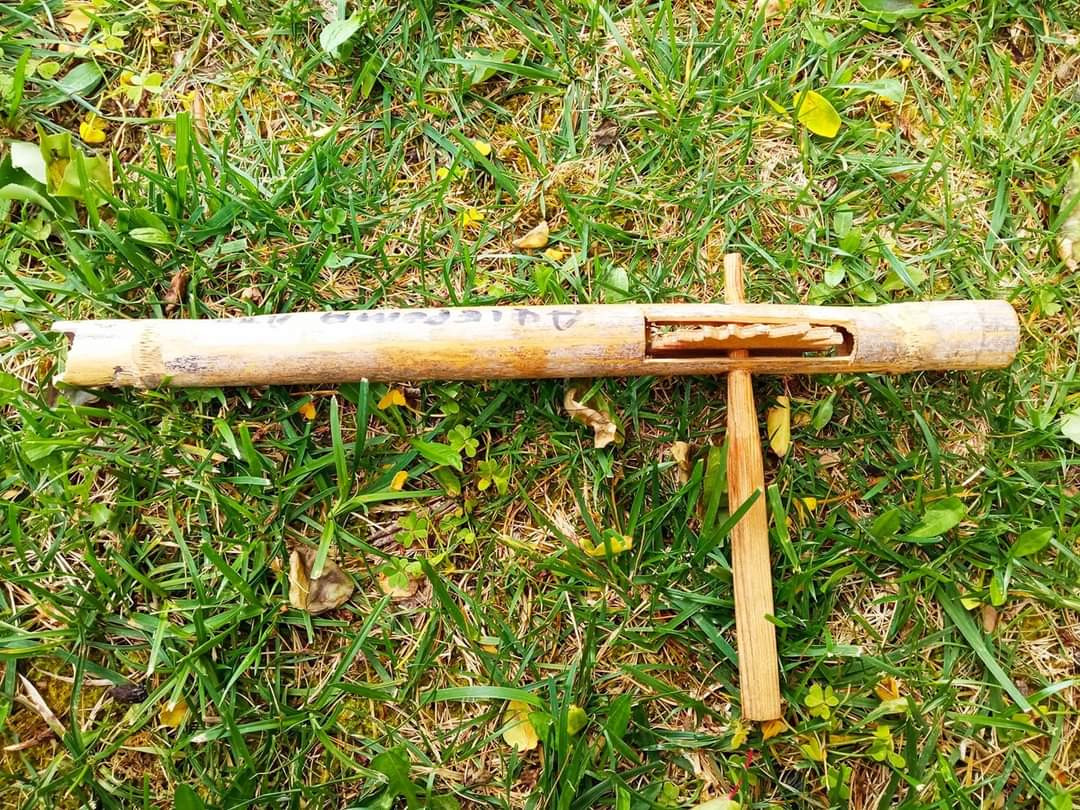
Or, alternatively, the ‘rokánes'. On the afternoon of Holy Thursday, at Agioi Deka… Always accompanied by the underlying, traditional symbolic meaning of noise as a purifying force against evil, according to one (unconfirmed) version, the custom was established in the 18th century (Venetian rule), when the -religiously dominant- Catholics ‘widowed’ the (Orthodox) bells.
Thus, it is said, village children, holding wooden, improvised rattles in their hands, would stand in the hollow of the locally well-known Skafidouli rock (which once bore a painted icon of the Mother and Child by Alexandros ‘Fragoulis’ Savvatis) and, chanting together “Ai geneai pasai”, took on the task of ‘waking’ the Orthodox locals, urging them to go to church.
Gaitani (Maypole)
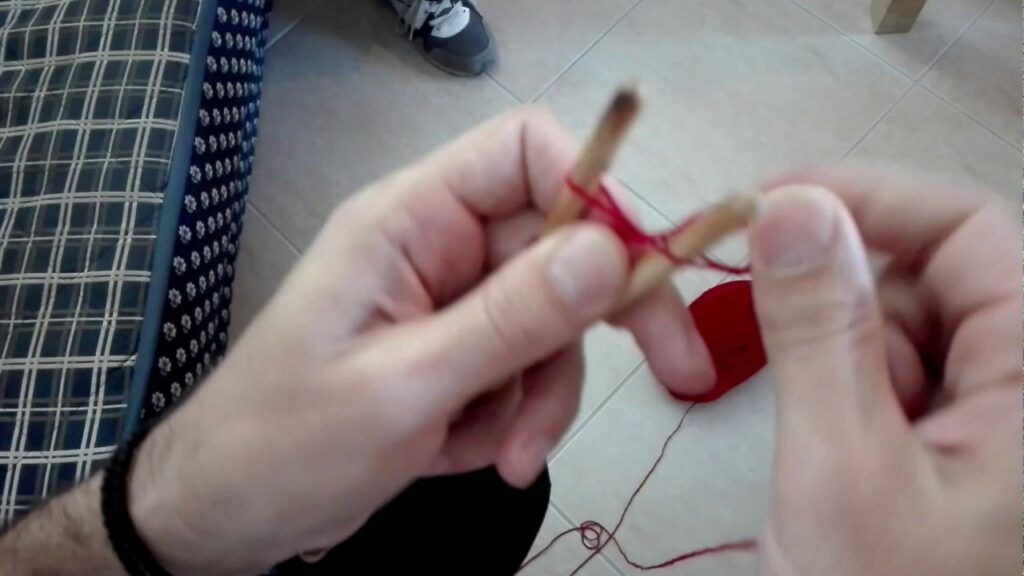
On Holy Thursday evening, during the slow, patient reading of the Gospels, seated in the pews, the women in the villages would weave the gaitáni with a cord-needle and threads: for each Gospel (when it was heard, they paused), they tied a knot—twelve in total. Creating it inside the church at this day and hour was considered therapeutic and protective: guarding against illness, the evil eye, and the like.
The (single) gaitáni made with black thread was then worn on the wrist of infants and children, ‘so that the accursed “shadow” would not weigh on them’—a belief linked to the pnigalion, an ancient malevolent spirit, thought to sit on the chest and throat of little ones during sleep, to suffocate them. Superstitions…
Shirt
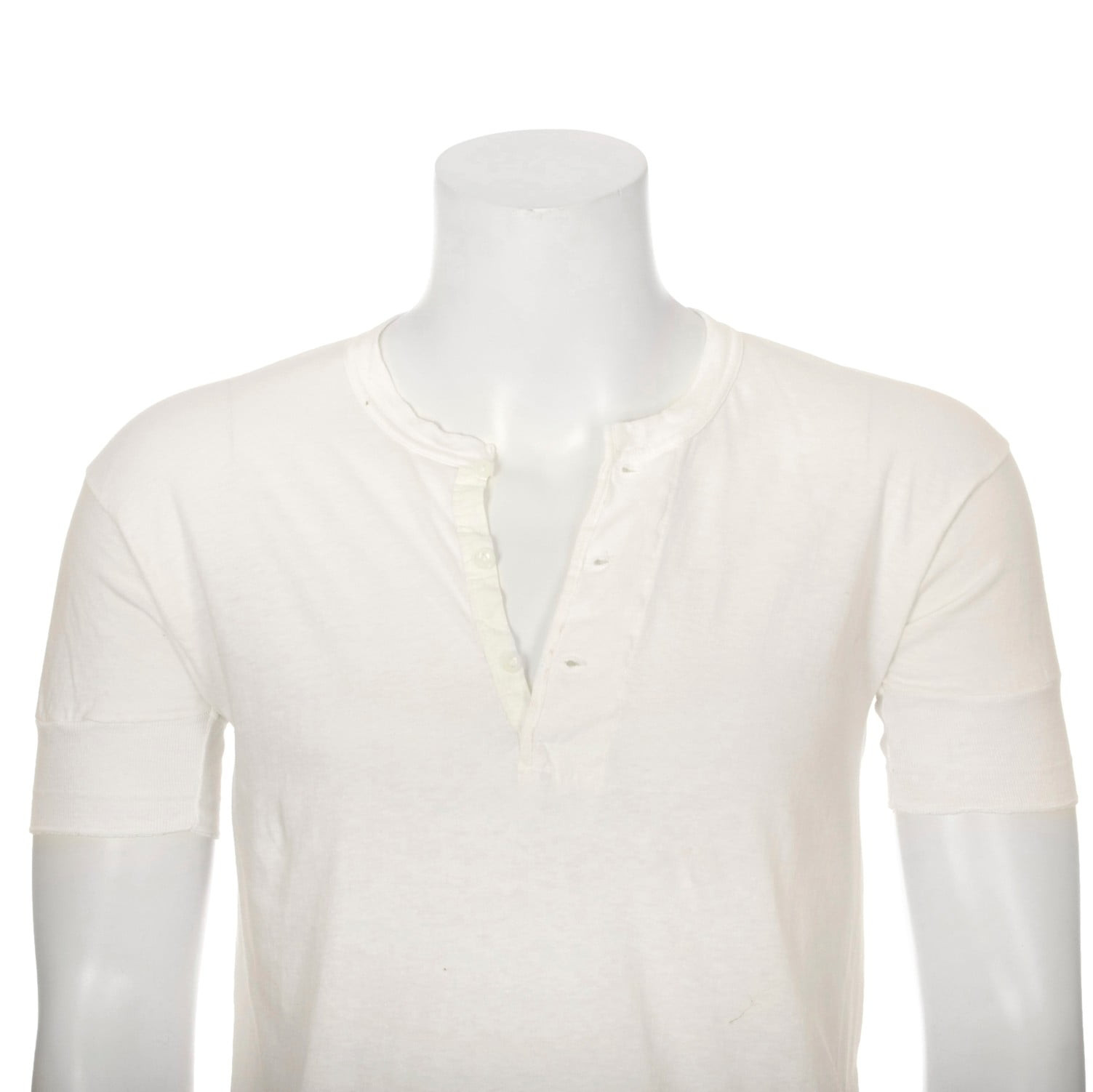
A passage, via Chutéri, from A. Arnault (‘Memoirs of a Sixty-Year-Old’), advisor to General A. Gentili, during the French Republican period (1797–’99)… He writes that on the evening of Holy Thursday, girls named ‘Maria’ (always an odd number) would gather in the neighbourhoods, and as soon as the bell of the church of the Saint struck midnight, they would begin cutting, sewing, washing, drying, and ironing a man’s shirt. By dawn (Good Friday) it had to be ready.
The shirt was then given as a gift by the girl leading the gathering to her beloved, because, it was said, this magical shirt made him brave and invulnerable ‘to bullet and blade.’ The origins of the custom remain unknown…
'Bobolia'
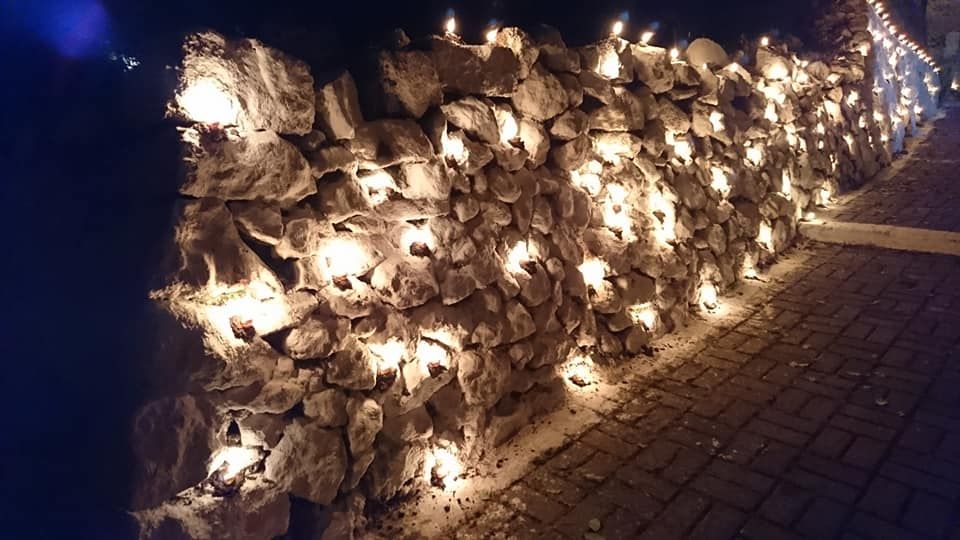
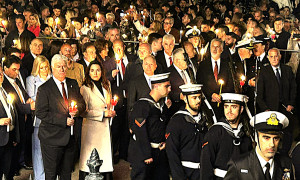
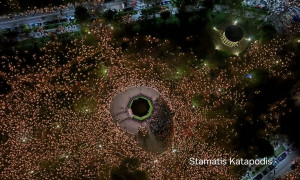
Good Friday, Varypatádes… Along the route of the Epitaphios in Agios Stefanos village, the locals place hundreds of (abandoned or emptied) snail shells—plentiful in the countryside during the ‘fresh’ spring—which they have previously collected, washed, and hollowed out to make small oil lamps, filled with oil and cotton (wicks). The result is a unique, moving spectacle, which has seen a noticeable revival in recent years.
Note: the word bóbolos (Corfiot for snail) derives from ancient Greek molgos (a bag or sack made of treated leather, carried on the back) → Venetian Italian bolgia → bolgos → bolos (also bógos) → bóbolos (plural bóboloi or bóbolia).
Dawn earthquake
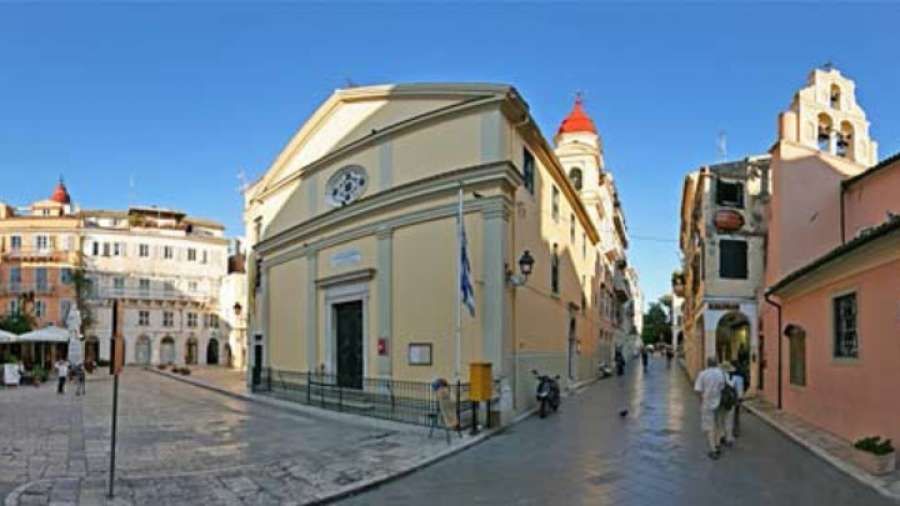
The earthquake described in the Scriptures at the Holy Sepulchre during the Resurrection is reenacted, with artificial noise created by hand and foot, shaking of icons, oil lamps, and pews (see also at Agios Iakovos, Paxos / Fontana).
Additionally, in the countryside, during the morning Resurrection service, at the words ‘Lift up your gates… the King of Glory shall come’ (Psalm 24 of David), the sexton calls from inside, ‘I will not open’ or ‘Who is the King of Glory?’ The priest, outside the church, kicks the door, and the sexton, chanting ‘Enter into the joy of the Lord’, opens the gates so that the congregation may enter in a festive procession.
Fireworks
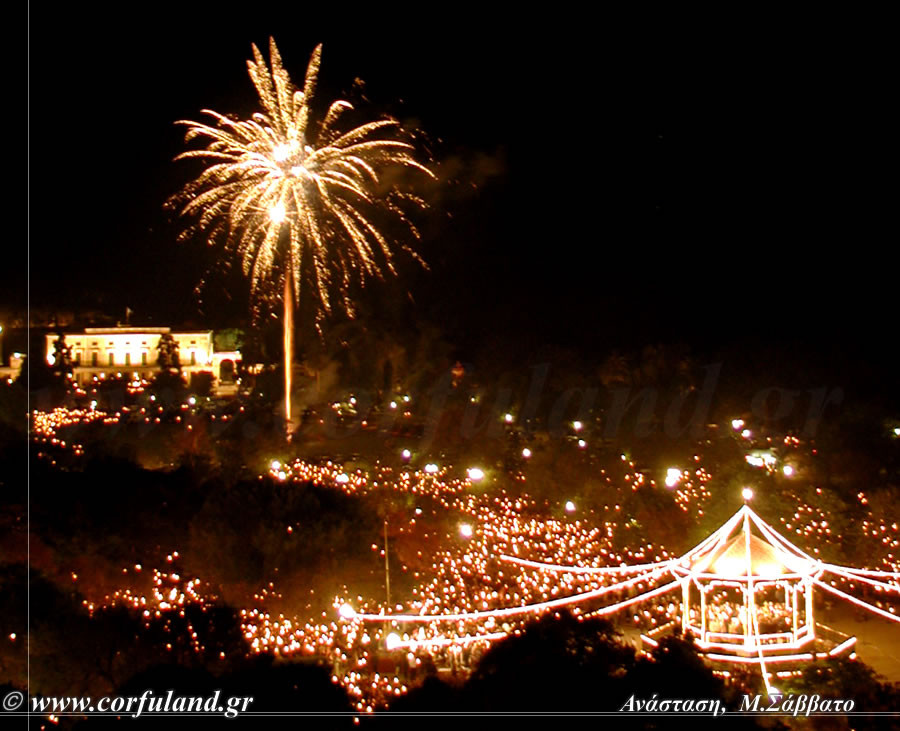
Upper Square, midnight on Easter Saturday, ‘Christ is Risen’—and…the spectacular display of fireworks! This is an evolution, since the 17th century, of the well-known use of explosive devices and fireworks during religious public ceremonies; a 1725 record mentions ‘fires with gunpowder.’
Added to this were the ‘maskoula’ of the countryside—metal tubes filled with gunpowder, into the mouth of which a corn cob (koutsouna) was inserted, which would explode with a loud bang when ignited. Here too, the idea of purifying evil through noise is clear.
Additionally, informally, until the early 20th century, there was the practice of firing shots as a ‘barbarous custom of chasing dogs,’ particularly in Portaríala…
'Tameni'
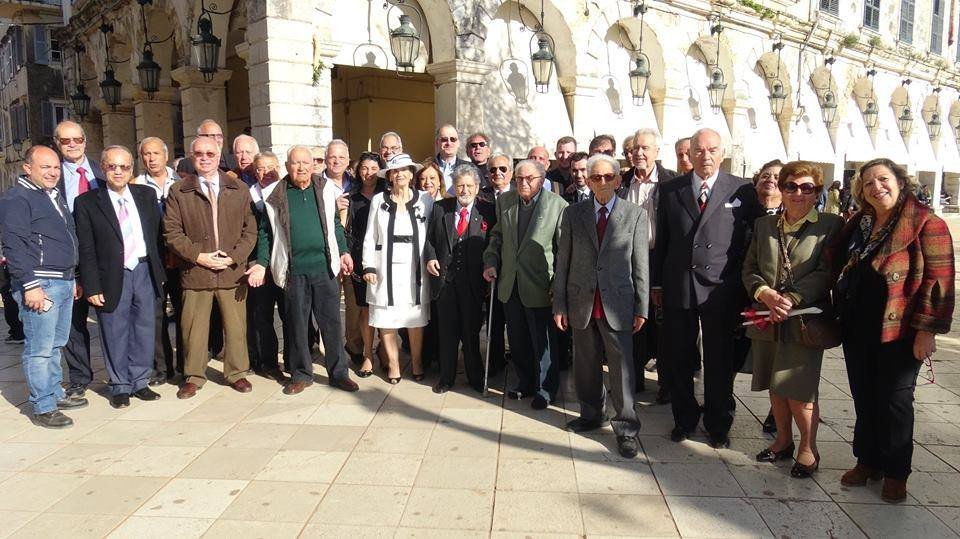
Photo: Enimerosi archive
Their old meeting place was ‘Zisimos’. Later, further to the right—the three-way intersection of the Listón. Sunday mornings, everyone would be present at the town’s Resurrection processions, back when the clamour of the ‘cosmopolitan’ Easter had died down and it was finally time for the Easter of… the Corfiots. Locals or Corfiots from abroad, ‘anonymous’ or ‘well-known’ (see the composer G. Katsaros), their gatherings over the years became an informal custom, eventually cemented into tradition. Like a ‘vow to the Saint.’ Hence, ‘the Tameni’ (‘the Vowed’). In recent years, they have become an official association, with a board of directors, carrying their extra characteristic: ‘our Corfiot cheerfulness, the practice of Corfiot humour and jokes, and genuine personal connection…’
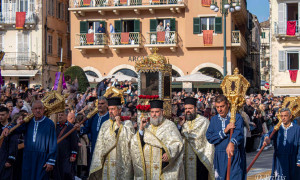
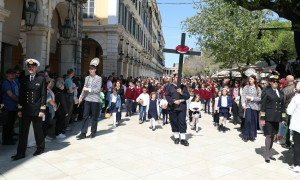
A dominant feature of their… programme are the solemn marches of the Philharmonic Bands during the Epitaphio processions (Good Friday – Easter Saturday). The 'Old' Philharmonic Society is inseparably linked to Albinoni’s Adagio (1671–1751) and Faccio’s Amleto (1840–1891). Additionally, in the last three years, the composition by its current chief conductor, Spyros Prosoparis, Eis Adou Kathodos (‘Descent into Hades’).
The Mantzáros band, with the classic Marcia Funebre (G. Verdi, 1813–1901), Calde Lacrimae (Ch. De Michelis), and Basileio tou Ploutona (D. Andronis, 1866–1918), plus newer works (2016 onwards) such as La Madruga (A. Moreno Gomez, 1944) and Aranjuez (J. Rodrigo, 1901–1999).
The Capodístrias band, with Sventura (G. Mariani, 1840–1904), Elegia Funebre (G. Perouli, 1921–2001), and To Peprōméno (‘Destiny’) (M. Michalopoulos).
Smashing of the pots (Botides)
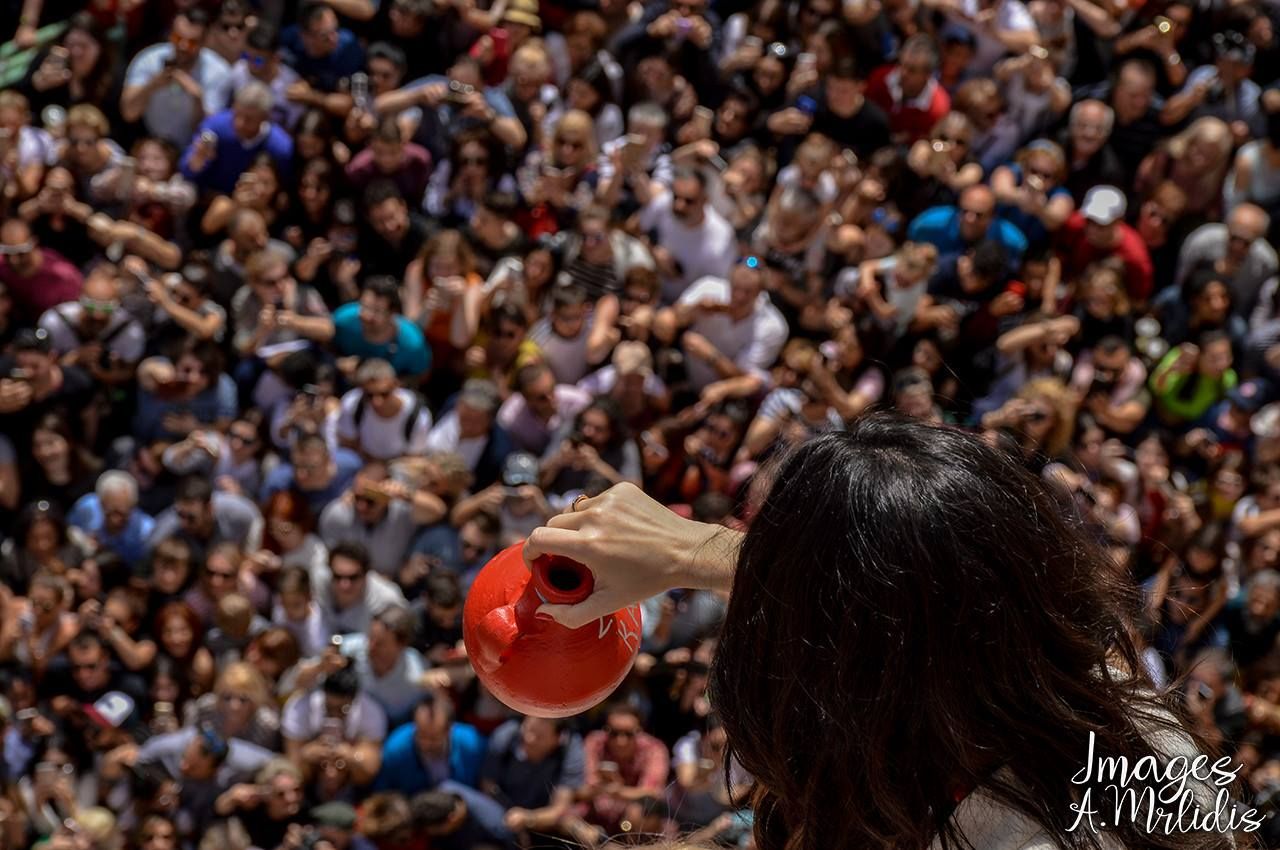
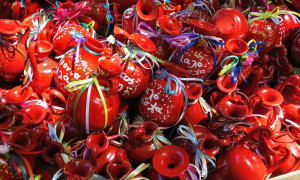
The most iconic, and certainly most ‘touristy,’ aspect of Corfu Easter is the custom of the bótides—smashing the pots—celebrated after the First Resurrection. At its heart lies the idea of using noise to drive away evil spirits and welcome the renewal of life. Its origins are ancient and layered: part of it comes from the old funerary practice of breaking clay vessels when a body left the home, part from pagan rites of throwing out old jugs at the start of the vegetative season. Over the centuries, the custom passed through Byzantium, Roman influence, and the West, eventually merging with the Venetian tradition of tossing out old belongings at New Year to make way for the new.
When this practice was integrated into the Orthodox Easter ritual, it found a textual echo in the Psalms and the liturgical Great Hours: “Shepherd them with an iron rod, break them as a potter would break vessels…”
On the night of the First Resurrection, the custom was—and remains—spectacular, sometimes frightening, and occasionally risky (1). Historical accounts speak of children terrified by sudden shouts, or accidents where someone suffered a cracked skull. Authorities often intervened, issuing prohibitions: “notification by trumpet… throwing of objects is forbidden.”
Yet beyond the thrill and the noise lies a rich layer of symbolism: the smashing of pots from windows was said to mock Judas Iscariot (2) and symbolically re-enact the stoning of the Jews. In earlier times, the tradition even had a punitive edge: the Jewish quarter could be barred from the streets, particularly on Good Friday and Holy Saturday, because Christian street children felt it their duty to ‘return the blow’ that Jesus had received in the High Priest’s courtyard. (3)
ILIAS ALEXOPOULOS
References:
(1) P. Samartzis, Daily News, ELIA, 2000
(2) G. Siettos, Customs during the Festivals, Piraeus, 1975
(3) N.D. Mamalos, The Brotherhood of the Bótiades, newspaper Enimerosi, 27/4/2019
Credits (main photo): Alexandros Melidis
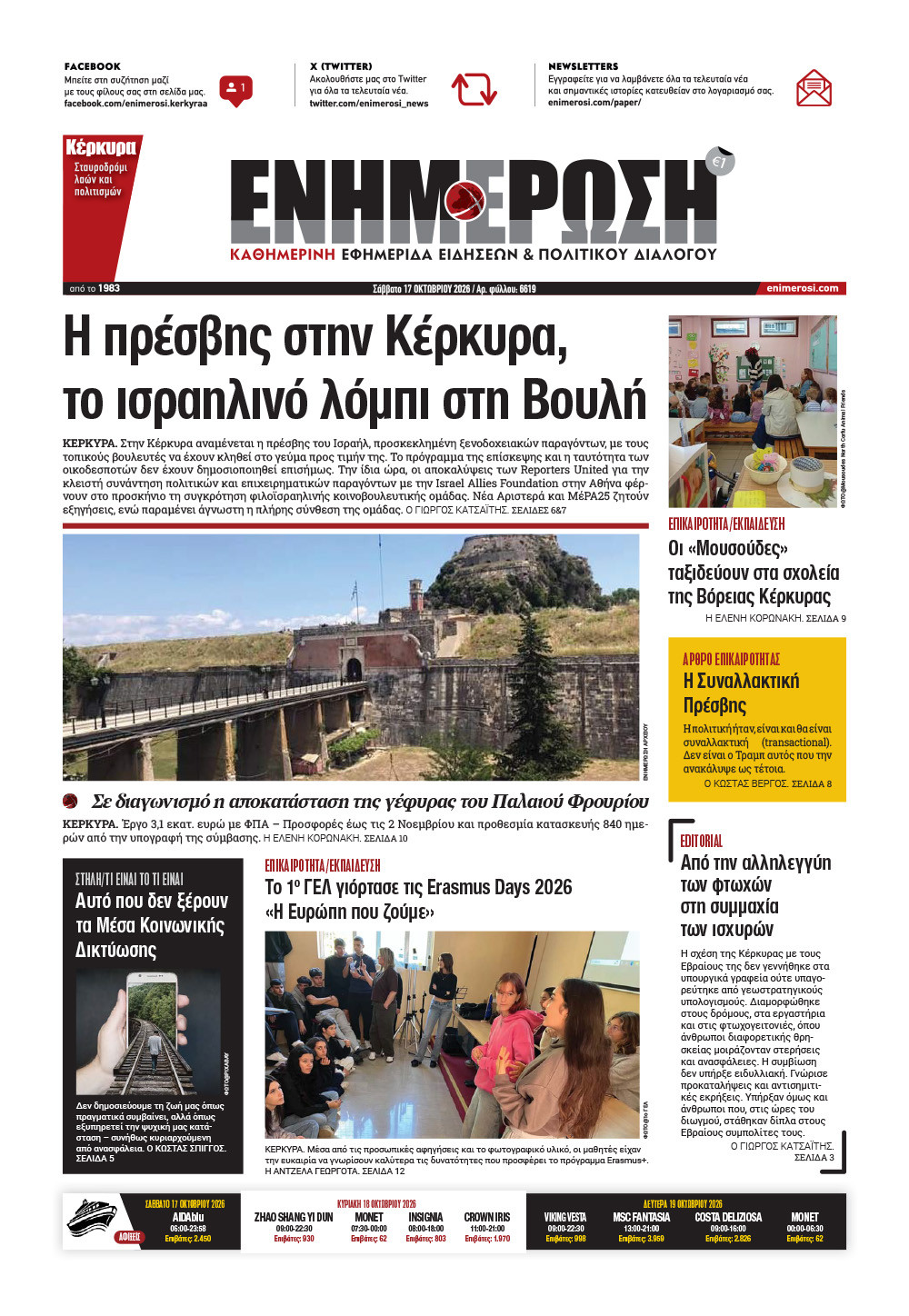
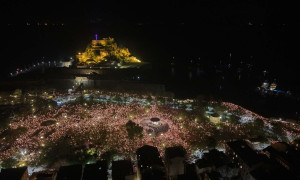
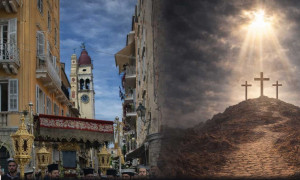
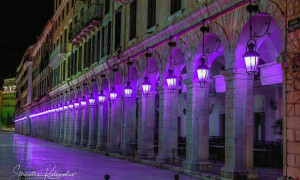
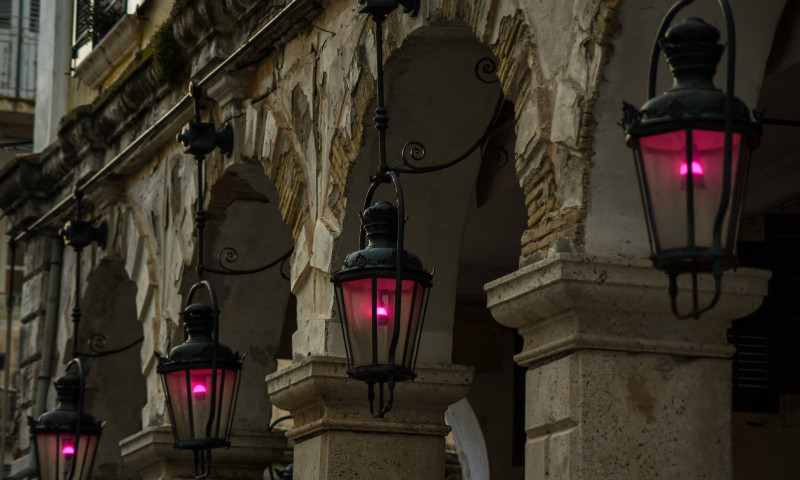
Iconic image of the days, aside from the Cross atop the Old Fortress, the towns illuminated purple lanterns. Particularly those along the Listón…
EN THE MAGAZINE
Rizospaston Voulevton 9–11, on the pedestrian street I. Polylas
Tel.: 26610 46363
Email: infoioniowdeiogr - filoi.ionioyahoogr
Office Hours: Weekdays 14:30 – 20:30, Saturday 10:00 – 14:00
Happy Easter! May the Holy Light bring love and hope to all our hearts!

Main agencies
Ionian Seaways – Ionian Cruises
Ethn. Antistaseos 4, New Port
Tel: 26610 38690 – 31649 – 25155 - Fax: 26610 38787 – 26555
Saranda Port, Albania
Terini Travel Agency – Ionian Seaways
Lagjia Nr. 4, Rruga Mitat Hoxha, Prane Portit - Mobile +(355) 692664264
Terini Travel Agency – Ionian Seaways
Lagjia Nr. 4, Rruga Mitat Hoxha Prane Portit - Tel: +(355) 852 26712
Mobile +(355) 692869523
May this year’s Easter find us with more smiles, health, and happiness. Happy Easter!