The price of modernisation: From 1830s Greece to the Albania of Zvërnec
 Facebook
Prompted by Jared Kushner’s €4 billion investment in the Albanian coast and the widespread backlash it has sparked, Richard Pine examines the enduring dilemma of modernisation. He argues that the real story is not so much about Albania as it is about the price Greece has paid—and continues to pay—in its effort to integrate into the Western economic and political reality, often at the expense of its productive base, cultural identity, and social cohesion.
Ever since the "London protocol" of 1830 – signed by Britain, France and Russia – which designated Greece as a sovereign, independent nation, the impetus has been twofold: modernisation, to bring the comparatively backward, rural state into the liberal, democratic ambience of the West; and territorial enlargement, from the original small land-base, to embrace as many ethnic Greeks as possible.
The fact that the protocol (and several subsequent treaties) was guaranteed by the major powers indicated that the fledgling state would be subject to the geopolitics of the Mediterranean and Balkan region. That situation recurred with the financial crisis of the 2010s with the forceful intervention of the European Union and the International Monetary Fund.
Greece finally achieved its territorial "Megali Idea" (or "Great Project") in 1947 with the acquisition of the Dodecanese islands (with their capital in Rhodes), ownership of which is now the subject of bitter disputes between Greece and their former ruler Turkey.
Membership of the then EEC in 1981, and adhesion to the euro zone in 2001, were as necessary for Greece as they are today for the neighbouring Balkan states Albania and North Macedonia, which are candidates for EU membership.
In the run-up to EEC membership Greek prime minister Konstantinos Karamanlis declared unequivocally "Greece belongs to the West", voicing the clear imperative of democratisation, economic viability and a culture attuned to western rather than eastern ways of thinking. The essential "Greekness" (ellenikótita) would undergo a personality change in the way Greeks perceived their "filotimía" or self-esteem.
Languages, cultures, identities, ethnicities, faiths are vulnerable to the concept of "progress", where progress involves both material and cultural change in the pursuit of economic development.
Modernisation continues to be the elusive aim of most influential sectors in Greek society, in an economy with minimal significant manufacture, lack of financial services and a top-heavy reliance on tourism which, it was recently reported, represents more than 30 per cent of GDP – an alarming statistic which many see as a key indicator of modernisation: an unstoppable demand and an equally unstoppable supply.
Last month the watchdog Bank of Greece warned of the danger not only of "overtourism" but of climate change as a factor in the future of tourism. This is a warning that the industry, and its national overseers, cannot ignore, given the relevance of tourism to the economy.
Tourism itself is a riven industry, divided between the profit motive of individual providers and the massive managerial responsibility at national level of providing the resources necessary to sustain tourism, such as water, waste disposal and the infrastructure of trains, roads, ferries and airports. A recent survey revealed that tourists who hired cars expressed serious criticism of the state of Greek roads.
Modernisation has led almost inevitably to urbanisation, with not only a withering of traditional ways of life but also a neglect of agriculture. A recent study showed that almost half the agricultural workforce is aged over 65. Little wonder that, back in 2012, Michael Noonan suggested that feta cheese was the only thing shoppers knew about Greece. The situation has hardly improved. Only 15 per cent of agricultural produce is exported, while – hard to believe – Greece remains a net importer of vegetables such as tomatoes. Olive oil, one of the quintessential Greek products, hardly figures in the export statistics.
Modernisation and democratisation are also essential in the ex-communist Balkan states. In Albania, prime minister Edi Rama sees tourism as an essential prop in the country's attempt to improve its profile as a primitive tribal society with almost medieval social imperatives such as the "sworn virgin" observance, by which a woman legally and socially becomes a man in order to inherit property.
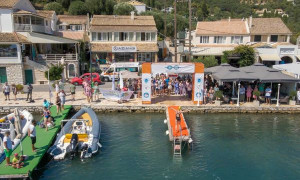
A microcosm of the dilemma this presents is the current plan to build a luxury €4 billion resort on the Adriatic coast at Zvernec, part-funded by Donald Trump's son-in-law Jared Kushner. Planning documents for the resort, according to the Sunday Times, include suggestions for a marina that could hold 350 superyachts, concert venues, a casino, an equestrian centre, yacht club, water park and "lagoon gardens" spread over the equivalent of 14 football pitches.
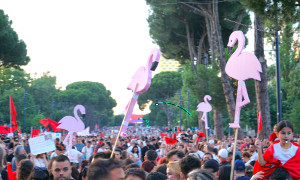
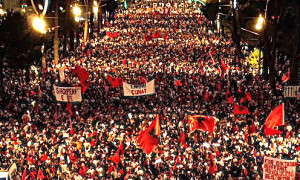
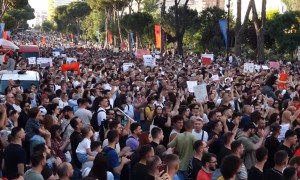
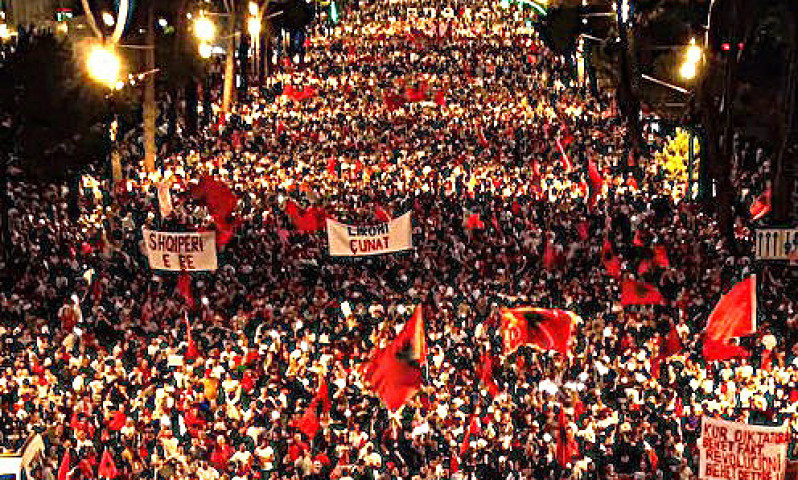
Protests, which began locally as an environmental concern for the biodiversity of the region, have now become political and global, with mass rallies in Tirana, the capital city, amid strident calls for Rama's resignation. MEPs have since warned Albania that EU accession talks are at risk if the government does not "change course". This unprecedented political dimension of the problem indicates how a local reaction can escalate to embarrass a politician bent on modernisation.
Rama, Albania's go-ahead prime minister since 2013, is fully behind this project, describing Kushner and his wife, Ivanka Trump, as "nice humble people". Rama calls the project "the jewel in the crown" of Albanian tourism, which he is "proud to contribute to Europe". He pours scorn on the environmental protests as anathema to Albania's need to become modern, not unlike his Greek counterpart, Kyriakos Mitsotakis in very similar circumstances.
Since the collapse of communism in eastern Europe, the EU and the Balkan states have become mutually attractive, with the incentive of financial wellbeing as a primary goal, to the possible detriment of identity and culture.
RICHARD PINE
* Published in the Irish Times