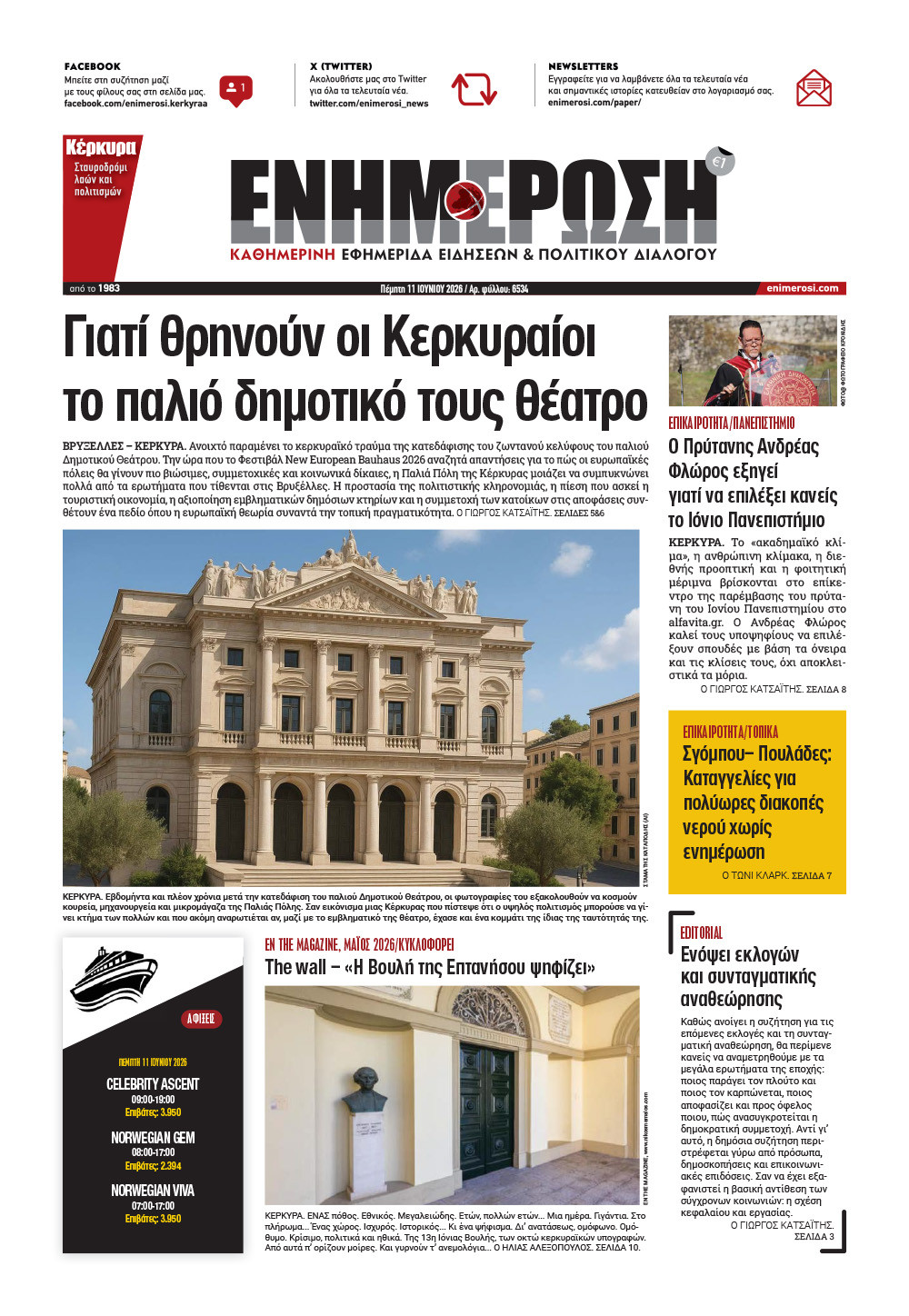
The Festival of the New European Bauhaus 2026 and Corfu Old Town: Who decides the future of heritage?
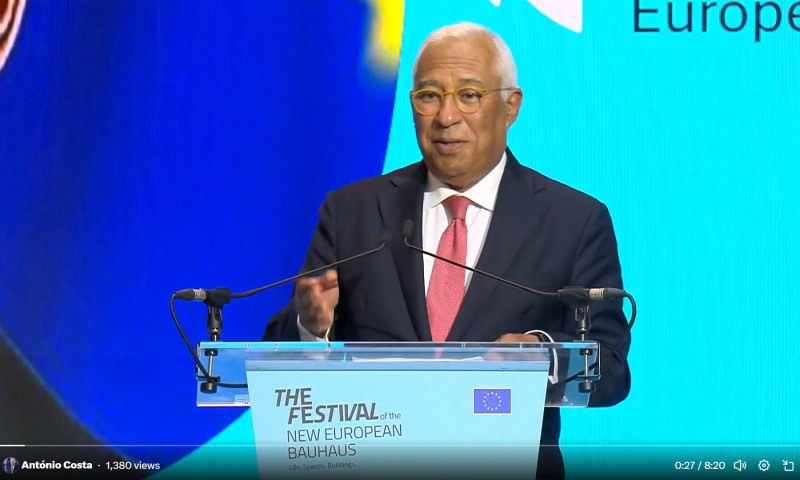 European Council President António Costa during his opening speech at the Festival. Photo: European Council
BRUSSELS. António Costa’s speech in Brussels on housing, citizen participation, and the redesign of European cities sheds new light on the dilemmas that also concern Corfu: from the uses of historic buildings to interventions in public space and the right of residents to remain in their city.
The housing issue and the way in which European cities will be redesigned to remain sustainable, accessible, and democratic were at the centre of the speech by the President of the European Council, António Costa, at the opening of the Festival of the New European Bauhaus Festival.
Costa described housing as a “fundamental human right” and warned that the shortage of affordable housing has now become a multi-layered crisis affecting not only lower-income groups but also the middle class and especially younger generations. He argued that housing insecurity fuels citizens’ disillusionment with democratic institutions and emphasised the need for a multi-level response from the European Union, member states, regions, and municipalities.
He placed particular emphasis on the philosophy of the New European Bauhaus, which links sustainability, aesthetics, and social cohesion through co-creation processes. As he noted, citizens should not merely be asked to approve pre-made decisions, but should actively participate in the design, implementation, and maintenance of their public spaces and neighbourhoods.
This position is of particular relevance to Corfu, where in recent years there have been intense debates over interventions in iconic public buildings and spaces. Discussions about interventions in the Corfu Municipal Theatre, as well as the future use of the former Prefecture building, have highlighted the longstanding question of who decides on the town’s identity and through which processes decisions are made.
The European example described by António Costa goes beyond architectural aesthetics. It introduces a different governance model in which the protection of cultural heritage, the contemporary needs of residents, and social accountability coexist. In cities with a strong historical footprint, such as Corfu, the discussion about what is preserved, what is changed, and how, concerns not only the technical aspects of a project, but the very democratic character of urban planning.
“We need sustainability, we need innovation, and we need affordability,” the President of the European Council stressed, calling on New European Bauhaus communities to collectively seek solutions to the challenges of today and tomorrow.
GIORGOS KATSAITIS