Water is being lost, time is being lost: the network is collapsing, and status of water infrastructure project is unknown
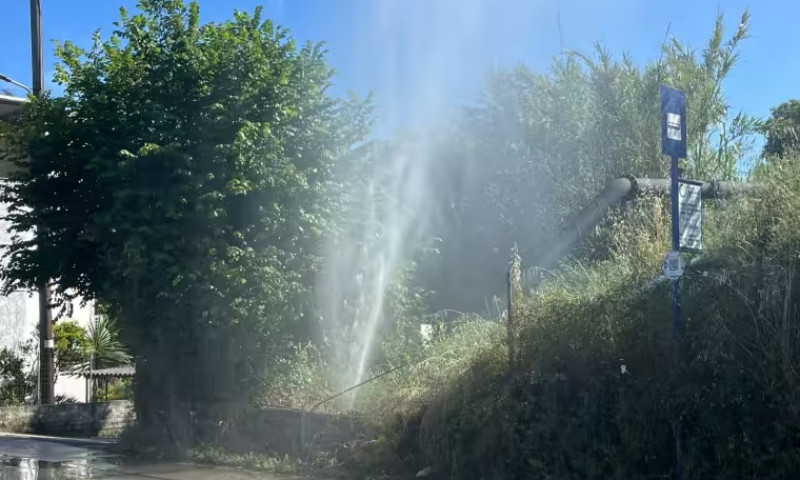
CORFU. The frequent water outages due to network failures are angering residents and causing inconvenience to visitors. While new studies for the restoration of the network are being completed and funding is being sought, it remains unclear at what stage the major project is—one that is being presented as the definitive solution for Corfu’s water supply.
The frequency of water supply outages due to network failures is angering residents and causing inconvenience to visitors. At the same time, the major project—still being presented as the definitive solution for the island’s water supply—remains out of sight, while DEYAK is expected to complete new studies within the next two months on the condition of the existing network and the necessary restoration interventions. This raises questions about the relationship between the two planning frameworks.
Today, funding directly related to the water supply network amounts to €1.6 million for the replacement of pipeline sections in the Municipality of Central Corfu and Diapontia Islands. The funding has been approved by the Ministry of Environment and Energy and concerns interventions at points with significant water losses and outdated infrastructure. It includes pipelines in Sotiriotissa, Nikolaou Armeni Street, Rankiou, and Gastouri, with networks that in many cases date back to the 1980s.
At the same time, according to the management of DEYAK, the studies documenting the actual condition of the network, leaks, problematic sections, and the cost of necessary restoration and modernisation works are in their final stages. Once completed, funding will be sought from national or European programmes for the implementation of the proposed interventions.
However, this development raises reasonable questions. The major water supply project for Corfu, promoted by the Ministry of National Economy and Finance since 2022, includes dams, water treatment facilities, reservoirs, pumping stations, and extensive transmission networks. Given that the restoration and modernisation of the network form part of the overall solution presented through this integrated project, it is questioned whether the new studies concern works outside the scope of the public-private partnership, or whether they refer to interventions that should already have been included in its design.
So far, it has not been fully clarified which sections of the network are covered by the overarching project and which are covered by the new study cycle of DEYAK. If they refer to different parts of the system—meaning the major project mainly concerns water abstraction infrastructure, treatment, and external transfer networks, while the new studies focus on the internal distribution network—then the two processes are complementary. If, however, there is an overlap in scope, then the question arises as to why a new round of studies is required for works that are theoretically already included in the partnership’s planning. And in any case, at what stage is the overarching project today?
Thus, despite announcements of major projects and significant budgets, the current picture remains complex. The funded project concerns €1.6 million worth of interventions in the existing network, while for the overall restructuring of the water supply system, both the completion of the new studies and answers are still pending regarding how they connect to the major outstanding project.
GIORGOS KATSAITIS