Chrysiida: Money is there — so why is project still on paper?
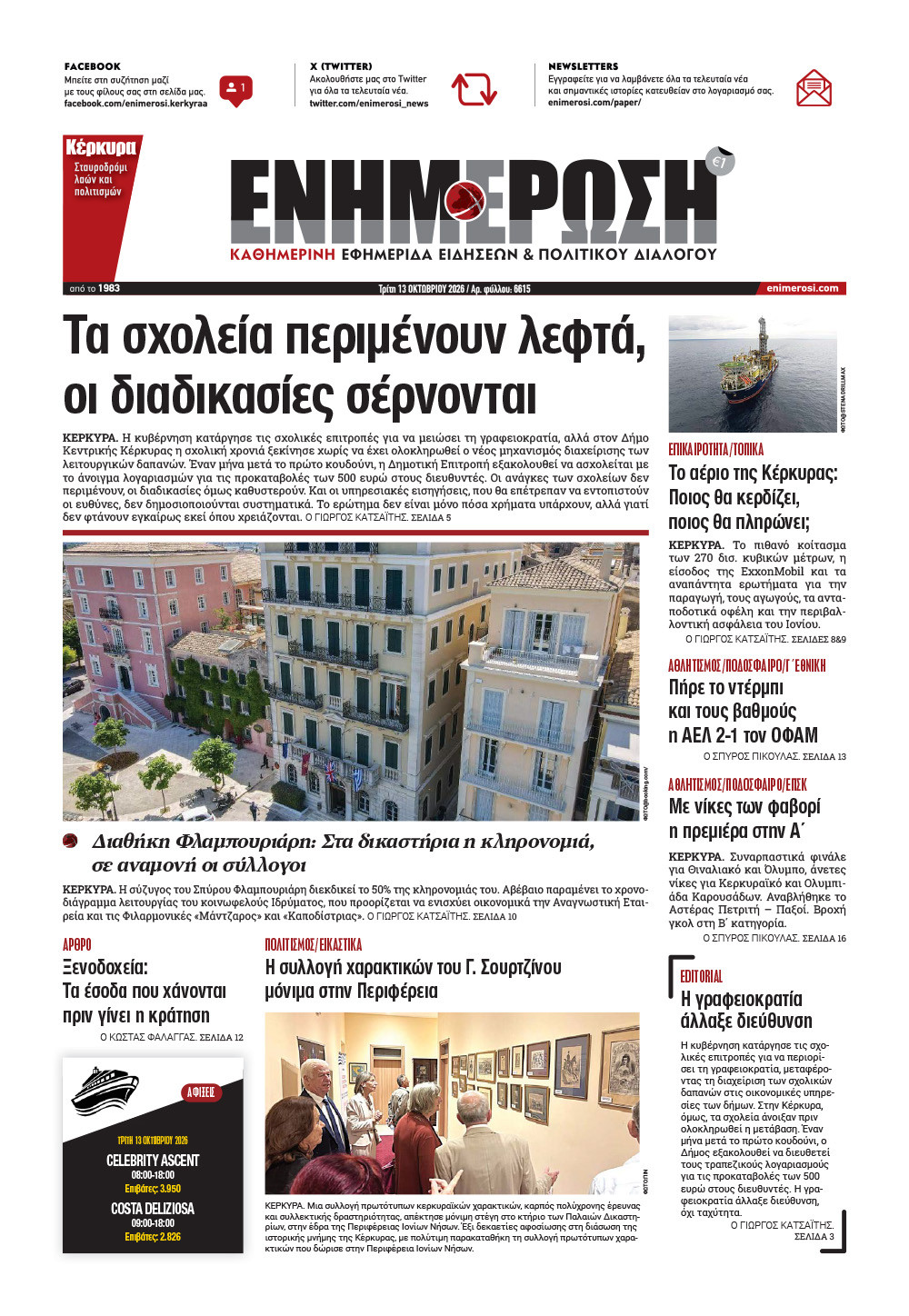
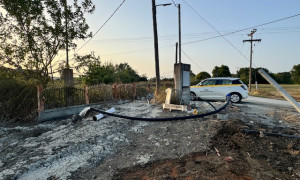
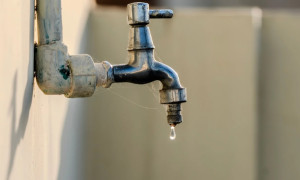
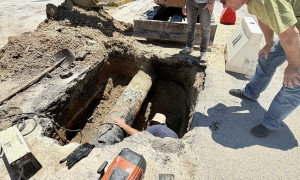
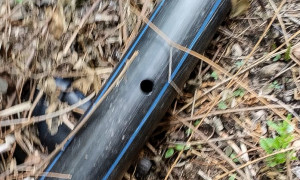
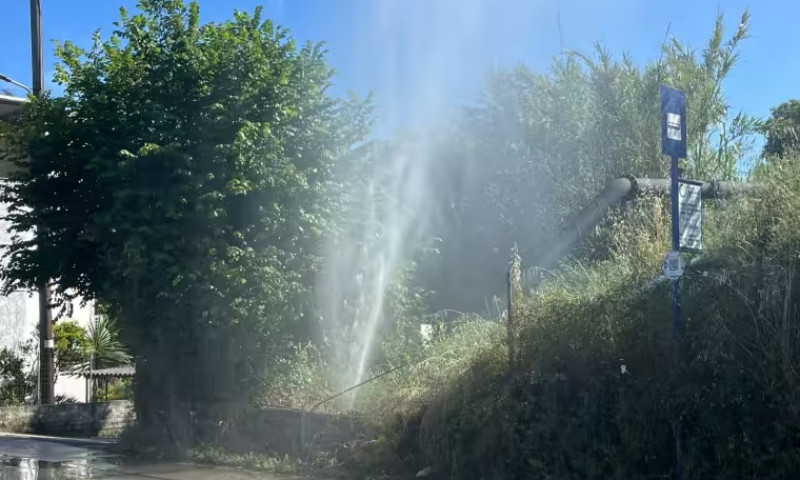 Significant water loss from the pipeline from Chrysiida. As time goes on, breakdowns are becoming increasingly frequent. Photo: Enimerosi
CORFU. The Deputy Minister assured Parliament that the €21.1 million in funding had been “secured”. Four years after the project was put out to tender, the Ionian Islands Regional Authority is being called upon to explain what is preventing the contract from being signed and when the contractor will finally move onto the site.
The funding for the water-softening plant at Chrysiida has been secured. At least, that was the categorical assurance given by the Deputy Minister of National Economy and Finance in his reply on Friday 9 October to an urgent question from Corfu MP Alexandros Avlonitis. If that is the case, the question changes: why, four years after the project was put out to tender, has the construction contract still not been signed?
The minister put the project’s budget at €21.1 million and said the funding had been secured through the Regional ESPA Programme, together with an additional €6 million from the Ministry of Environment and Energy’s National Development Programme.
He referred to interministerial collaboration in 2025 involving Deputy Minister to the Prime Minister Thanasis Kontogeorgis, Deputy Minister of Maritime Affairs Stefanos Gikas and Regional Governor Yiannis Trepeklis. According to his reply, the necessary conditions are now in place for the Regional Authority to proceed with awarding the contract and signing it with the successful tenderer.
In his follow-up response, he was even more categorical: “The funding has been secured and the project is locked in,” arguing that the matter had been settled.
Funding is one thing; signing the contract is another
Avlonitis pressed for clarification on whether the €6 million had actually been disbursed, whether the relevant procedure at the General Accounting Office of the State had been completed, and whether the contract could be signed immediately. The minister reiterated his assurance that the funds were secured, but gave no specific date for signing the contract or starting work.
The distinction matters. Securing funding is not the same as disbursing it, nor does it automatically mean that the tendering and contractual procedures have been completed.
A never-ending saga...
The project was approved for funding in 2021 and put out to tender in 2022. It provides for the creation of an independent water supply system for Corfu Town, with a capacity of 15,000 cubic metres of drinking water per day, including treatment facilities and associated infrastructure.
Meanwhile, the four-year delay raises further questions about whether the original tender terms and the successful contractor’s financial offer remain valid. The MP raised the possibility that the relevant details might need updating, including the contract price.
It has not been clarified whether new approvals, updated studies or other steps are required before the contract can be signed. Nor has the precise status of the associated networks needed to transport and distribute the treated water been made public.
The ball is now in the Regional Authority’s court
Following the minister’s assurance, attention inevitably shifts to the Ionian Islands Regional Authority, which is responsible for implementing the project.
The Regional Authority is being called upon to explain exactly what stage the tendering process has reached. Has the contract award been finalised? Is a pre-contract audit still pending? Does the contractor’s offer remain valid? Are additional approvals or revisions to the contractual terms required?
And, above all, when is the contract expected to be signed and the contractor to move onto the site?
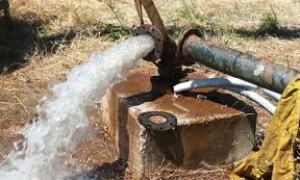
These questions carry particular weight as Corfu continues to face problems with water supply and quality, with provision depending heavily on boreholes and a network plagued by frequent breakdowns.
In Parliament, Avlonitis also recalled the long-standing failure to resolve the issue of the dams, stressing that the Chrysiida plant primarily serves central Corfu and is not a comprehensive solution for the island.
The minister countered by listing a series of publicly funded projects in Corfu, covering everything from healthcare and education to sewage infrastructure, in defence of the government’s policies. However, listing other projects does not answer the specific question of why the Chrysiida project has been delayed.
The government is now declaring that the funding problem has been resolved. This does not prove that the Regional Authority is responsible for the delay. It does, however, make a clear update from the implementing authority essential, setting out what remains outstanding and providing a timetable.
Because if the €21.1 million really is “locked in”, Chrysiida does not need another funding announcement. It needs a signed contract, a construction site and a completion date.
GIORGOS KATSAITIS