“Islands of Odysseus”: Tourism idea revives old Ionian rivalries
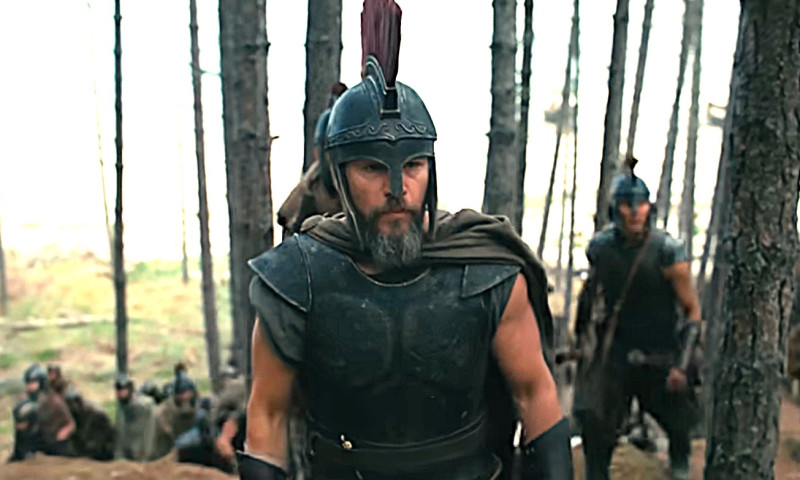 Odysseus will always return to the Ionian Islands. To each one individually, and to all of them together...Photo from film directed by Nolan
CORFU. Koulouris’ proposal for a shared tourism brand and “Odysseus sea routes,” Ithaca’s objection, and the old Ionian Islands dispute over Homeric geography.
The idea of using Odysseus as a shared tourism narrative for the Ionian Islands, discussed in Corfu in recent days in connection with Christopher Nolan’s new film The Odyssey, was almost bound to revive a very old Ionian dispute. Where exactly was Homer’s Ithaca, and how do the places described in the Odyssey correspond to the modern geography of the Ionian Sea?
The idea arose during a working meeting between Tourism Minister Olga Kefalogianni and Ionian Islands Regional Governor Yiannis Trepeklis on Friday, August 21, in Corfu. The meeting focused on the Region’s new tourism promotion strategy, extending the tourist season, and highlighting the smaller islands. Particular attention was given to the possibility of capitalising on the enormous international publicity expected to be generated by Nolan’s film The Odyssey.
It was in this climate that the idea that would later cause controversy emerged. Deputy Regional Governor for Finance and Trade Savvas Koulouris proposed using the name of Odysseus for the joint international promotion of the Ionian Islands, starting with the World Travel Market in London: “Islands of Odysseus” and themed sea routes linking mythology, history, culture and the natural landscape.
Ithaca reacted immediately. Mayor Dionysis Stanitsas made clear that the island would not accept the idea if it meant transferring its distinctive identity into a broader Ionian brand: “Ithaca is Ithaca. Odysseus has his homeland.” The municipality argued that no decision concerning the island’s history, identity and international profile could be taken without its participation, concluding emphatically that “Ithaca is not surrendering its history or its name.”
Koulouris subsequently responded, clarifying that he had never proposed “renaming the Ionian Islands.” As he explained, the proposal was exclusively about tourism branding and the creation of “Odysseus sea routes,” while no relevant decision had been taken by the Regional Council. He also explicitly recognised Ithaca as “the Homeric homeland of Odysseus” and assured that the distinctive identity of each island would not be replaced by the shared brand.
A dispute far older than tourism marketing
Behind today’s confrontation, however, lies a history more than a century old — and, as a question of how to interpret Homer’s geography, one that goes back much further. The attempt to match Homeric geography with the islands of today was already occupying ancient geographers and remains the subject of competing theories.
The people of the Ionian Islands, particularly on the other islands and less so in Corfu, have been arguing for decades over the place names of the Odyssey. Modern-day Ithaca unquestionably retains the strongest and most internationally recognised connection with Odysseus. In Lefkada, however, the theory of German archaeologist Wilhelm Dörpfeld remains alive. From the beginning of the 20th century, Dörpfeld argued that Lefkada was the real Homeric Ithaca. The theory is still officially presented today by the Lefkada Regional Unit, along with 16 locations that Dörpfeld associated with corresponding references in Homer.
Other theories developed in Cephalonia, the best known being the one that places Homeric Ithaca on the Paliki peninsula, on the assumption that it was a separate island in antiquity. The hypothesis gained renewed international attention after 2000 through the research project led by Robert Bittlestone and his collaborators, although it has not produced the archaeological evidence needed to settle the debate.
Corfu lies somewhat outside the dispute over Ithaca itself, but not outside the Odyssey. A long-standing local tradition identifies the island with Scheria, the land of the Phaeacians, Odysseus’ last major stop before returning home. It was here, according to the tradition, that his shipwreck occurred, where he met Nausicaa, was welcomed by King Alcinous, and finally departed for Ithaca.
Thus, regardless of where one places each Homeric place name — and without treating more recent theories as proven historical identifications — the entire Ionian region is dotted with traditions, place names and stories associated with Odysseus and the Odyssey. It is, after all, entirely natural that the quintessential seafaring hero of western Greek mythological geography should have left a stronger imprint here than anywhere else.
And that is precisely the contradiction — but perhaps also the strength — of the “Islands of Odysseus” concept. From a tourism perspective, it seeks to unite places connected by a shared Homeric myth. At the local level, however, it touches on identities that have been contested, almost island by island, for more than a century. Ithaca’s reaction shows that before Odysseus can become a shared brand for the Ionian Islands, the people of the Ionian Islands may first have to agree on exactly what they share — and what each considers exclusively its own.
GIORGOS KATSAITIS