How much it costs to go swimming in Corfu in 2026
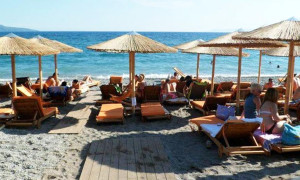
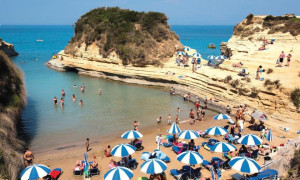
 The sea may be free, but a day at an organised beach can cost two people up to €90. Archive photo
CORFU. From €15–20 for a basic set of sun loungers to €90 or more for a full day at the beach for two people. Corfu tourism in 2026 — and the increasingly expensive experience surrounding the free sea.
The sea remains free. An organised beach, however, can be expensive. In Corfu in 2026, a day at the beach for two people at some of the island’s most popular organised beaches can turn into an expense of €60, €90 or even more once coffees, drinks and something to eat are added to the cost of the sun loungers.
The differences are significant and do not allow for generalisations. There are beaches where a set of two sun loungers and an umbrella still costs €15–20, while there are, of course, also free sections where a day at the beach costs nothing. At the other end of the scale, however, charges of €30, €40, €60 or even €90 can be found, depending on the beach, the row, the type of sun lounger and whether part of the charge can be offset against food and drink purchases.
Recent records from July 2026 at an organised beach in Dassia show a charge of €34 for two sun loungers and an umbrella in the first row. Other accounts from this year confirm the same charge.
But the cost does not stop there. Current menus at the organised beach list a freddo espresso at €5.80, beer at €6, a soft drink at €5 and a club sandwich at €15.60. For a couple, two coffees, two beers and two club sandwiches add €54.80 to the bill.
With the sun loungers included, the total for the day comes to around €89 — without a proper meal, cocktails or the cost of getting to the beach.
In Paleokastritsa, the gap is even wider. Records from this year show that some facilities have a minimum charge of around €10 per person, which provides access to sun loungers and other facilities. At the same time, much higher charges have been recorded at another organised beach in the area, depending on the location and the facilities provided.
At Glyfada and other beaches with a strong beach-club presence, premium options can also be found, where a sun lounger is no longer simply regarded as a chair by the sea but as part of an all-day experience: music, restaurant service, cocktails, beach service and events. This trend is now clearly visible at several of the island’s most prominent beaches. A recent guide to Corfu describes precisely this transformation of beach bars into all-day dining and entertainment venues.
The conclusion, therefore, is not that “a day at the beach in Corfu costs €90”. With a towel and an umbrella, it may not cost a single euro. Nor do all organised beaches have luxury prices.
The interesting point is the widening gap between the two options.
On the one hand is the traditional day at the beach enjoyed by local residents. On the other is an increasingly organised tourism product in which two sun loungers, two coffees, two beers and two simple snacks can come close to €90.
And that is where the discussion stops being simply about rising prices. It becomes a question of the extent to which an increasingly large part of Corfu’s tourist “shop window” is being priced according to the spending power of visitors rather than that of permanent residents.
GIORGOS KATSAITIS