Cautious optimism at Berlin IT Fair
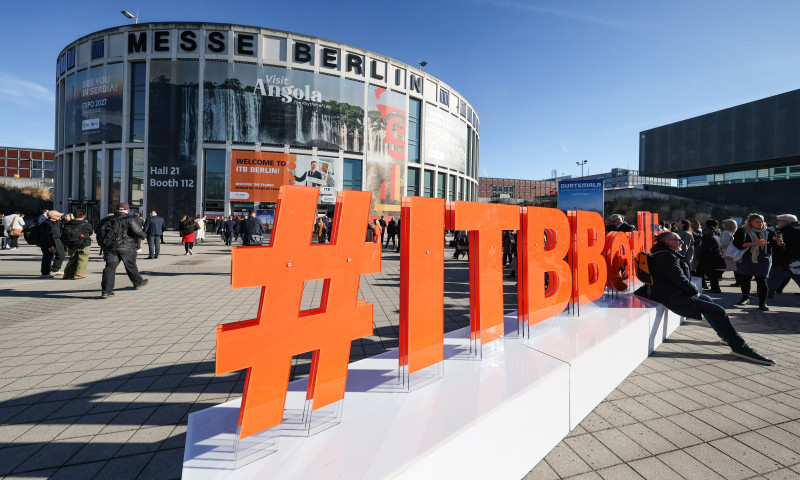 Από τη χθεσινή πρώτη μέρα της διεθνούς τουριστικής έκθεσης ΙΤΒ. Eingang Süd-Messe Berlin GmbH
BERLIN. Uncertainty is already impacting the scheduling and planning of airlines, tour operators, and insurance providers.
At the opening of ITB Berlin in Berlin, geopolitical tensions in the Middle East — and in particular the war between Israel and Iran — took centre stage in the discussions, partly overshadowing the atmosphere of optimism for the new tourism season. Representatives of the German tourism industry and the DRV stressed that it is still too early for reliable assessments regarding the scope of the impact; however, they acknowledged that uncertainty is already affecting the planning of airlines, tour operators, and insurance providers.
On the sidelines of the exhibition, reference was made to the disruptions caused in air transport, including airspace closures, flight rerouting, and increased operating costs — factors that are burdening both holiday packages and destination management. Particular mention was made of the Mediterranean, where, although most European destinations are considered safe and outside the immediate conflict zone, “risk perception” may influence demand, especially from long-haul markets such as the United States and Asia.
At the same time, it was noted that safety is emerging as a decisive factor in destination choice for 2026, with several Southern European countries highlighting their stability and operational readiness as a competitive advantage. Industry executives stated that in previous crises, travel flows shifted toward destinations regarded as “safe havens,” a pattern that could recur if the conflict is prolonged or escalates.
The overall conclusion expressed at the opening of ITB was that global tourism remains resilient, but extremely sensitive to geopolitical developments. The course of this year’s Mediterranean season will largely depend on the duration and intensity of the crisis, as well as on whether traveller confidence is maintained.
GIORGOS KATSAITIS