Before they bring in the bulldozers
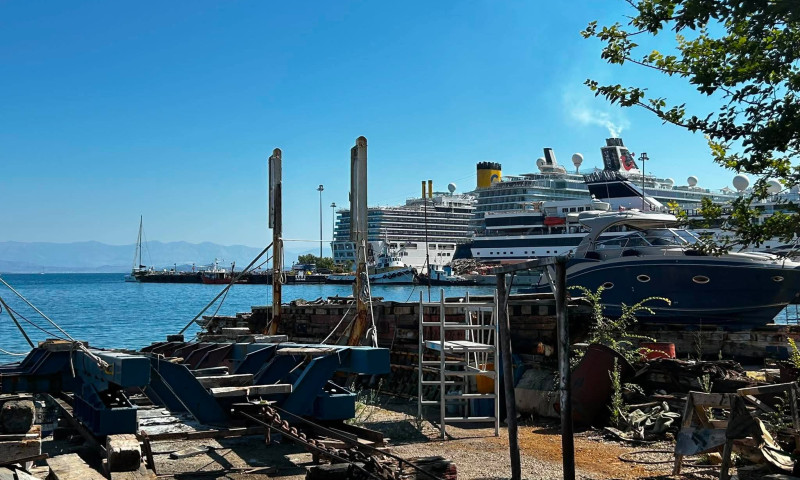 The provision for relocating the boatyard and the boatbuilders, without specifying who will build the new facilities, is almost prophetic... Photo: Enimerosi
CORFU. Ratification of the agreement does not bring the public debate to a close; if anything, it makes it imperative. The municipality, the regional authority, and the scientific and civic community must demand a comprehensive plan addressing the investment΄s impact on the town and the effective relocation of the boatyards.
The debate over the marina cannot be reduced to the binary question of "investment or no investment." The real issue is whether Corfu will allow an agreement to be implemented that will permanently transform its waterfront without first planning for the consequences for the town, its economy, and its traditional activities.
The agreement is binding on the contracting parties. It does not, however, oblige the local community to accept without objection every administrative decision issued for its implementation. On the contrary, it is the responsibility of the Municipality, the Regional Authority, the Technical Chamber of Greece, the Chamber of Commerce, and the scientific and professional bodies to open this discussion through the appropriate institutional channels. This should be done through public hearings, technical studies, alternative proposals, and clear commitments regarding the operational relocation of the traditional boatyards, traffic management, environmental protection, and the relationship between the new marina and the surrounding urban fabric.
Silence is not neutrality. It is a surrender of the town's right to help shape its own future.
And if the State chooses to proceed while disregarding these legitimate concerns, institutional safeguards remain available. Administrative appeals and, where the legal requirements are met, even an application to the Council of State are not acts of hostility toward the investment. They are legitimate instruments for protecting the public interest and for ensuring that the project proceeds in accordance with the principles of legality, transparency, and broad public consent.
Corfu cannot afford to wake up only after the bulldozers have already started their engines.
GIORGOS KATSAITIS