Forestry Department: The invitation was for souvlakia not for fire protection
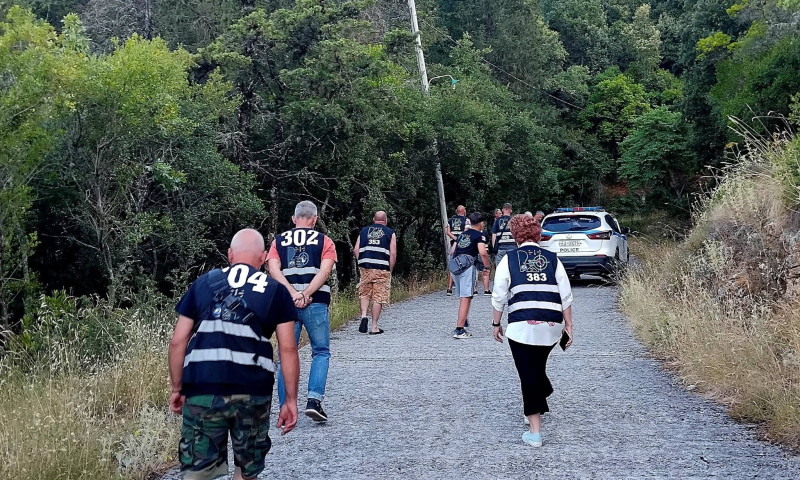 Volunteers from ALMKE on their way to the Radar site in Agioi Deka, where, according to the organisation, the relevant authorities denied them access because movement restrictions were in effect that day due to the high wildfire risk. Photo: ALMKE
CORFU. "We enforced the access restrictions – It is not a certified volunteer organisation." The dispute highlights gaps in Greece΄s wildfire volunteer system.
The public dispute between the Forestry Department and the Motorcycle Club (ALMKE) over last Saturday's incident is about more than the cancellation of a volunteer activity. It has brought to light an institutional issue that appears to have remained unresolved for years and is now emerging in the most conspicuous way.
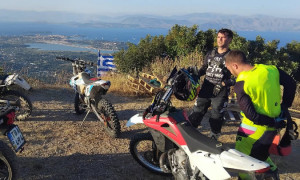
In a statement issued on Tuesday, the Forestry Department said that on 4 July it enforced the standing ban on movement in forested areas, as Corfu was classified at Level 3 on the wildfire risk map. It also noted that ALMKE had invited members and friends via Facebook to gather at the Radar site in Agioi Deka, with the presence of the public broadcaster ERT and the offering of desserts and grilled souvlaki, describing the event as a social gathering rather than a wildfire protection operation. According to the department, holding the event would have violated the movement restrictions and created an additional risk on a day of heightened wildfire danger.
The Forestry Department also stressed that ALMKE is not registered in the Special Registry of Civil Protection Volunteer Organisations and therefore is not a certified volunteer forest protection organisation.
The statement came in response to ALMKE's announcement that it was permanently ending its participation in the island's volunteer wildfire protection efforts, an activity which, it says, it had carried out for many years by staffing fire lookout posts and observation points.
"Officially, that's the end of fire protection by the Club! The Forestry Department—and everyone else—has forbidden us from doing it. Have a good summer," the club wrote in a social media post.
This is where the more fundamental questions begin.
If ALMKE never possessed the official status that the Forestry Department now cites, how was it possible for the club to operate for years at fire lookout posts, participate in patrols, appear in photographs alongside fire engines, and be publicly presented as part of the island's wildfire protection effort, without creating the widespread impression that it formed part of the official response system?
Was there an informal working relationship with the relevant authorities? Was there tacit acceptance of a practice that was considered useful as long as it caused no problems? Or has the institutional framework effectively changed, with activities that had been tolerated for years no longer being permitted?
In its statement, the Forestry Department effectively confirms that it is now applying the legal provisions strictly. However, this does not answer the question of what exactly had been in force until now.
The case becomes even more noteworthy because ALMKE did not suddenly appear on the wildfire protection scene. For many summers its presence was highly visible, its activities were regularly publicised, and its contribution was recognizsd by a large part of the local community. If that presence was not based on official certification, then a legitimate question arises: under what status was the organisation operating, and who was responsible for coordinating its activities?
The dispute, therefore, goes beyond the incident at the Radar site or the cancellation of a single volunteer action. It brings into focus the relationship between public authorities and organised volunteer groups, highlighting the need for clear rules, transparency, and public accountability. If the law now requires ALMKE to be excluded, then the public is entitled to know under what framework it had been operating until yesterday—and why the issue only came to the fore once the relationship between the two sides had broken down.
GIORGOS KATSAITIS