Too little, too late
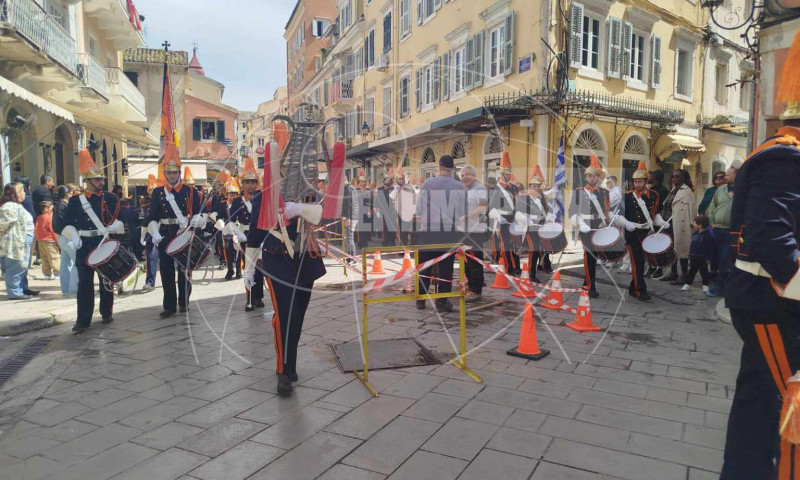 When philharmonic bands coexist with failures in the water supply network.
CORFU. An entire year had to pass, with the Central Corfu Municipality in a state of emergency, before the Ministry of Environment announced funding to replace sections of the problematic water supply network.
Corfu is living in a permanent state of emergency over water. This was formally declared in November 2024. In reality, however, it is a crisis that has been dragging on for years and is being handled in the only way the state seems to know how: delays, extensions, and—after long postponements—triumphant press releases.
We had to reach the eve of New Year’s Day 2026 for the much-publicised €1.6 million allocation for the gaping water supply networks to be “released.”
And even so, Corfu still needs yet another extension of the state of emergency, at least until June. Not because the problem is being resolved, but because bureaucratic procedures require it for projects that should have been completed decades ago. With the otherwise “grandiose” water supply project for the island of Corfu having been abandoned, the “state of emergency” has effectively become the norm.
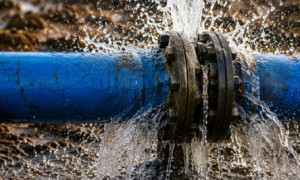
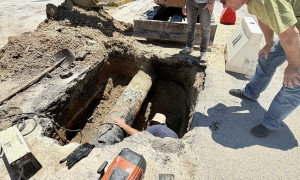
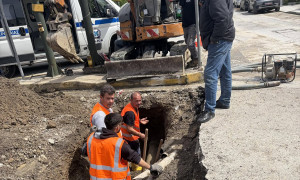
The projects now being announced concern sections of a network that is quite literally leaking:
– In Sotiriotissa, the replacement of 1,410 metres of PVC pipeline dating from 1980.
– In Potamos, on Nikolaou Armeni Street, the replacement of 1,400 metres of a main iron pipeline from 2000.
– In the “Rankiou” area, between Potamos and Evroplouli, the replacement of 1,750 metres of pipeline more than 40 years old.
– In Gastouri, the replacement of a total of 4,300 metres of pipelines, in networks that resemble a historical monument more than water supply infrastructure.
All of this is necessary. No one disputes that. But it is not enough.
At the same time, the critical Chrysiida project remains frozen. A project that could supply the town with 15,000 cubic metres of water per day is being treated as an administrative footnote. There, the paradox is recorded of a contractor being on site since 2021 without secured funding, and in 2025 the scope of the project being altered “midstream,” without a new tender.
Reality is unforgiving. The town and its suburbs require approximately 22,000 cubic metres of water per day. Even if Chrysiida operates at full capacity, the balance remains in deficit. That is why the option of utilising the boreholes at Kakotrafos (Tsavrou) remains on the table, with the potential to provide an additional 10,000 cubic metres per day. In both cases, water hardness necessitates treatment facilities—projects that, once again, have not progressed.
GIORGOS KATSAITIS