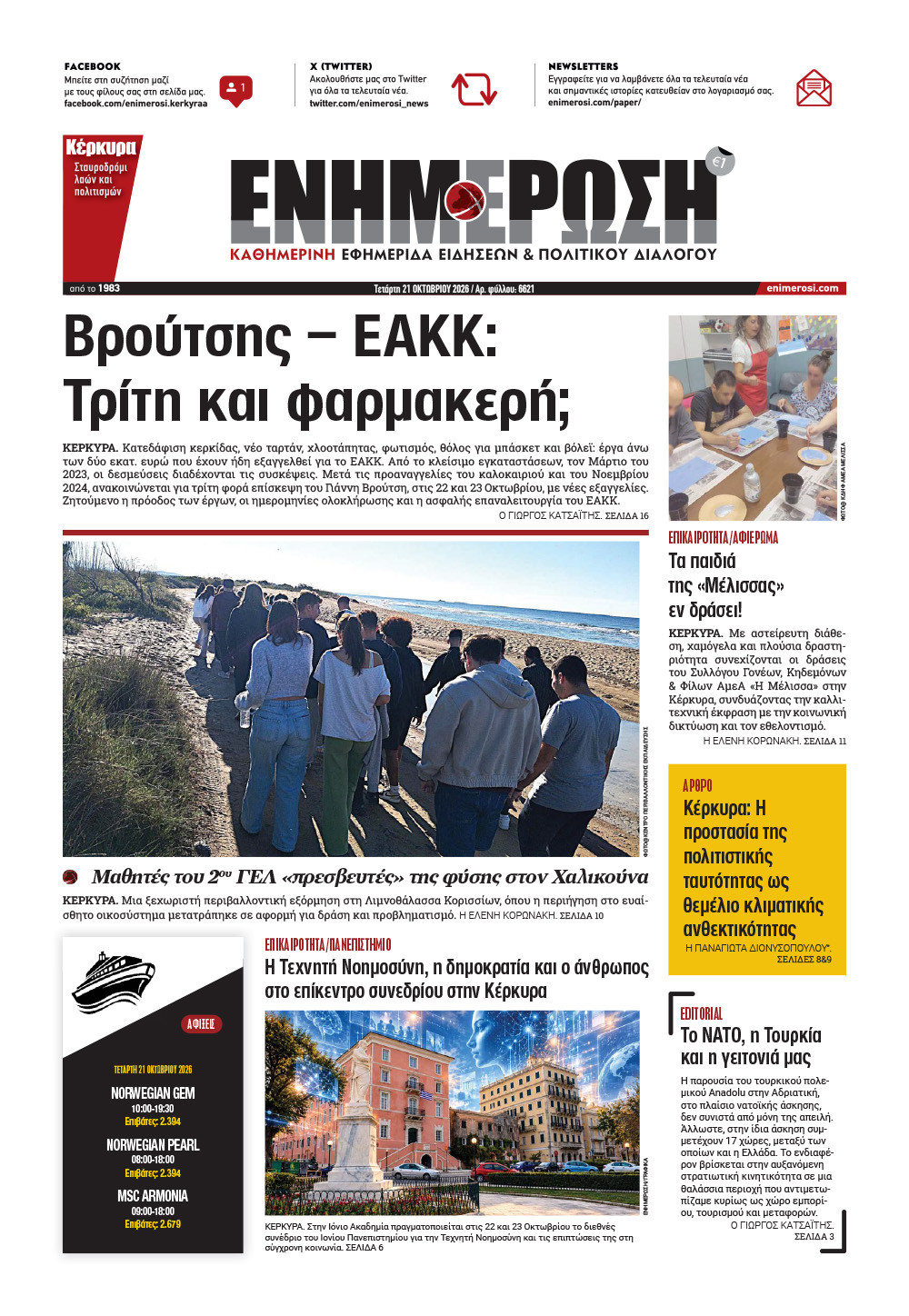
Projects that grow old before they are even built

Six years from the study to the contract, followed by another 18 months for construction. The slow development and approval of projects is not simply a matter of bureaucracy: it costs money, results in lost funding and leaves Corfu waiting.
Six years from the study to the contract. And then another eighteen months for the project to be completed. The case of the road network in South Corfu is not an exception. If anything, it is a good snapshot of the way public works are carried out.
The long delays in getting projects to the point where they are ready to proceed are usually treated as an administrative detail. They are not. They come at a cost — and, in fact, a multiple one.
First of all, they make projects more expensive. The cost of materials, energy and labour changes. A budget drawn up five or six years ago often no longer reflects reality. Revisions, supplementary procedures and further delays follow.
But the worst part is that the studies themselves grow old. During the intervening period, needs change, infrastructure deteriorates and new problems emerge. So when the time finally comes to start construction, there is a risk that we will be building the solution we needed six years ago, rather than the one we need today.
There is another, even more serious consequence: funding opportunities are lost. Projects without sufficiently advanced studies cannot be included in funding programmes in time when they open. And when funding comes with a strict timetable, delays can even mean losing the funding altogether.
In Corfu, we have paid the price for this weakness many times over. It is not simply that we lack the money. We often lack the ability to turn a need, in time, into a mature, fully approved project that is ready to go to tender.
And this is where the excuse of “bureaucracy” no longer holds up. When it takes six years for a project to move from study to contract, we are not simply dealing with slow procedures. We have a management problem.
Funding that is secured but cannot be used in time is not a success. Studies that remain sitting in drawers are not projects. And contracts signed when needs have already changed do not justify celebrations.
Corfu’s real deficit is not always money. It is the ability to turn money into projects in time. And when a contract takes six years just to reach the signing stage, followed by another eighteen months to complete the work, it is not enough to celebrate simply because the project eventually made it to the contract stage. We should be asking who allowed six years to be lost, and why.
Because it is not bureaucracy that pays the bill for the delay. Corfu does.
GIORGOS KATSAITIS