Who benefits and who loses from ‘untouched’ Halikouna
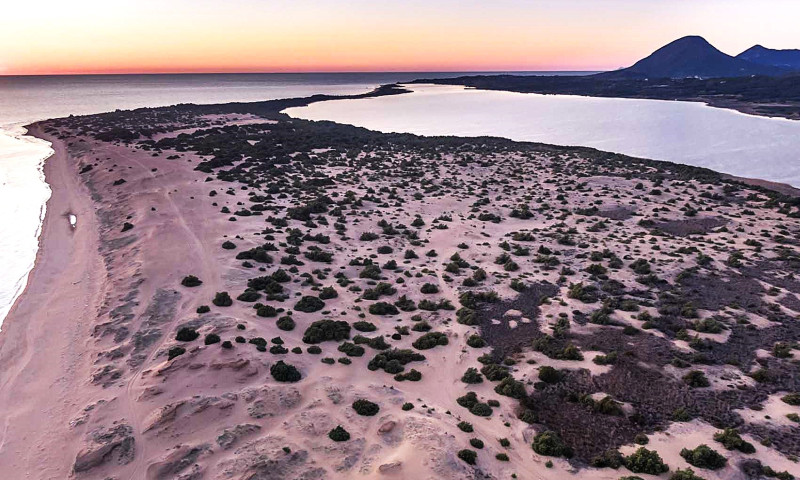 Halikouna
CORFU. Growing anger in the community of Agios Matthaios and the wider Lake Korission area. The Municipality is being called on to give clear and practical responses.
The inclusion of Halikouna beach in the “untouched beaches” designation is not merely an environmental measure. It represents a shift in both the economic and spatial model: it reduces short-term exploitation and increases the long-term value of the landscape. Whether this leads to upgrading or decline depends almost entirely on whether local management succeeds in transforming restriction into organised quality.
The inclusion of Halikouna beach in the “untouched beaches” regime marks a substantial change in the way the coastline in front of Lake Korission is managed, without altering the fact that the wider area is already part of the Natura network.
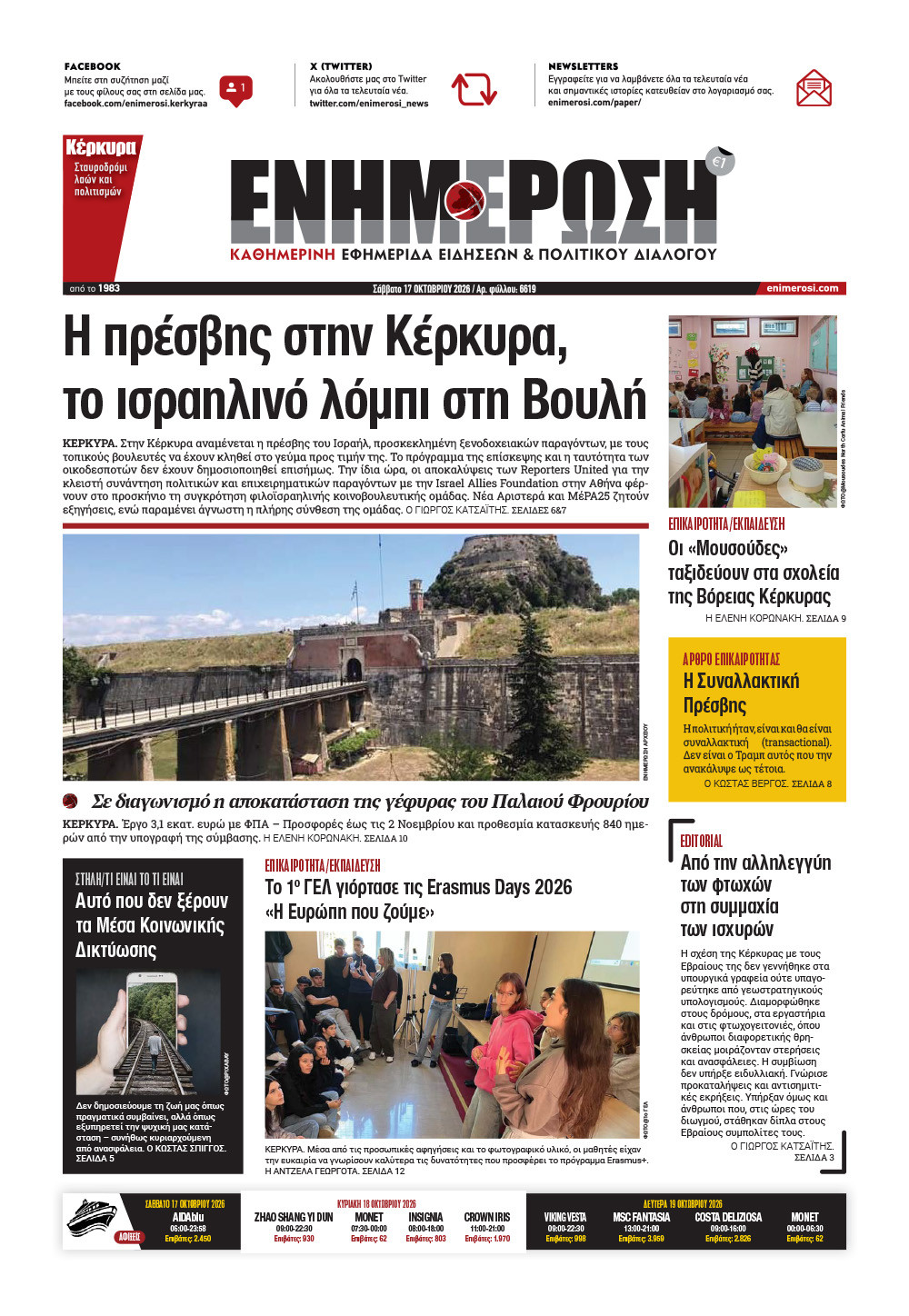
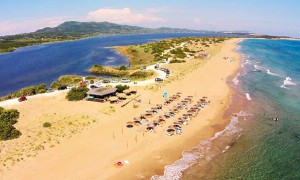
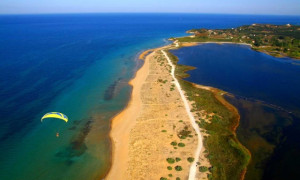
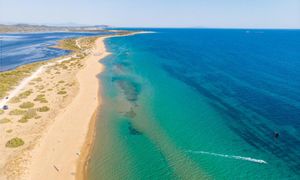
The new regime does not concern the entire protected area, but specifically the shoreline and the narrow strip of land with its sand dunes, which functions as a natural boundary between the Ionian Sea to the west and the lagoon to the east. It is a long strip of land approximately three kilometres in length, stretching from the Issos area to the southern opening of the lagoon.
Under this new framework, the presence of the public and the simple use of the beach are not prohibited. Access remains possible, as do swimming, walking, and generally low-impact recreation. What changes fundamentally is that any form of organised or commercial exploitation of the shoreline is no longer permitted.
Umbrellas and sunbeds can no longer be installed, beach bars or snack kiosks may not operate, infrastructure cannot be placed, and activities involving permanent or semi-permanent equipment are banned. Vehicle movement and parking on the sand or dunes is also prohibited, as is the opening of new roads. In other words, the beach remains open, but is “stripped” of any form of organised use.
This also has direct consequences for access. While access is not formally restricted, in practice it becomes more difficult, as there are no longer businesses acting as informal entry points or support facilities. Visitors are expected to approach the beach from designated points, park at a distance, and continue on foot, while the creation of new passages through the dunes is not allowed.
This shift also transfers the economic weight from short-term exploitation to the long-term value of the landscape. Properties that relied on the potential for immediate beachside activity or expectations of development linked to organised uses lose their main advantage. By contrast, properties that benefit from naturalness, views, and tranquility—without dependence on mass beach use—may strengthen in the medium term, as the area gains characteristics of scarcity and protected landscape.
A decisive role in this development is played by the Municipality of South Corfu, which is called upon to turn the regulatory framework into a functional reality. Without organised parking areas outside the shoreline, clearly marked access paths, basic signage, and protection of the dunes, the regime risks remaining merely formal and leading to confusion or conflict.
In terms of interests, the new regime primarily benefits the ecosystem itself, as well as those who invest or operate with low-intensity and long-term value in mind. Conversely, it harms those who relied on direct exploitation of the beach, such as businesses operating on the shoreline or properties oriented toward mass tourism.
GIORGOS KATSAITIS