Halikounas: Delayed implementation of decision provokes reactions
CORFU. The concept of the ‘untrodden beach’ has existed since 2023, but 2026 is the year when its real implementation is being attempted. In Halikounas, the protection of nature is clashing with old permits, long-standing practices, and the pressure of tourism.
This year’s tension surrounding “untrodden beaches” creates the impression of a new, sudden ban. In reality, however, it concerns the activation of a legislative framework that has been known since 2023. That was when Law 5037/2023 was introduced, which for the first time explicitly established the concept of a beach that must remain “untrodden”—that is, free from organised commercial use and with priority given to the protection of the natural environment. In 2024, an implementing decision followed, designating specific coastal areas across the country. However, during the first two years, the regulation remained largely inactive or was applied only sporadically. The real confrontation with on-the-ground realities is taking place now, as 2026 marks the first attempt at systematic enforcement of the rules.
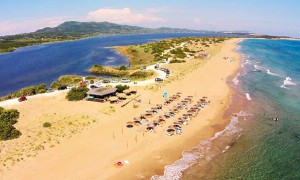
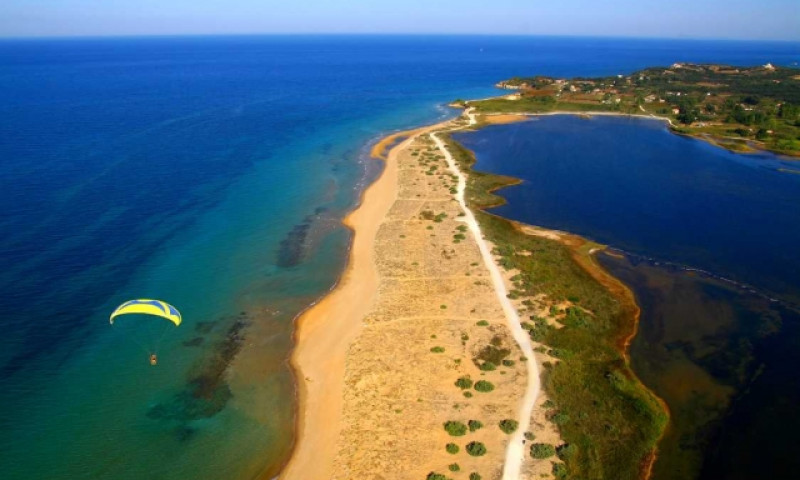
The case of Halikounas in Corfu is indicative. It is an extensive sandy beach next to the Korission Lagoon, part of the Natura 2000 network, where sand dunes, wetland ecosystems, and important bird habitats coexist. Its designation as “untrodden” is not merely formal but substantive: it means that the installation of sunbeds, beach bars, or other structures that alter the landscape is not permitted, while human presence must remain mild and leave no permanent footprint. In other words, it is a beach meant to function as a natural space, not as tourist infrastructure.
Despite this clear framework, the transition has not been immediate. For years, even in areas of high environmental value, concessions for the commercial use of the seashore existed—either because contracts were already in place or because the new regime had not yet been fully clarified. Municipalities were involved through recommendations and operating permits, but primary responsibility lies with the state, mainly through the Property Services of the Ministry of Finance. This created a grey zone, where the new regime coexisted with older practices, effectively allowing activities that are now considered incompatible with the “untrodden” designation.
This context explains why businesses that operated in previous years—such as beach bars in Halikounas—could appear “legal,” provided they held concessions that had not yet expired. There is no public confirmation that a specific business, such as “Bar Tayo,” currently holds an active permit overriding the new regime. However, if any installation is operating, it may be due to an existing contract still in force, activity outside the strictly designated protected area, or a case that may ultimately be deemed a violation following inspection.
The current tension stems precisely from the effort to close this gap. The competent ministries are bringing the issue back to the forefront at the start of the tourist season, emphasising stricter inspections and the prevention of new concessions on protected beaches. Inspections are carried out through on-site checks as well as modern monitoring tools, while citizen complaints—significantly increased in recent years—also play an important role.
GIORGOS KATSAITIS