Block 2: Corfu Technical Chamber points to gaps in plans for dealing with potential accident
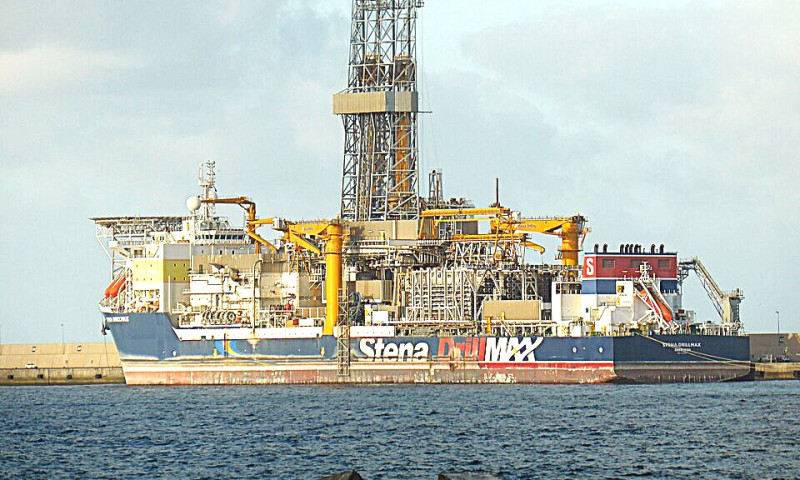 The Stena DrillMAX, the drillship selected for the exploratory drilling operation in Block 2. Carlos Teixidor Cadenas / Wikimedia Commons / CC BY-SA 4.0. Wikimedia Commons
CORFU. Corfu engineers point to shortcomings in the environmental impact assessment and operational planning. They are calling for a specific assessment of the risk of an uncontrolled well blowout and a clear allocation of responsibilities.
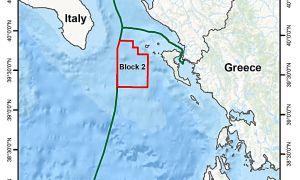
The Corfu branch of the Technical Chamber of Greece (TEE) has raised significant concerns about safety and the handling of a potential major accident during exploratory hydrocarbon drilling in Block 2, northwest of Corfu, in a statement issued on Thursday 12 November.
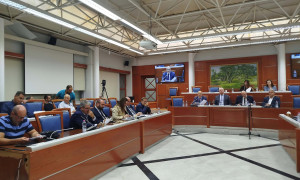
The intervention follows the publication of the Environmental Impact Assessment, the related consultations at local government councils in the Ionian Islands and Epirus, and a special information event held in Corfu, attended by TEE engineers and representatives of the Hellenic Hydrocarbons and Energy Resources Management Company.
TEE clarifies that this is an exploratory operation, which will provide information about the geological characteristics of the wider area. It stresses that the planned drilling is exploratory and that the area remains unexplored.
At the same time, it acknowledges that the exploration forms part of the national energy strategy and could have an economic impact on Corfu and Igoumenitsa.
The critical issue of safety
TEE's main technical concern is the absence of a specific study examining the possibility of technological equipment failure, particularly involving the safety mechanism that controls pressure in the well.
This refers to the blowout preventer (BOP), equipment used to prevent an uncontrolled release of pressure – one of the most serious accidents that can occur during drilling operations.
According to TEE, the Environmental Impact Assessment should include a specific examination of the possibility of this mechanism failing, even though the equipment is covered by international technical standards.
The Chamber stresses that the possibility of such a failure represents a risk that must be addressed both in the assessment and in the planned emergency response procedures.
Who takes responsibility in the event of an accident?
A second major concern relates to operational planning for dealing with a potential accident.
Based on its examination of the EIA and the information presented at the briefing, TEE finds that the planning lacks the necessary operational detail.
Although the involvement of the contracting company, local authorities and state services is envisaged, the procedures for intervention, as well as the roles and responsibilities of each organisation involved, are not sufficiently clearly defined.
In TEE's view, this area requires further examination and more detailed planning, so that the response to a possible accident does not remain limited to general provisions.
Just 16% chance of success
The statement also notes that the probability of success of the exploratory drilling – meaning the discovery of a hydrocarbon deposit – is estimated at 16%.
TEE considers that this figure reflects the high exploration risk associated with the search for hydrocarbons.
It also notes that operations of a similar scale and nature have been carried out elsewhere in the Mediterranean, although the statement does not cite any specific examples.
Energy footprint and sustainable development
TEE's intervention is not limited to safety concerns. It also addresses the potential economic and energy implications of the exploration, pointing out that any new hydrocarbon deposits could have an impact on the country's energy mix.
At the same time, it stresses the need for policies aimed at energy conservation and reducing the national energy footprint to be considered.
According to the statement, the aim should be to ensure that significant national resources are exploited sustainably and for the benefit of future generations.
GIORGOS KATSAITIS