Corfu splits up, Athens reunites
CORFU. The dissolution of the unified DIADEYAK was presented as a necessary adaptation to the new local government reality. Just a few months later, however, the same state is promoting large collaborative structures for water management. In the end, the problem was never the size of the organisation, but the lack of infrastructure projects.
It has been only a few months since the unified DIADEYAK was split into three municipal water utilities serving Corfu's three municipalities, yet the Ministry of Environment is already promoting a new model of large-scale collaborative entities for water management. The contradiction is obvious. What until recently was presented as an unavoidable move toward fragmentation is now giving way to a renewed emphasis on economies of scale, coordinated planning, and larger operational structures.
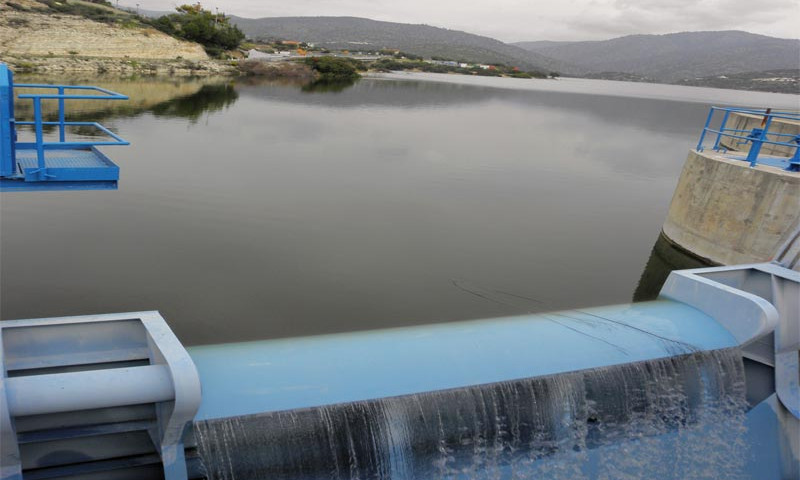
In reality, however, the breakup of DIADEYAK was not the result of a comprehensive strategy for Corfu's water supply. It was a forced adjustment to a situation that arose because the central government failed to deliver, in a timely manner, on its commitments to implement major infrastructure projects—most notably the construction of dams.
Had Corfu today possessed a unified, modern water supply system capable of ensuring an adequate supply of high-quality water across the entire island, the discussion would be very different. The question would then be who should manage an integrated infrastructure, rather than how to divide responsibility for its shortcomings.
Institutional structures can be changed with relative ease. Pipelines, dams, reservoirs, and distribution networks, however, cannot be built through legislation. Without them, every new administrative framework risks recycling the same deadlock under a different organisational chart.
GIORGOS KATSAITIS