Garitsa isn΄t the problem - it΄s a symptom
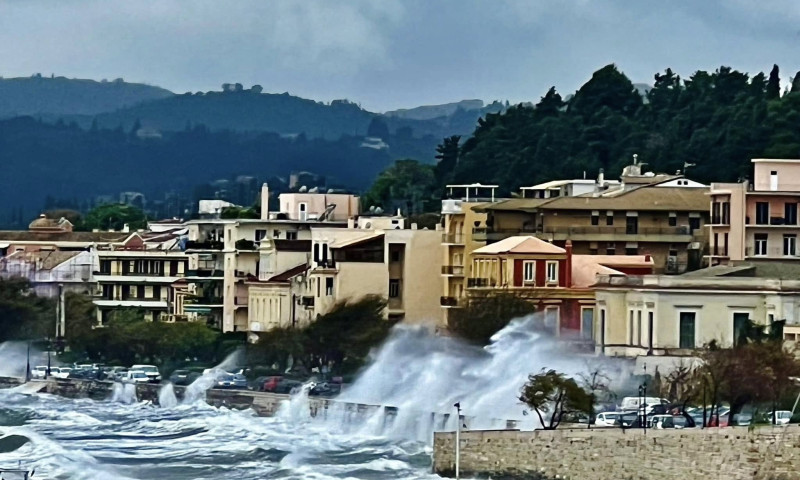
The controversy surrounding the moorings and the effort to preserve Garitsa Bay as an “open marina” is about more than a cherished waterfront. It raises broader concerns about how much development Corfu can sustain, the growing commercialisation of public space, and whether local people will remain connected to the sea that has long defined who they are.
The broader issue in the debate over preserving Garitsa Bay as an “open marina” lies in the well-known question of the carrying capacity of the town and the island as a whole. Restricting the discussion solely to Garitsa leads to a flawed reading of reality.
Experience has shown that neither the town nor the island can cope, with their existing infrastructure, with the scale of activity recorded today. For this reason, it is unfair to place all responsibility on local government officials for the extent of an activity that was often imposed through arbitrary practices in the name of the free market, while selectively and self-servingly ignoring its consequences.
Local authorities have failed to prevent this gradual deterioration. Indeed, there have been numerous instances in which they carelessly invoked the rights of businesses to expand their use of public space, arguing that otherwise they “couldn't make ends meet.”
As for the waterfront and its future, one need only picture the coastal and maritime zone stretching from Anemomylos to the mouth of the Potamos River, progressively occupied by every kind of commercial installation. It is no exaggeration to argue that local residents are being threatened with a form of confinement behind the invisible walls erected by an unchecked market.
If this course continues without planning, limits, and public oversight, there is a real danger that the residents’ unique, living relationship with the sea will gradually be reduced to a single experience: the ferry crossing between Corfu and Igoumenitsa.
GIORGOS KATSAITIS