Ionian caught in geopolitical storm
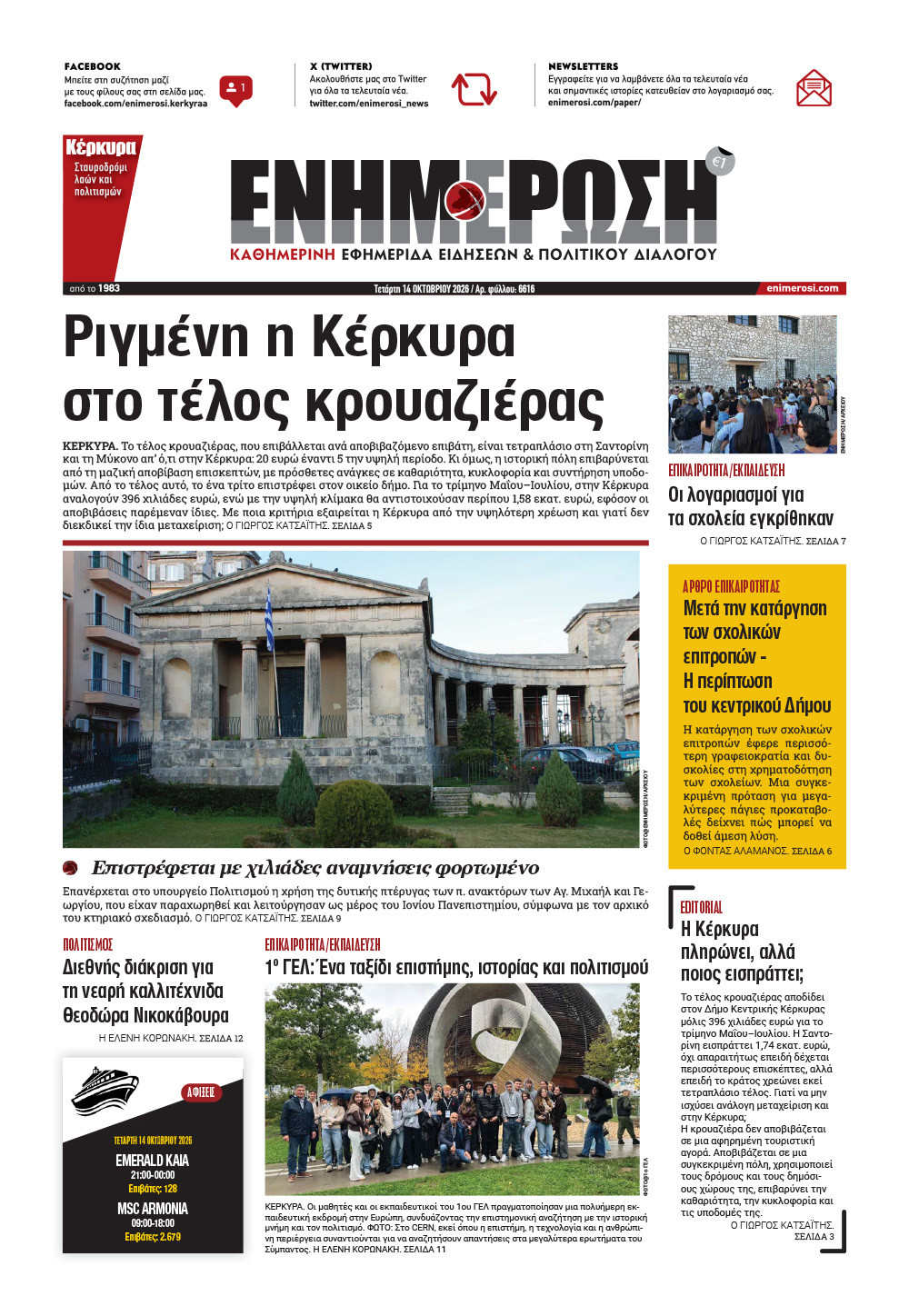
 Archive photo
CORFU. Wars and disruptions to energy flows are enhancing the region’s strategic importance – From the Strait of Hormuz and the Black Sea to Corfu and Block 2.
The geopolitical significance of the Ionian is changing. Corfu may be hundreds of miles from the war fronts in the Middle East and the Black Sea, but it now lies at the western end of a vast arc in which the security of shipping, Europe’s energy supplies and the new balance of power in the Eastern Mediterranean are at stake.
The most significant development at the moment is not even in the Aegean. It is much farther east. The war with Iran has dramatically restricted commercial traffic through the Strait of Hormuz, while the latest escalation in Yemen is putting pressure on the second major maritime artery, the Bab el-Mandeb Strait and the Red Sea.
According to data from Kpler and LSEG cited by Reuters, just 17 commercial vessels passed through the Strait of Hormuz over the weekend, compared with around 125 a day before the US-Israeli war with Iran began on 28 February. The same source also reports disruptions along the Red Sea route.
War is redrawing the routes of energy
This is the development that directly concerns Europe – and, indirectly, the Ionian.
Oil companies have been forced to create an unusual system of ship-to-ship oil transfers off the coast of Oman. Reuters estimates that around 2.5 million barrels per day will be moved through such transfers in September, while freight rates for large tankers travelling from the Gulf to China have exceeded $30 a barrel.
The disruption has already reached the European market. According to a Reuters report published today, Europe is expected to face an aviation-fuel deficit of around 510,000 barrels per day in the fourth quarter, as the war has reduced its traditional imports from the Middle East by around half.
The discussion about new and safer energy sources and routes is therefore no longer theoretical.
And suddenly, the Ionian takes on a new strategic importance
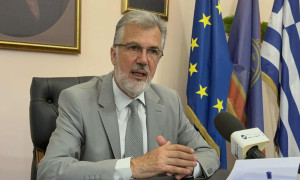
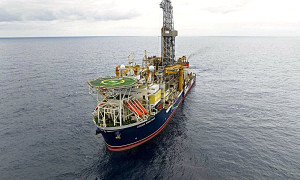
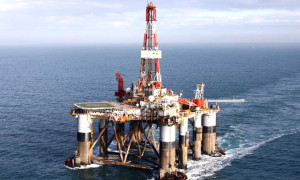
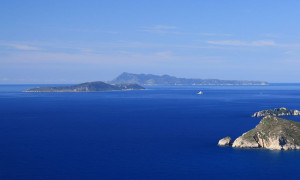
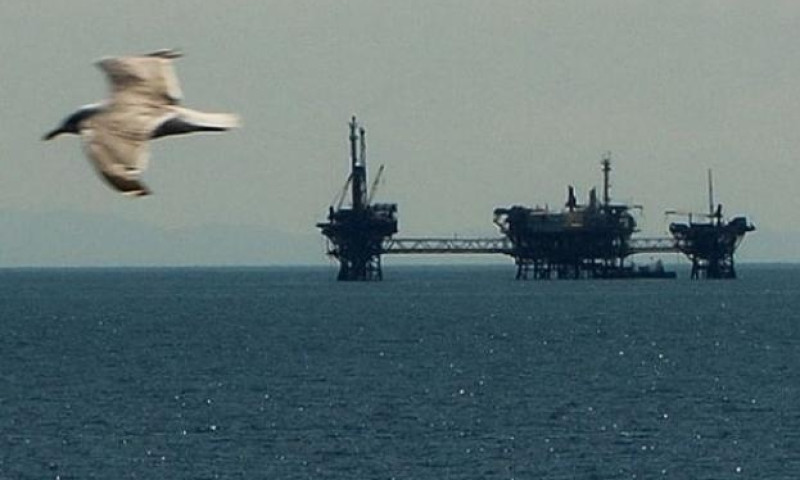
This is where the connection with Corfu lies. West of the Diapontia Islands is Block 2, where the prospect of an actual exploratory drilling operation has returned after decades. Reuters had already highlighted the shift in Greece’s energy policy, directly linking it to Europe’s search for energy security following the war in Ukraine.
Block 2, involving ExxonMobil, Energean and HELLENiQ Energy, has been reported as potentially containing resources of up to 200 billion cubic metres of natural gas. This is, however, an estimate of geological potential rather than a confirmed deposit: only drilling can determine whether commercially exploitable quantities exist and at what cost. Exploratory drilling is reportedly scheduled to begin in April 2027 and, even in the event of a commercial discovery, production would not be expected before 2030.
The significance of this prospect is increasing in light of current developments. Just a week ago, the head of Chevron’s global gas business told Reuters that the Eastern Mediterranean was an area of particular interest to the company, explaining that the crises in Ukraine and the Middle East were increasing the need to diversify natural-gas supplies.
The drilling operation west of Corfu therefore takes on a dimension far broader than that of a Greek energy investment.
Greece between two zones of conflict
To the north, meanwhile, the Black Sea is becoming more, rather than less, dangerous.
On 18 September, Reuters reported that London’s insurance market had extended the high-risk war zone to cover the entire Black Sea, following an increase in attacks on commercial vessels. The region is a critical route for grain, crude oil and petroleum products.
Geographically, Greece therefore lies between two major zones of insecurity: the Black Sea–Ukraine to the north and the Middle East–Persian Gulf–Red Sea to the south and east.
Between them lies the Mediterranean.
And at the western gateway to this space are the Ionian and Adriatic seas.
Eastern Mediterranean: alliances are also changing
There is a second shift as well. The regional security architecture is changing. Greece, Cyprus and Israel have decided to strengthen their joint air and naval exercises during 2026. Reuters has reported on a joint defence-cooperation plan involving the three countries, as well as plans for closer cooperation on maritime security and energy interconnections.
At the same time, Syria has become a point where Israeli and Turkish interests intersect. Significantly, during US-mediated Syria-Israel talks in August, Reuters reported that the need to prevent the Israeli-Turkish confrontation from spilling over into Syrian territory was among the issues discussed.
At the same time, Ankara remains a member of NATO while also broadening its options. In early September, Recep Tayyip Erdoğan said that Turkey could even consider full membership of the Shanghai Cooperation Organisation, in which China and Russia play leading roles, while clarifying that such a move would not mean leaving the West.
The bigger picture now reaches the Diapontia Islands
This is perhaps the crucial point for Corfu. Block 2 is no longer operating in the same international environment in which it was conceived. The energy crisis following the war in Ukraine, the war with Iran, problems at the two major passages of Hormuz and Bab el-Mandeb, and the search for alternative energy sources have changed the landscape.
This does not prove that Block 2 is economically viable, nor does it invalidate environmental concerns about drilling in a particularly sensitive marine area. It does, however, explain why interest in the Ionian’s hydrocarbons now carries a different strategic weight.
And there is another factor: Corfu lies at the entrance to the Adriatic, on the maritime axis connecting the Eastern Mediterranean with Italy and Central Europe. As the traditional energy and trade routes of the East become more expensive and less secure, the importance of diversifying sources and routes increases.
That is why the discussion taking place today in the Diapontia Islands over the drilling operation is not simply a local one.
Corfu lies at the western end of a geopolitical chain that now begins in Iran and the Strait of Hormuz, passes through the Eastern Mediterranean, and ends in the Ionian and Adriatic seas.
GIORGOS KATSAITIS