What should we expect from Corfu’s Sustainable Urban Mobility Plan - and when?
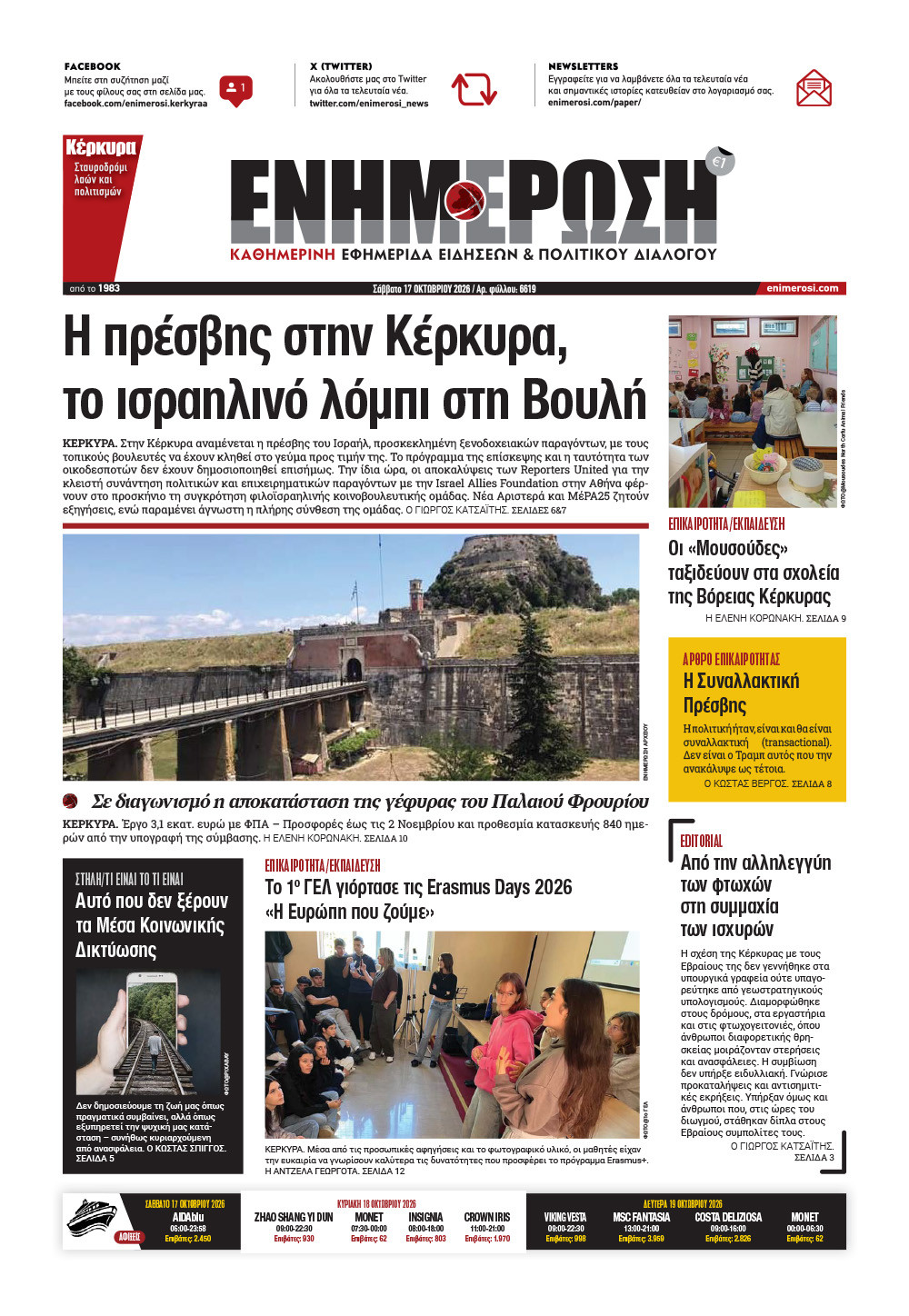
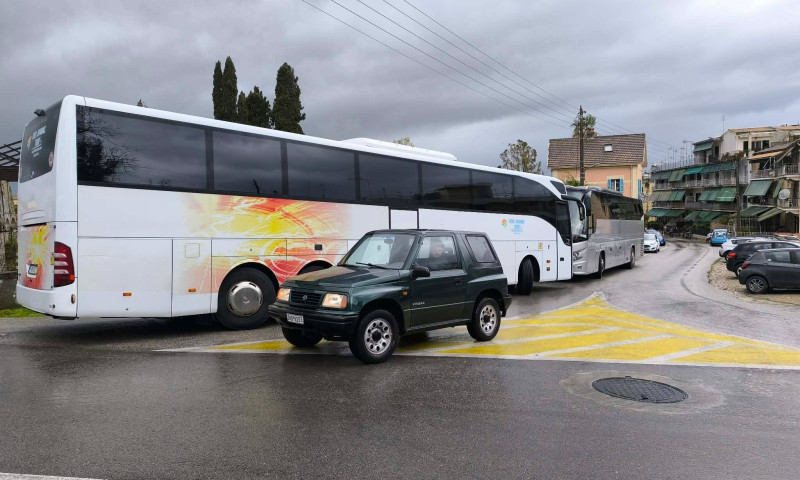 The publication of Corfu’s Sustainable Urban Mobility Plan (SUMP) in the Government Gazette completes its formal institutional approval, but not its implementation. Pedestrians, cycling, public transportation, and parking are at the core of the plan, but every intervention will require studies, approvals, and funding before it can move from paper to practice. Photo: Enimerosi
CORFU. The publication of Corfu’s Sustainable Urban Mobility Plan (SUMP) in the Official Government Gazette formally establishes it, but does not mean it has been implemented. Pedestrians, cycling, public transport, and parking are at the heart of the plan, but each measure will require studies, approvals, and funding before it can move from the drawing board into reality.
The publication in Government Gazette of the ministerial decision issued by the then Deputy Minister of Infrastructure and Transport, Konstantinos Kyranakis, formally brings into force the Sustainable Urban Mobility Plan (SUMP) of the Municipality of Central Corfu and Diapontia Islands. However, approval does not automatically mean that the measures contained in the plan will be implemented.
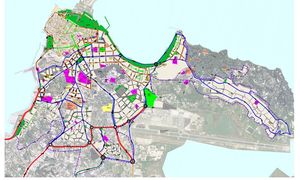
As a priority, the SUMP provides for the creation of a continuous and accessible pedestrian network, including the reconstruction and improvement of pavements, provisions for people with disabilities, and safe routes to schools, public services, and key destinations. It also calls for the development of a cycling network, with organised bicycle routes and supporting infrastructure, so that cycling can be used not only for recreation but also for everyday travel.
For public transportation, the plan envisages the reorganisation of routes and bus stops, improved passenger information, a review of terminal locations, and better integration between different modes of transport. At the same time, the plan places particular emphasis on parking, proposing controlled parking systems, special provisions for permanent residents—especially those living in the Old Town—and measures to reduce unnecessary vehicle traffic in the town centre.
The plan also includes road-safety measures, such as improving intersections, introducing traffic-calming measures to reduce speeds, and addressing locations with elevated safety risks.
None of these interventions, however, comes into effect simply through the publication of the Government Gazette. The ministerial decision clarifies that implementation of the Action Plan must comply with the requirements established by the applicable legislation in each case. This means that every individual project will require specific traffic and technical studies, approvals from the relevant municipal bodies, approvals from other competent authorities where necessary, and the securing of funding.
In the case of Corfu, some interventions may require additional approvals from the services of the Ministry of Culture because of the special protected status of the Old Town as a UNESCO World Heritage Site.
Furthermore, the SUMP itself is not accompanied by earmarked funding. Each action must be included in financing programmes—such as ESPA, the Green Fund, or other national and European funding instruments—after the necessary studies have been completed and matured.
The SUMP was prepared and approved in its first two phases by the previous municipal administration, while final approval of the plan was granted by the Municipal Council in its current composition. The ministerial decision also provides that the Action Plan may be updated and revised whenever the Municipality considers it appropriate.
GIORGOS KATSAITIS