Something isn’t right in Garitsa
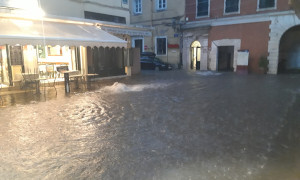
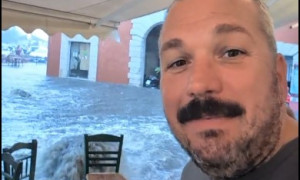
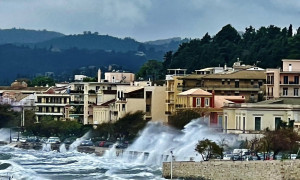
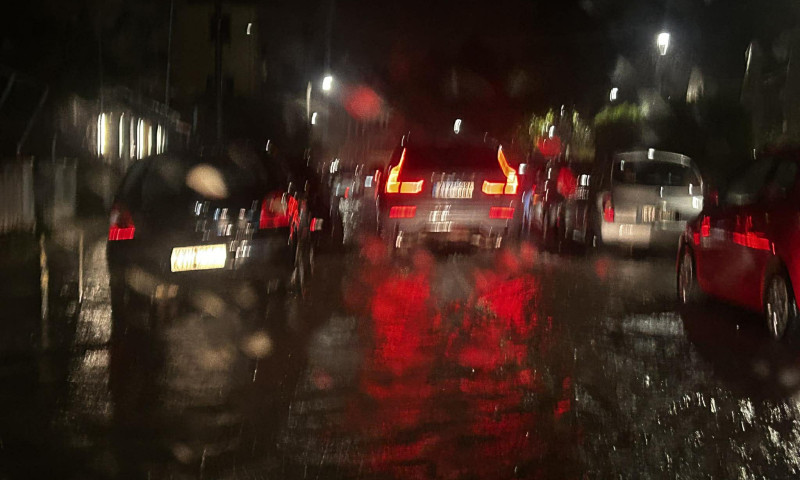 Mit. Athanasiou St. flooded on Wednesday night
CORFU. Fifty years of interventions have failed to protect the seafront. With time and rain, the coastal road repeatedly closes because of flooding.
And yet, something needs to be done about the Garitsa seafront road. The intensity of the weather events does not explain everything. The accumulation of seawater and seaweed often renders the road unusable and puts motorists at risk—whether they failed to stop in time or dared to pass through.
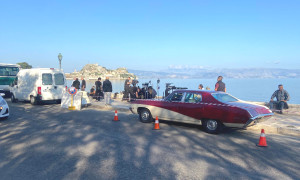
And yet, this is a project whose implementation—from the restoration of the wall at NAOK to Anemomylos—took us nearly half a century to complete, only finishing last year. Even so, on Wednesday the road once again had to be closed due to the danger posed by severe weather.
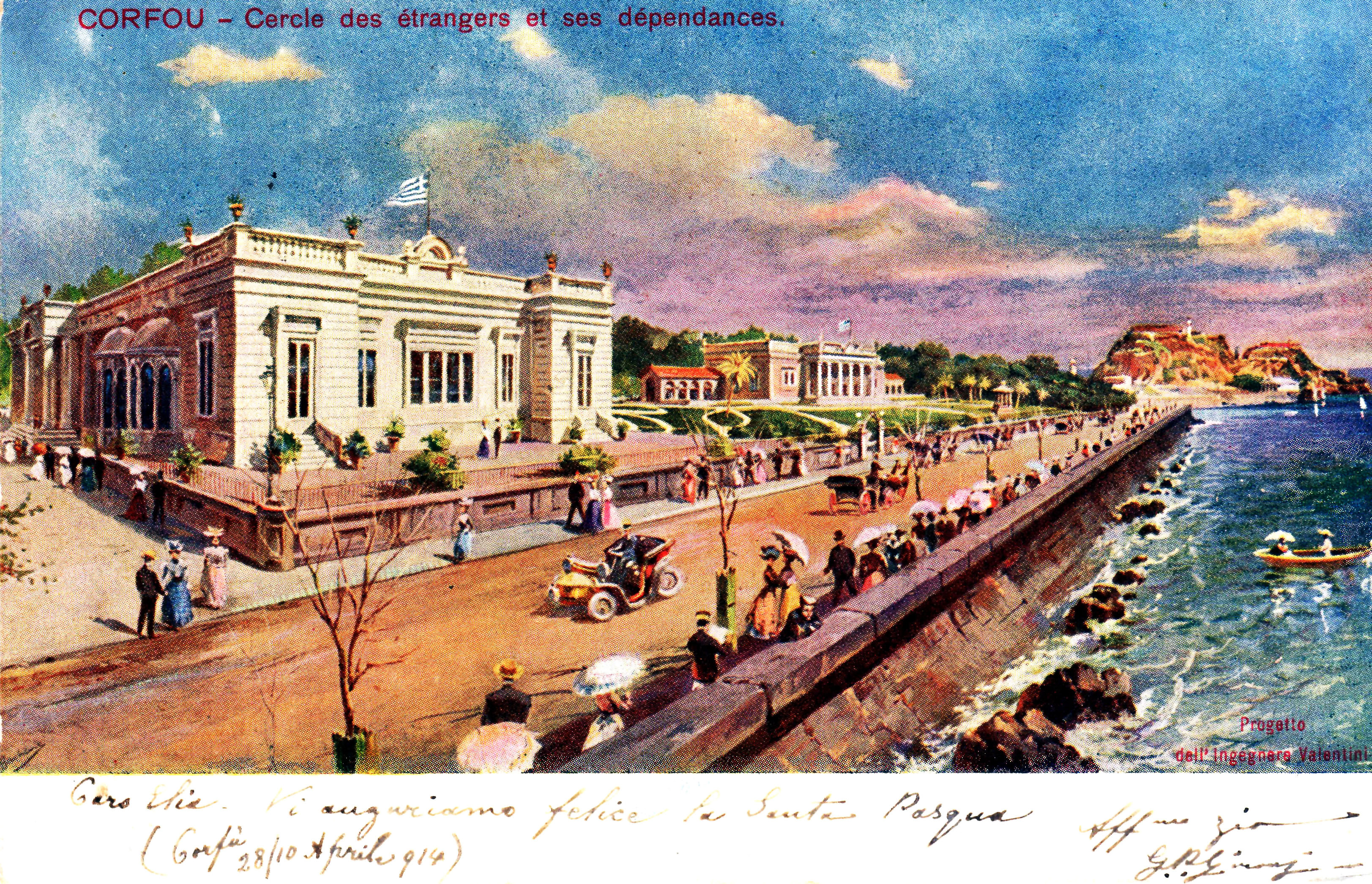
Early-20th-century postcard from the Sp. Gkautsi collection (G. Zoubos archive), where the rocks can be clearly seen at a distance and along the coastline, as well as the design of the parapet intended to send the wave back.
The original shaping of the seafront dates back to the tenure of Sir Howard Douglas (1835–1840) and continued until the dawn of the 20th century, when it assumed roughly its present form. Whatever else may be claimed, flooding along the seafront roads of Garitsa was in the past a common occurrence, attributed to southerly winds and the strong waves that entered the bay. This was further exacerbated by the difference in elevation, which facilitated storm surge while hindering drainage.
Moreover, the bay—which, according to Thucydides, was once the harbour of Alcinous—extended as far as the later Desyllas factory. Given these conditions, both Alkiviadou Darri Street and Mitropolitou Athanasiou Street, lying lower than the area’s main axis and close to the bay’s natural level, were easily transformed into a “Venice,” as was the football field, from which rainwater failed to drain. Even into the 1990s, older residents recall the inner road of Garitsa flooding after heavy rainfall. At the stadium, drainage systems had to be added to save the grass, which rotted every year. (Editor’s note: now it simply no longer exists—it was abandoned.)
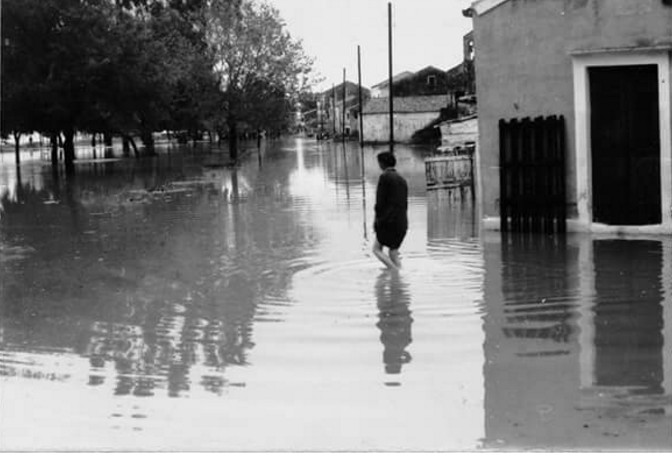
Alkiviadou Darri Street under floodwaters in the early 20th century. Photo: CORFULAND
However, along the seafront, the flood-control works that followed did bring some improvement. The sea might spray and churn, but the water did not linger. The gradual removal of rocks from 1965 onward, however—despite the presence of the parapet—became the cause of acute and rapid erosion of the seafront paving, leaving dangerous craters in places and ultimately disrupting the Corfiot promenade, for which the area had been laid out from the period of British administration through to modern Greek times.
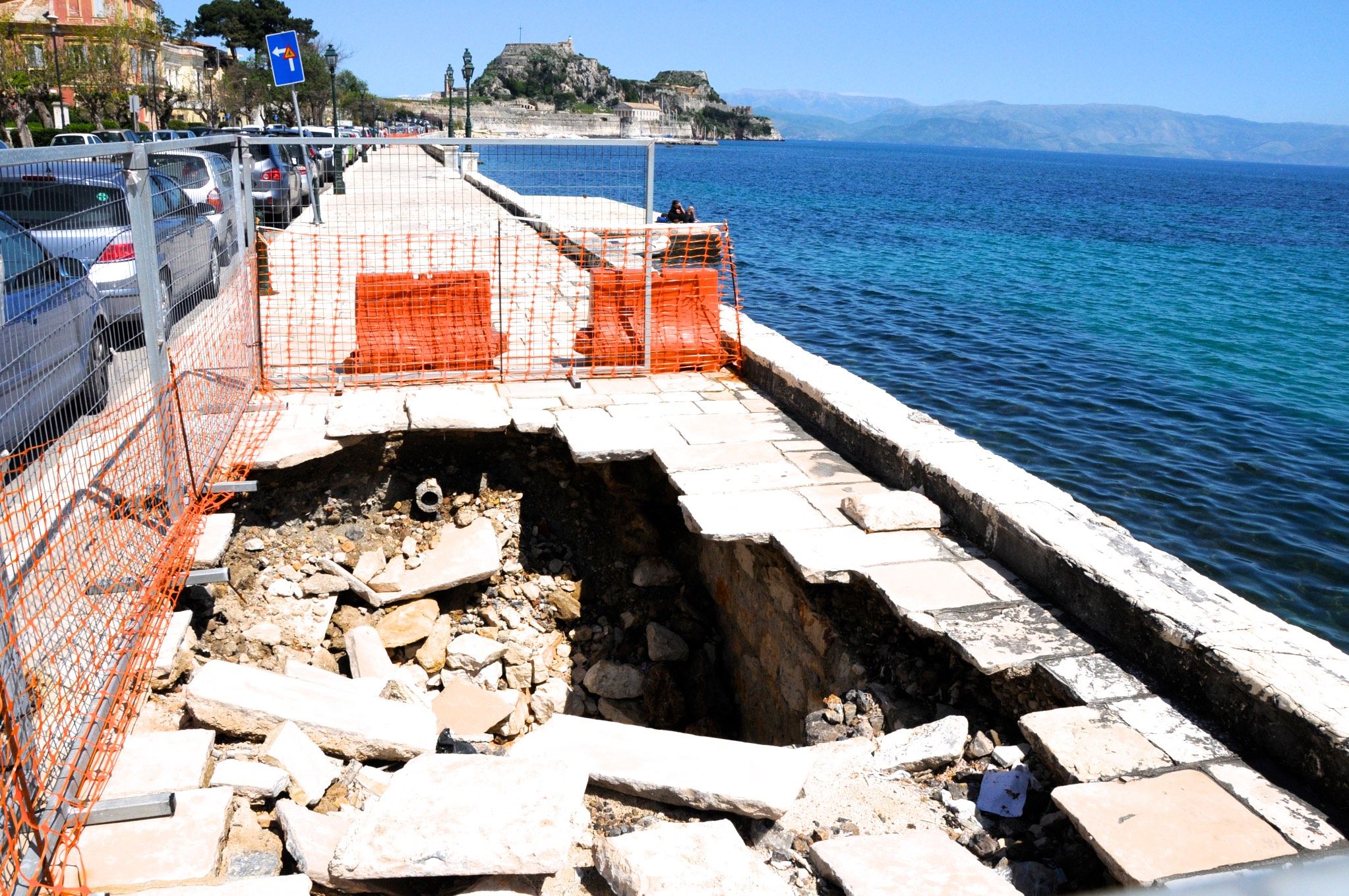
The impact of the gradual removal of rocks beginning in the 1960s (2012). Photo: ENIMEROSI / ARCHIVE.
The restoration was carried out in two phases. The first section was completed during the term of Galiatsatos at the Regional Authority, and the second just a few months ago, under Trepeklis.
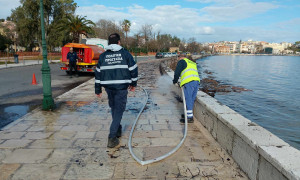
However, it is now clear that something is not functioning properly in either section of the road. The recent bout of severe weather resulted in its closure. Water pools mainly from the Desyllas bend to the Douglas Column. Further along, seaweed accumulates on the paving, and even in the newly completed section subsidence has been observed. From the Regional Authority, there has been radio silence.
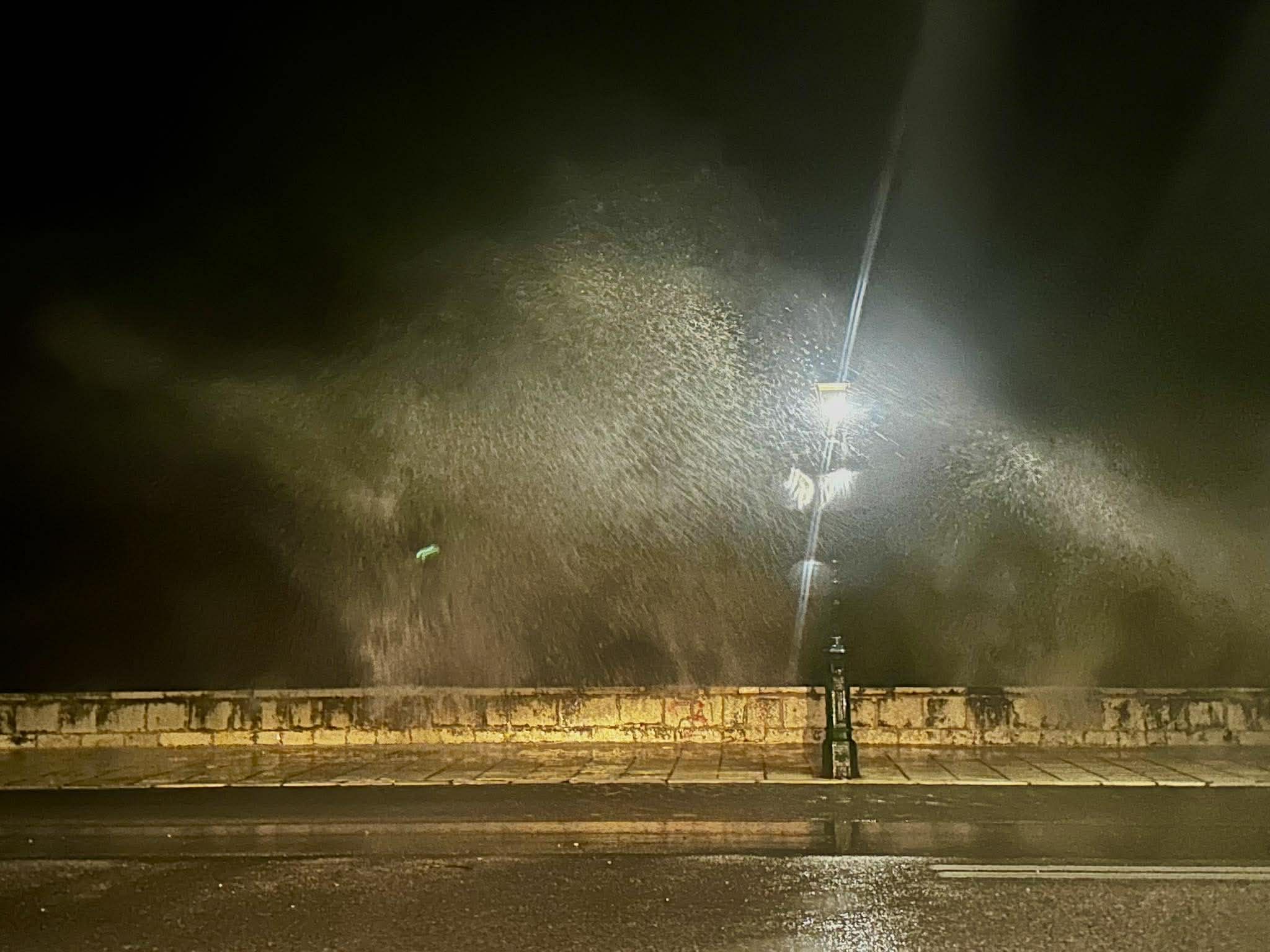
Now, even after the restoration works, the water does not return to the sea; it remains on the roadway and pools, forcing the road to close.
Despite the presence of a submerged artificial reef, the water that overtops the parapet does not drain back into the sea, with the result that it pools and floods the road. The installation of drainage outlets remains indispensable. The project must return to the local authority’s technical programme, which now also holds ownership of this specific section of the town’s seafront zone—because, alas, it is far from finished.
GIORGOS KATSAITIS