Open letter to British filmmaker Christopher Nolan, director of "The Odyssey"
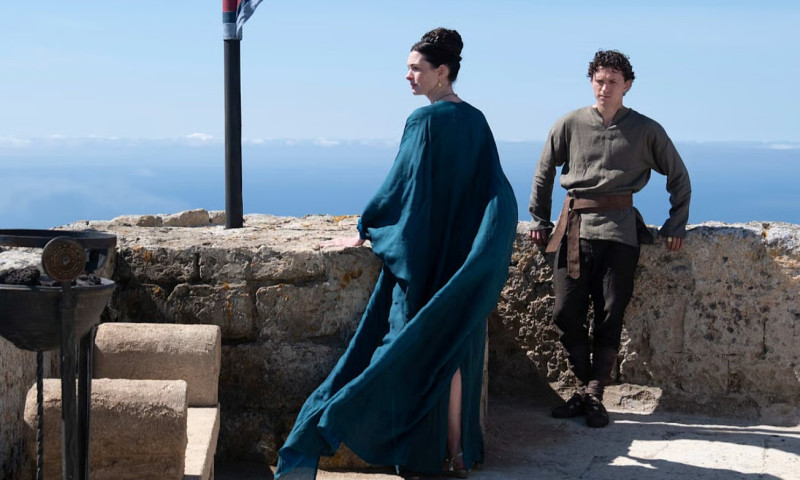 Photo: Universal Pictures
The absence of the Phaeacians from Christopher Nolan’s The Odyssey is not simply the omission of an episode. It is the absence of hospitality, of Nausicaa, and of the human respite that Homer placed between the dangers of the journey and Odysseus’ bloody return to Ithaca.
Mr Nolan,
I had been eagerly looking forward to seeing your new film, The Odyssey.
As an ordinary viewer, rather than a film critic, I found much to admire, and I congratulate you on bringing Homer’s Odyssey back into the global spotlight.
My purpose in writing is not to criticise or correct your film, but to suggest what I believe is missing from it. Several reviews in both the print and online media have drawn attention to the absence of the island of the Phaeacians, the place Odysseus reaches before finally returning to his beloved Ithaca.
This is also my principal reservation about your film, because I believe the omission diminishes the epic.
The 24 books of the Odyssey are traditionally divided into three broad sections. The first (Books 1–4) is known as the Telemachy, as Telemachus is its central figure.
The second (Books 5–13) is known as the Phaeacian Episode, recounting Odysseus’ departure from Calypso’s island and his arrival on the island of the Phaeacians.
The third (Books 13–24) concerns the return to Ithaca and the Slaying of the Suitors.
The first and third sections are dominated by war, violence, death and adventure. The second is entirely different. Here, peace, hospitality, feasting, music and dance take centre stage. And this entire dimension is absent from your film.
Of course, that is your artistic choice. But if, of the 30 minutes devoted to Odysseus’ killing of the suitors, you had found just two minutes for the Phaeacians, I do not believe it would have weakened your narrative.
Quite the opposite.
Through the Odyssey, Homer chose the island of the Phaeacians to celebrate one of the most important values of Greek civilisation: hospitality.
Through Odysseus, perhaps the most famous traveller in world literature, Homer expresses the universal human need for protection, care and acceptance.
It is particularly significant that roughly one-third of the Odyssey unfolds on the island of the Phaeacians, and that such an important part of the story takes place there — a place that historical and cultural tradition has long identified with Corfu.
It is there that Homer describes, in remarkable detail, the ritual of hospitality: a process that begins with the welcoming of a stranger and ends with gifts and the safe transportation of that guest to his destination.
Mr Nolan,
If Odysseus, as portrayed in your film, had travelled directly from Calypso’s island to Ithaca, do you believe Homer’s Odyssey would have secured its place among the greatest works of world literature?
Certainly not. It would have been incomplete.
Around 3,000 years ago, Homer chose the island of the Phaeacians as the setting for one of the most profound moments in the Odyssey.
Odysseus, exhausted from his journey, shipwrecked, alone and unknown, reaches the shores of a land he has never seen before.
He is not greeted by armies.
He is greeted by a young woman: Nausicaa.
She is not distinguished by power or strength, but by something far more important: her humanity.
Their encounter embodies a timeless message that remains profoundly relevant to the modern world: civilisation begins when one human being recognises another as a human being.
Hospitality is not merely a social obligation. It is an act of civilisation.
From that moment to the present day, Corfu has continued to tell the same story through different protagonists. Sometimes through travellers, sometimes through refugees, and today through the millions of visitors who come in search of beauty, tranquillity and human connection.
There are places discovered by maps.
There are places discovered by history.
And there are places discovered by imagination.
Corfu belongs to all three.
Most of the stages of Odysseus’ return journey are dangerous and full of adventure. He encounters the Cyclopes, the Laestrygonians, the Sirens and, ultimately, the Suitors. You portray these episodes with striking effect in your film.
At this point, allow me to make a supposition.
Had the Phaeacians treated Odysseus with hostility and menace, I am certain they too would have earned their place in your film.
What distinguishes the Odyssey from the Iliad is that the Iliad evokes the passions and devastation of war, whereas the Odyssey explores homecoming, identity, temptation, perseverance and hospitality.
In our own age, we need symbols that unite rather than divide. Symbols that do not glorify conflict, but celebrate encounter.
Symbols that do not exalt power, but HUMANITY.
Nausicaa — the hostess of Corfu — belongs to this tradition.
With great respect,
Dr Kostas Tsoumanis